What Recouping Returns Costs Really Means in Returns Management

“Recovery” is a common term in retail that means almost nothing in practice. Brands say they “recovered value” on returns, but don’t say what they recovered, or how much, or against what cost. Recouping the cost of returns is different: it is real money against a known cost. The loose talk about recovering value lets teams feel productive without proving a single dollar came back.
This article explains how recouping return costs differs from loose “recovery” language, identifies the channels through which money comes back, and shows how retailers recoup more of their return costs.
Article Brief
- Recouping returns costs means recovering measurable money against a specific return expense, not a vague sense of “value recovered.”
- The retail habit of saying “recovery” hides whether anything was actually recouped.
- Real recoupment needs return data, clear cost tracking, and a returns process built to retain revenue.
Recoupment vs. Recovery: Why the Difference Matters
When retailers say they “recovered value” from returned goods, the claim often lacks a denominator and therefore cannot be verified. Recouping costs is something you can measure: money recovered against a known cost. For example, getting $40 back on an item that cost $25 to process is a fact.
In reality, the way “recovery” is used sounds like a win but never talks about what it cost to get there. For instance, a returned item can be “recovered” to a warehouse space where it sits until it is marked down to nothing. The item was recovered, but nothing was recouped. That gap is where inefficient return processes lose money.
Vague recovery language risks letting a broken returns process pass as a working one. When no one is measuring recoupment against the real cost of returns, every returned item recorded seems like progress, even if the operation loses money on every one.
The fix is simple in principle: every recoupment claim needs a cost to measure it against, and that cost is rarely small. The National Retail Federation reported in 2024 that U.S. retail saw roughly $890 billion in returned merchandise. Just processing one return can cost 20% to 65% of the item’s original price. At that scale, “we got some value back” is not enough. You need the number.
Where Returns Costs Get Recouped
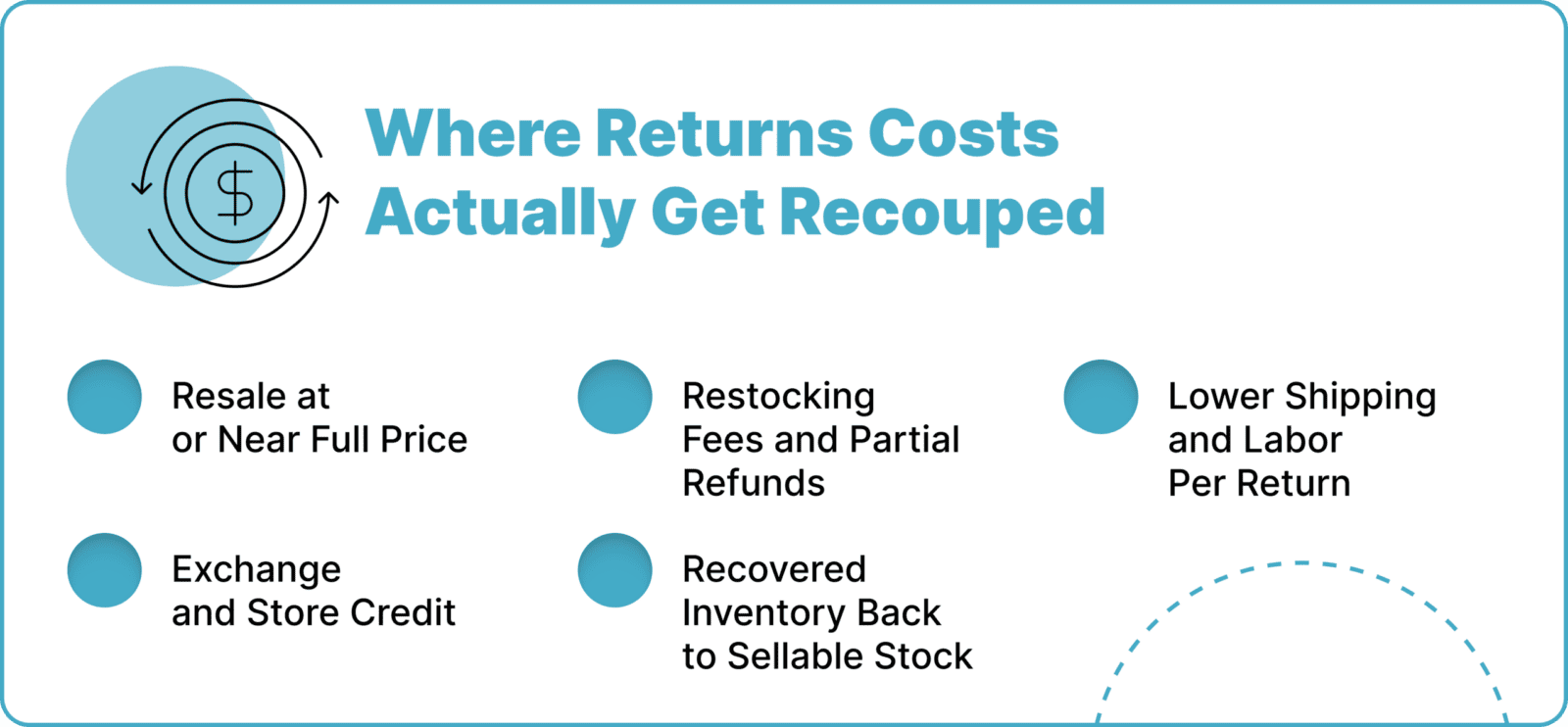
Recoupment involves several levers, and each is counted only against the return expense it offsets.
Resale at or Near Full Price
The best outcome is resale at or near full price. If the item is returned in sellable condition and can be quickly put back on the shelf, most of a product’s value can be recovered against the cost of processing a return. The faster it goes, the more value you keep because each day of delay moves it closer to a markdown.
Exchange and Store Credit
Exchanges and store credit recoup cost differently: you retain the revenue. If the customer chooses store credit or a replacement instead of cash, the sale remains with the business. The real recoupment is in the revenue you did not lose, which offsets the cost of the return, even if no item was resold.
Restocking Fees and Partial Refunds
Restocking fees and partial refunds directly offset processing costs. A small restocking fee on a returned product covers some of the labor and return shipping involved in receiving it.
Recovered Inventory Back to Sellable Stock
When reverse logistics returns an item to sellable stock quickly and accurately, you recoup its value rather than write it off. The slower that process, the more often a perfectly good item ages into a markdown or a loss.
Lower Shipping and Labor Per Return
Trimming the shipping and warehouse labor on each return, through better routing across multiple carriers and fewer manual touches, lowers the cost you’re trying to recoup in the first place. Every dollar shaved off processing is a dollar you no longer have to recover.
How Retailers Recoup More Returns Cost
Intentions do not move the recoupment number. A few practices, done consistently, do.
Track The Real Cost Per Return
This is the first step. Without it you cannot prove recoupment, your key performance indicators are guesses, and “recovery” is a claim without a number. Everything else builds on this data.
Speed Up Reverse Logistics
The longer an item sits unprocessed, the more likely it is to lose value, especially for seasonal products. The faster reverse logistics can get an item back into sellable stock, the more value you can get out of it. A returned product resold in days gets you far more value back than the same product resold in months.
Default to Exchange or Store Credit over Cash Refunds
Keeping the money in your business means you get to keep the sale you would have lost, and often the customer, too. According to Appriss Retail data, 70% of shoppers will buy again after a smooth return experience, so a well-managed exchange protects not just the sale but the relationship.
Use Return Data to Cut Returns at The Source
Reduce returns before they happen by combining your cost tracking with return data and customer behavior patterns. If data shows that a category has high return rates, fixing the listing or product reduces the returns you need to cover. This matters most for online sales, where return rates are far higher than in-store: 24.5% online versus 8.7% in-store returns, according to Appriss Retail and Deloitte.
Protect Inventory Management Accuracy and Product Value
Real-time tracking across carriers and physical locations means fewer lost items, fewer write-offs, and a clearer picture of what each return actually recovers. That’s where a returns management platform like ReverseLogix helps, by tracking the true cost per return and making recoupment measurable.
How to Choose the Right Channel for Each Return
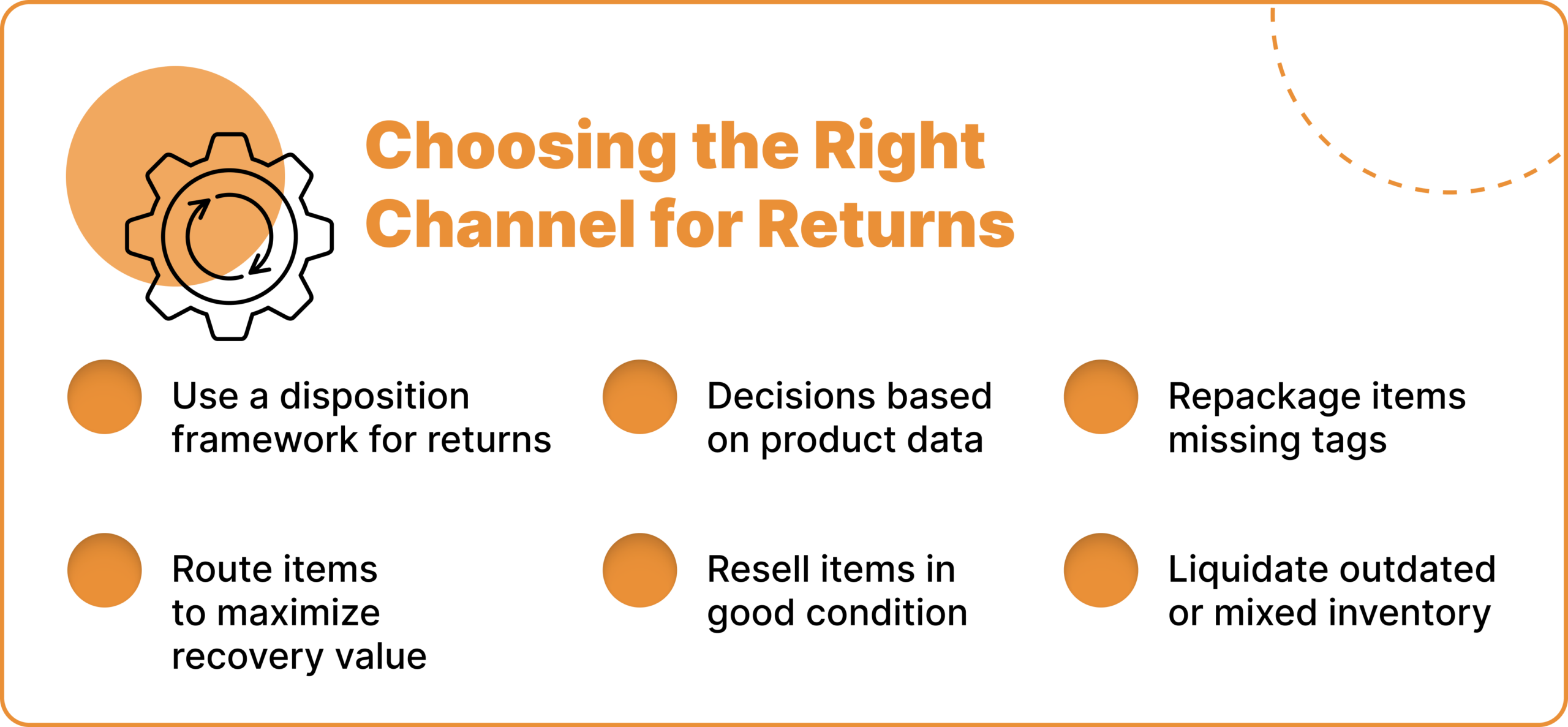
The retailers and manufacturers that get the most money back from returns use a disposition framework. It is a decision tree that routes each returned item to the place that will get the most money back.
The inputs are: the item’s condition, its original price, its product category, the current demand, and the time of year. If a laptop is returned in working order along with its original packaging, it should go right back on sale. A dress that was returned without a tag might need to be lightly repackaged. A pallet of mixed seasonal goods that are no longer for sale is a good candidate for liquidation.
Where data analytics and technology fit
Returns management platforms grade returned items, decide what to do with them, and track how many items are recovered through different channels. For retailers and manufacturers that handle thousands or millions of returns every year, that kind of automation can turn a cost center into a revenue stream.
Measure Recoupment With ReverseLogix
Recovery without a number cannot be managed. ReverseLogix gives you visibility into the cost of every return, tracks where revenue is retained through exchanges and store credit, and reports on the full returns lifecycle so recoupment becomes a number you can stand behind. ReverseLogix also automates disposition to protect product value and keeps customers in the loop at every step. Get a demo today.

Frequently Asked Questions
Is returns management just a cost center?
Not when it’s run well. Treating returns as just a cost center misses the revenue opportunity in every item recouped and every retained sale. A returns process that recoups product value, keeps revenue through exchanges, and builds customer loyalty turns a cost into a competitive advantage. The cost is real, but so is the money a good process pulls back.
What return data helps recoup costs?
The data that matters most is cost per return, return rates by product category, and the reasons behind returns. Together, these show where the cost of returns concentrates and where recoupment is possible. Tracking which items resell at full price versus which get written off gives you the valuable insights to make data-driven decisions instead of guessing.
How do restocking fees affect recoupment?
Restocking fees offset part of the return processing costs, helping recover some of the labor and shipping costs incurred in handling the return. They also gently shape customer behavior, discouraging casual returns without breaking customer trust when applied fairly. The aim is to recoup real cost, not to punish buyers, so most retailers reserve fees for specific categories or conditions.
How is recoupment different from preventing return fraud?
Recoupment recovers money against the cost of legitimate returns. Return fraud prevention stops losses from dishonest returns before they occur, such as wardrobing or false claims. Both protect profit margins, but they work at different points: fraud prevention reduces the customer returns you never should have absorbed, while recoupment pulls value back from the returns you do.
Get a Demo
Discover how you can jump-start your returns management efforts with ReverseLogix.