B2B Bulk Returns: Managing Wholesale and Multi-Vendor Returns at Scale

Selling a bulk order is a clean forward transaction. Taking it back is anything but.

Wholesale and distributor returns do not behave like consumer returns. They arrive in bulk, mix multiple return types on a single consignment, and carry per-account terms that no two trading partners share.

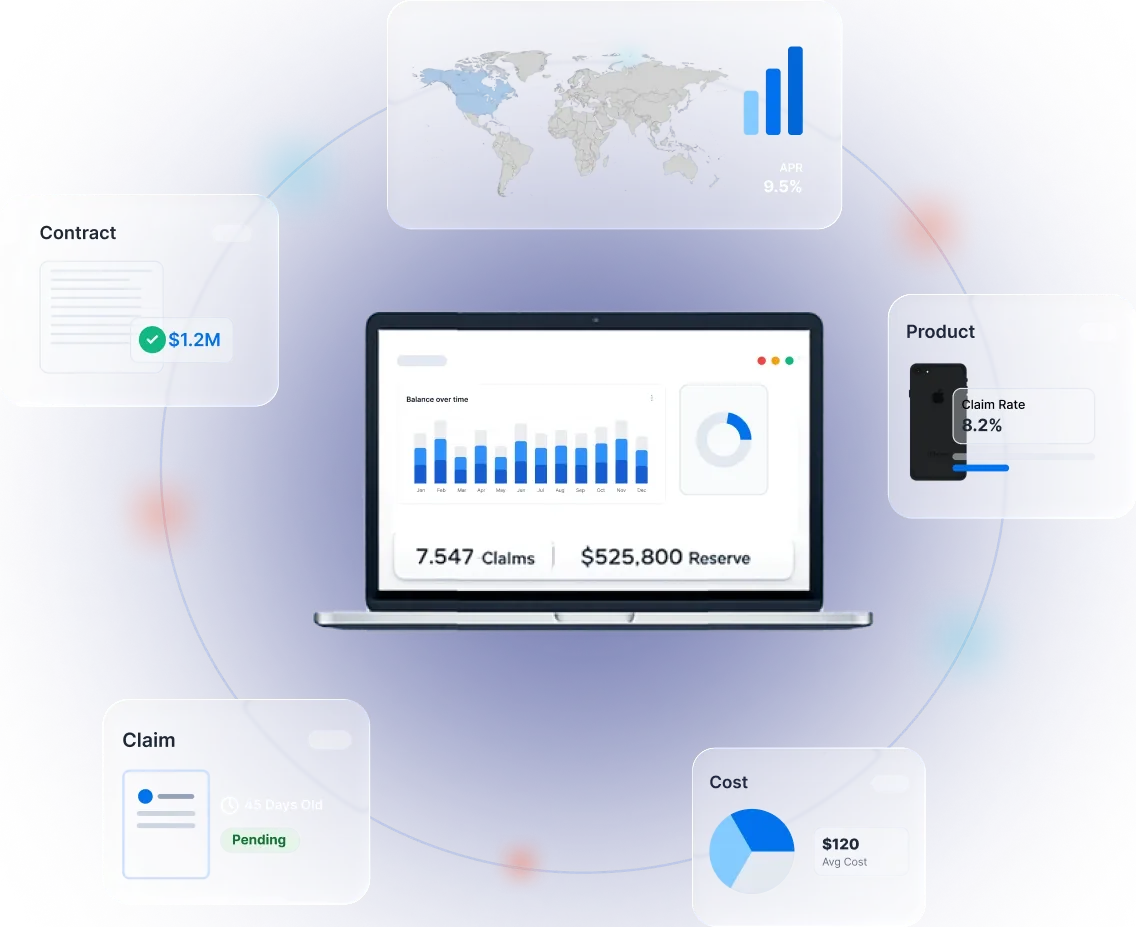
ReverseLogix warranty claims management dashboard

Trusted by logistics teams at:

Jabra logo

State of B2B Returns

$312.3B

B2B/commercial returns market, 2024

Grand View Research

33%

of B2B online orders contain errors

Sapio Research

9-15%

of revenue spent on returns

Aberdeen & Research

20-30%

of supplier deductions are ever disputed

SupplyPike

What Makes B2B Bulk Returns Different From Consumer Returns

A consumer return is one person sending back one item. A B2B bulk return is a wholesale account, dealer, or 3PL sending back many units at once, with mixed reasons and a contract defining what credit is owed. Seven things change:

Consumer (B2C/D2C) ReturnB2B Bulk Return
Unit of returnOne item, one buyerMany units, often thousands, across multiple SKUs on one consignment
Value profileLow volume, higher unit valueHigh volume, lower unit value, large aggregate impact on inventory, credit, and margin
Return reasonsUsually one per returnMixed on a single consignment: defective, overstock under stock-balancing, recall or field action
AuthorizationStandard policy applied uniformlyConsolidated RMA tied to one account, with serial or batch tracking in manufacturing
TermsThe same policy for everyoneEntitlements negotiated per account, capped and conditioned differently
Who decidesThe customer initiates the returnProcurement, logistics, finance, and the vendor, each with a stake
What followsA refund against the orderDisposition per line, credit against entitlement, then reconciliation

How to evaluate a bulk returns system

When comparing options, the useful questions are motion-specific:

One Consignment, Multiple Return Types

Can it accept one consignment with multiple return types and disposition each line separately?

Entitlements Per Account

Can it apply entitlements per account automatically, or does someone still look up the terms?

Audit Track

Can it produce the record needed to dispute a deduction or claim a vendor credit?

Volume-vs-Value

Does it handle the volume-versus-value shape of wholesale returns without a per-item workflow?

Reduced Operator Fatigue

Does it sit alongside the ERP rather than replace it, and reduce the screens an operator touches?

A single B2B return can cost 8 to 10 times more,

to process than a standard order, with $176 per return cited as a working benchmark.

Continuum via B2BEA


Where Wholesale Returns Leak Cost and Margin

The real cost sits in the labor, the errors, and the margin that leak out during processing. Most of it never appears as a line item, which is why it goes unmanaged.

THE GAP

A Bulk Return can cost more than the original order. Some practitioners estimate a single B2B return costs eight to ten times more to process than a standard order, with $176 per return cited as a benchmark (Continuum via B2BEA). 

The operator-fatigue and re-keying tax. When returns data lives across an ERP screen, a supplier portal, a spreadsheet, and an email thread, operators spend the day switching between them and re-keying. a HBR study estimates that toggling screens and apps can cost up to 4 hours/week in lost productivity.

Over-crediting and vendor-policy abuse. The most direct margin leak is over-crediting: issuing more credit than the account’s entitlement allows. It happens when operator defaults to the most generous policy to avoid disputes or loose policy enforcements. Policy abuse occurs when returns are structured to extract credits beyond contract scope. Both don’t show up as fraud.

Financial Reconciliation Problem

Bulk returns are settled in accounting. Money goes missing in both directions.

Downstream. Retailers deduct from a supplier’s invoice for shortages, compliance failures, defects, and promotional terms. Industry analysis puts the revenue lost at 5–7% (SPS Commerce). Many deductions are shortage claims, a large share of them invalid. Few are disputed, because a dispute needs the return record, the entitlement, and proof of shipment and receipt.

Upstream. Supplier credits, takebacks, and stock-balancing returns have to be tied to the agreement that authorized them, or they go unclaimed. Parts distribution adds the core charge, a deposit released only when the old core comes back.

The fix is one record. Consignment, reason codes, entitlement, credit, and proof of receipt in one place. Then deductions get disputed with evidence, credits get claimed on time, and over-crediting gets caught before it posts.



Manual return handling costs $10–$15 per return in labor alone, versus under $2 with automation.
– McKinsey

Applying each account’s return terms by hand?

ReverseLogix applies entitlements at the line level, so the credit matches the contract without a manual lookup.

What running on one system like ReverseLogix changes

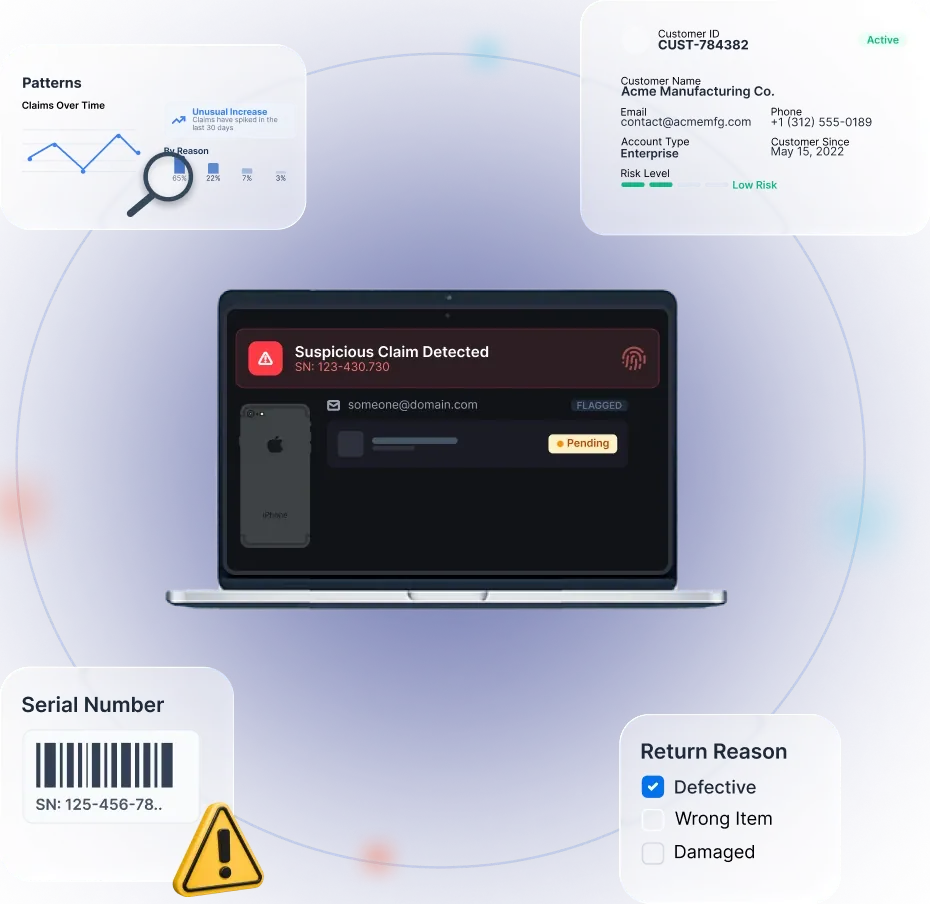
ReverseLogix warranty business intelligence dashboard

Entitlements enforced, not looked up

The contract becomes a rule the system applies rather than a document someone consults. Over-crediting is caught before it posts, under-crediting stops generating disputes, and every entitlement claim carries an audit trail.

Every line dispositioned on its own terms

One consignment can hold defective units, stock-balancing overstock, and recalled stock at once. Each line routes to its own path rather than collapsing into a single decision for the whole consignment.

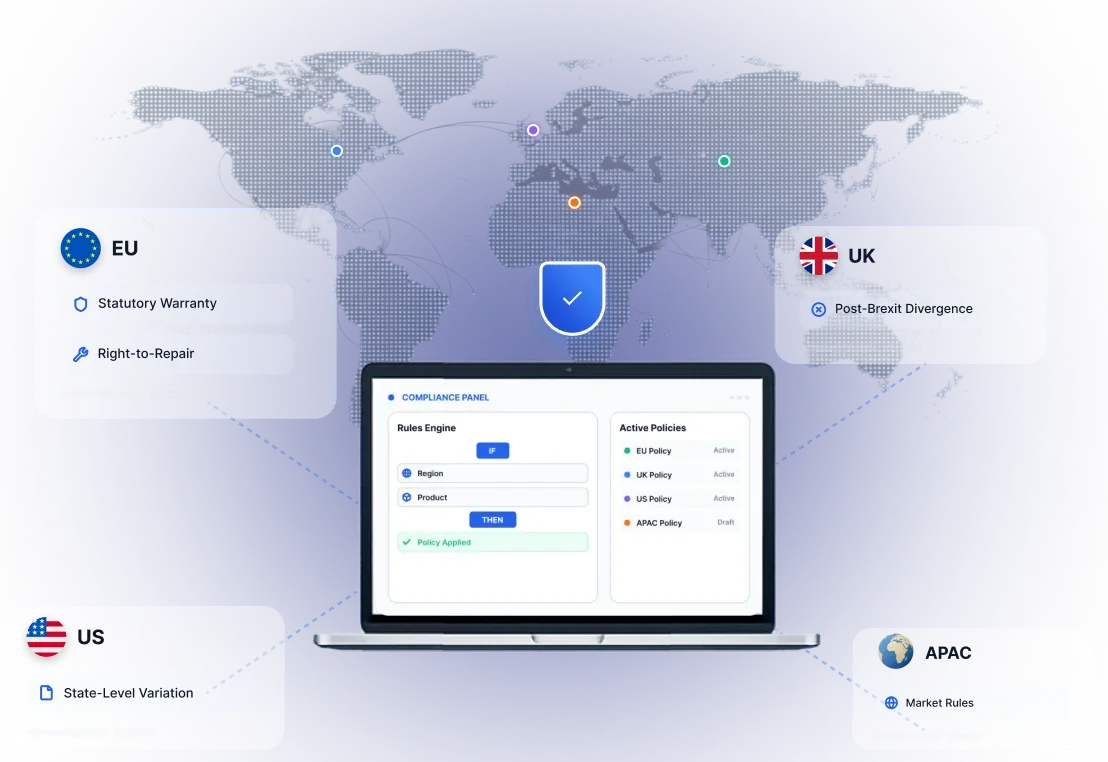
ReverseLogix warranty repair intelligent triage and routing
ReverseLogix warranty repair serialized tracking and database

One record, from dock to credit note

The consignment, reason codes, entitlement, credit, and proof of receipt live together. That is what makes a deduction disputable and a vendor credit claimable before the window closes.

What this looks like in practice

Jabra: consolidating four systems into one

Jabra consolidated four separate systems into ReverseLogix. Their right-to-repair mandate is a regulatory forcing function shared by every European consumer electronics manufacturer. The platform handles their B2B enterprise returns and B2C consumer returns in one unified system, a use case no Shopify-native vendor and no acquired enterprise vendor can credibly serve.

“We have been able to increase our customer satisfaction scores significantly. We found a partner who is truly a subject matter expert in their field.”

Martin H
VP of Support and Services, Jabra

“When we turned ReverseLogix on, it was instant visibility into the warranty volume that we had.”

Richard L
VP After-Sales Service, Tumi

Tumi: migrating off the SAP repair module

Tumi migrated off the SAP repair module specifically because it could not support their after-sales workflow efficiently. ReverseLogix integrates with SAP and replaces the warranty workflow layer that SAP modules have historically not handled well, so finance postings stay in SAP while claim intake, routing, and SLA tracking move to a system built for them.

How ReverseLogix runs bulk returns as one governed workflow

Entitlements Engine

Applies each account’s negotiated terms automatically at the line level, so the credit matches the contract without a manual lookup.

Discrepancy log

Captures the gap between what was authorized, what shipped, and what was received, as evidence rather than an email thread.

ASN upload

Advance ship notice intake, so consolidated consignments are known before they arrive.

Dealer entitlement management

Captures each account’s terms once at onboarding and reuses them on every return that follows.

Disposition routing

Sends each line to restock, refurbish, return-to-vendor, liquidate, recycle, or scrap based on its reason and entitlement.

Reconciliation record

Consignment, reason codes, entitlement, credit, and proof of receipt in one place, so deductions can be disputed with evidence.

ReverseLogix applies each account’s entitlements inside returns processing, natively rather than as a bolt-on.

The same platform runs warranty and repair, exchanges, and D2C returns when you’re ready, so teams expand across the post-purchase lifecycle instead of adding a point tool for every motion.

When ReverseLogix is the right fit for B2B Bulk Returns

(and when it isn’t)

Bulk returns software is not a universal need. The distinction below is about the shape of your returns motion, not the size of your business.

Built For

  • Wholesale distributors, dealers, and manufacturers processing returns in bulk against trading partner accounts
  • Accounts with negotiated per-account terms: stock-balancing clauses, return caps, entitlements that differ by partner
  • Consignments that mix return types on one inbound: defective, overstock, recall, product-not-sold
  • Parts distribution handling core charges, serialized units, or batch traceability
  • Teams keeping the ERP as the system of record and needing the returns workflow alongside it
  • Suppliers absorbing retailer chargebacks and deductions who need evidence to dispute them

Not the right fit

  • Single-channel D2C brands running one standard return policy with no negotiated terms
  • Uniform policy across every account, where there is no entitlement to enforce
  • One reason code per return, dispositioned the same way every time
  • Non-serialized consumer goods with no upstream credit recovery
  • Organizations looking to replace the ERP rather than run alongside it
  • Volume below the point where line-level automation pays back a manual process that works

See bulk returns run as one governed workflow

Data security, access control, and compliance

ISO/IEC 27001 Certified

ISO/IEC 27001 CERTIFIED

ISO/IEC 27001 Certified

SOC 2 TYPE II ATTESTED

ISO/IEC 27001 Certified

SECURE BY DESIGN

Integrations

Integrations are configured during implementation rather than built from scratch. Standard connectors cover the major ERPs, CRMs, WMS/OMS, and carriers listed below, and custom systems connect through a REST API and standard EDI. The practical effect is that finance data stays in your ERP, service data stays in your CRM, and ReverseLogix orchestrates the warranty workflow across them without a rip-and-replace, unless warranted.

Explore integrations by category

ERPs
CRMs
WMS / CMS
Carriers
Commerce
Marketplaces
ERPs
  • SAP S/4HANA
  • SAP Repair Module
  • Oracle
  • NetSuite
  • Microsoft Dynamics 365 F&O
  • Microsoft Dynamics AX (legacy)
  • Infor SyteLine
  • Epicor
CRMs
  • Salesforce
  • HubSpot
  • Zendesk
  • Freshdesk
WMS / CMS
  • Manhatta
  • Blue Yonder WMS
  • Körber
  • Custom OMS via REST API
Carriers
  • FedEx
  • UPS
  • DHL
  • USPS
  • 400+ regional & national carriers via standard EDI/API
Commerce
  • Salesforce Commerce Cloud
  • SAP Commerce Cloud
  • Oracle Commerce
  • Spryker
  • NetSuite Commerce Cloud
  • Shopify Plus
  • Adobe Commerce
  • BigCommerce Enterprise
  • Custom B2B portals
Marketplaces
  • Amazon
  • eBay
  • Walmart

Custom and API-based integrations

Where a system is not on the standard connector list, ReverseLogix integrates through a documented REST API. Custom OMS, homegrown B2B portals, and regional carriers connect the same way, so a nonstandard stack is not a barrier to deployment.

Frequently asked questions

What is a bulk or consolidated RMA?

A single Return Merchandise Authorization covering many units at once, often across multiple SKUs and return reasons, tied to one wholesale account. It holds the context for the return, including serial or batch tracking in manufacturing, so disposition and credit are handled correctly for each line.

How is a B2B return different from a B2C return?

A B2C return is one buyer sending back one item under a standard policy. A B2B return involves many units per event, lower per-unit value but high aggregate impact, approval across procurement, logistics, and finance, and terms negotiated per account.

How much does a B2B return cost to process?

There is no single authoritative figure, and the most-quoted numbers are vendor estimates. Some practitioners put a bulk return at eight to ten times a standard order, or around $176 per return (Continuum via B2BEA), which should be read as directional.

What are entitlement claims in wholesale returns?

An entitlement is what an account is contractually owed on a return: return rights, credit terms, and where applicable warranty coverage. An entitlement claim is a return processed against those terms, and applying them at the line level makes each claim auditable.

What is value leak in wholesale returns?

The margin lost between a return’s book value and what is actually recovered, through over-crediting beyond an account’s entitlement, unclaimed vendor credits and takebacks, undisputed retailer deductions, and returns that are never reconciled.

Can ERP handle bulk returns on its own?

An ERP records transactions and holds the system of record, but it does not manage the returns workflow: intake, inspection, disposition, entitlement application, and reconciliation. A purpose-built system runs that workflow alongside the ERP rather than replacing it.

Make Bulk Returns a Breeze

Bring your own numbers: a live consignment mix, two or three accounts with different terms. We’ll map them onto the platform for a custom demo.