How to Embed Reverse Flows into Product Lifecycle Management

Manufacturers often believe that returns are an operations problem that starts after a sale. That kind of approach to returns is not only wrong but also expensive. Returns or reverse flow are supposed to be designed long before a product reaches a customer, otherwise you would inevitably have to deal with delays, write-offs, disputes, and waste called returns.
Article Brief:
- Most manufacturers treat returns as a post-sale issue, but the real problem begins in product design.
- By embedding reverse flows into every stage of the product lifecycle, companies can reduce waste, recover value, and control costs.
- This article explains how to build returns into your PLM strategy from day one.
Reverse flows and PLM strategy belong in the design room, not the warehouse. Which is why when teams treat reverse flows as an afterthought, the product life cycle breaks under pressure, and the cost appears downstream as confusion. In this article, we explore why manufacturers that design reverse flows into product development gain control over returns before the first unit ships that control.
At ReverseLogix, we have watched manufacturers struggle with returns they never planned. And the pattern is always the same. Product launches, sales rise, returns arrive, and panic follows just before chaos descends. But ultimately, that chaos is always a result of poor design decisions.
Reverse Flows Start Before the Product Exists
Reverse flows are not just about moving products backward. A well-thought-out reverse flow should determine in advance how products return, are assessed, and re-enter the value streams. Think of it this way: in the typical supply chain, the reverse flow ensures that products are pulled back into the business through recovery operations, inspection, repair, resale, or disposal.
Design choices set the limits of that loop, packaging decides the inspection speed, and materials decide the recovery cost. The assembly decides whether rebuilding products is possible or pointless labor. Manufacturers that design reverse flows create predictable returns rather than surprises in the future.
Ignoring Reverse Flows Creates Expensive Blind Spots
When reverse flows are missing from product design, costs appear where no budget exists. For example, returned products arrive without clear rules, inspection teams are forced to play guessing games rather than make accurate decisions based on established rules and standards, and inventory control fails. All of these mean there is a high level of uncertainty in the returns support operation, inevitably leading to higher costs even as customers wait for speedy answers.
When design teams optimize for production speed and recovery teams absorb the damage later, it creates a separation that keeps manufacturers stuck in a reactive mode rather than in control.
Designing Products That Are Expected to Come Back
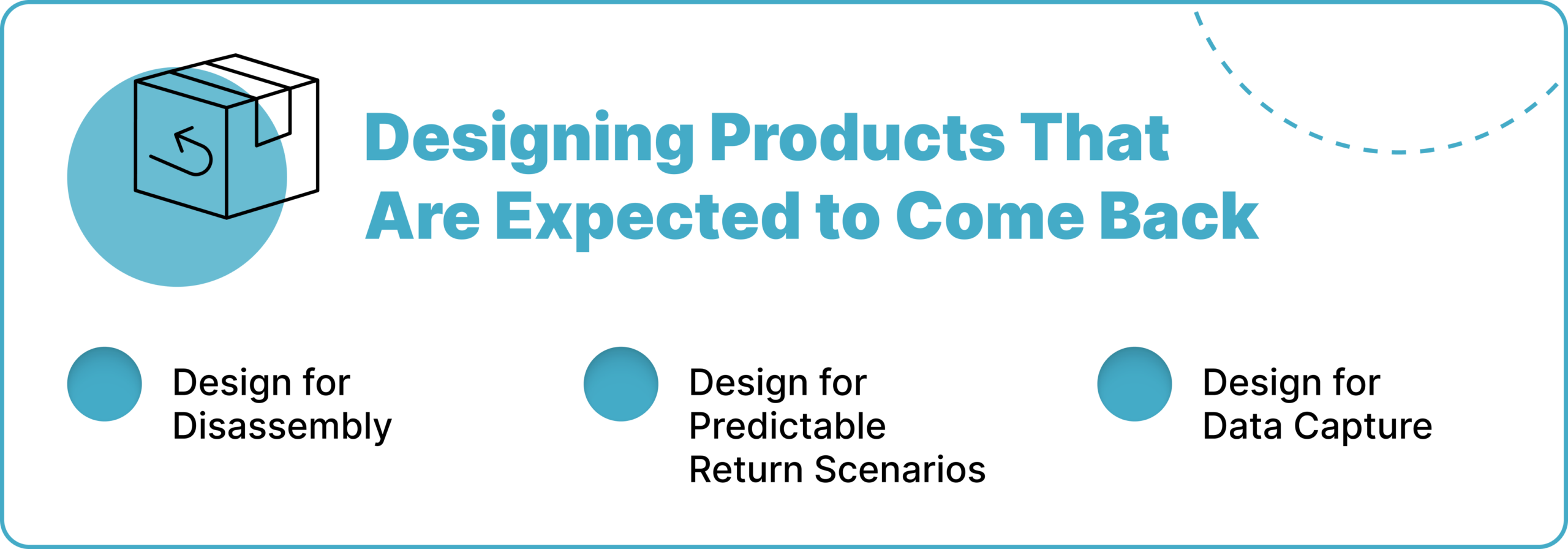
The fastest way to reduce post-sale chaos is to assume that every product will be returned. Making that assumption immediately changes your product’s design. Here is how to go about it:
1. Design for Disassembly
Designing for disassembly reduces inspection time at recovery centers. Modular components allow quick separation, standardized fasteners cut labor requirements, and clear access points reduce damage during repair. For example, electronics manufacturers that standardize fasteners usually see the refurbishment cycle time drop by a few days.
2. Design for Predictable Return Scenarios
Most returns fall into known demand buckets. It could be buyer’s remorse, warranty claims, transit damage, and end-of-life recovery. Whatever the case, design teams should be able to map out these scenarios well in advance to effectively define return eligibility and recovery paths before launch clarity. This way, there is no guesswork later on.
3. Design for Data Capture
Serialization and tracking should begin at the product birth system. This way, returns reasons that are tied to product designs can feed the PLM systems with factual rather than opinion data
Return reasons are tied to product design data feed PLM systems, with facts rather than opinion data.
Reverse Flows Across the Product Life Cycle
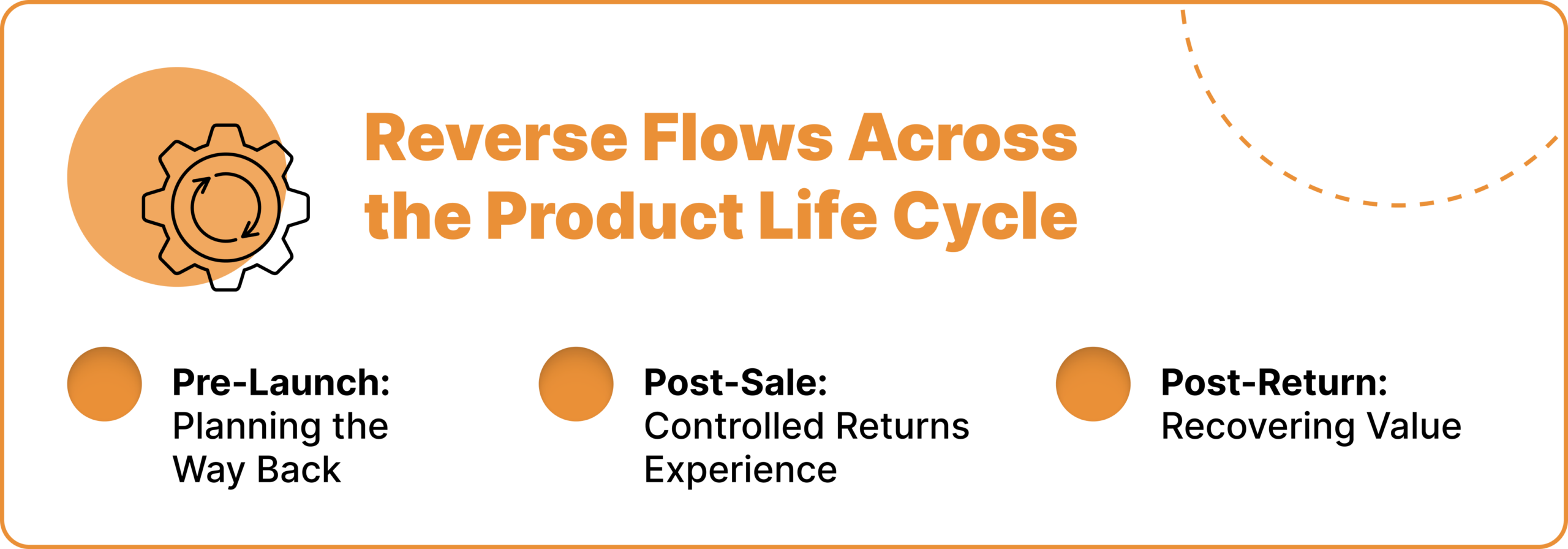
Reverse flows cannot be restricted to a single department or process, it has to span across the entire life cycle loop, including:
1. Pre-Launch: Planning the Way Back
This is the first step to managing returns. The design, manufacturing, logistics, and support teams must agree on recovery rules for early alignment. Return thresholds, repair limits, and disposal rules should be in place before the first sale decision. Manufacturers that do this reduce recovery decision time by over 40 percent.
2. Post-Sale: Controlled Returns Experience
A planned return experience reduces friction for customers. Clear return rules speed up approvals, defined inspection steps reduce disputes, and automated tracking prevents lost unit tracking. Ultimately, returns become a process rather than a scramble.
3. Post-Return: Recovering Value
Every returned product still holds value. Some go back to store shelves, others to secondary markets, and some feed the recycling streams. Designing reverse flows makes those paths clear before recovery begins.
Why PLM Strategy Must Include Reverse Flows
PLM strategy often stops at launch, creating gaps or blind spots once the products go to market. But ideally, product lifecycle management systems should track forward and reverse data equally. Return rates tied to components reveal failure patterns faster than warranty claims data. Manufacturers that connect reverse flows to PLM systems shorten product improvement cycles by months. And when machine learning is applied to return data, it can flag design risks way before they spread across production lines.
Technology Supports Reverse Flows but Does Not Replace Design
Although technology and automation do not fix bad designs, it exposes their flaws much faster. For instance, software supports reverse flows, and returns management tools like ReverseLogix enforce rules that design teams define earlier. This way, manufacturers can:
- Track returned units accurately
- Apply recovery logic consistently
- Measure recovery performance across product data
Without design input, software only speeds up the confusion. But with it, your software solution transforms into a control layer that ensures efficiency and increased throughput.
Reverse Flows Require Organizational Ownership
Reverse flows belong to everyone. And that is why it often fails when ownership of the returns management process rests squarely with a single team. That is a recipe for disaster. Think divide and conquer. Design controls materials, manufacturing controls assembly, logistics controls movement, and recovery teams manage the outcomes. Manufacturers that bring these groups together early prevent finger-pointing later and ensure success. Sometimes immediate.
Environmental Pressure Makes Reverse Flows Non-Optional
Environmental regulations now demand accountability after sale pressure. Governments track waste reduction, consumers expect recovery programs, and markets punish disposal waste.
Designing reverse flows reduces landfill exposure and supports compliance with recovery requirements. Manufacturers that ignore this face rising disposal costs and public scrutiny risk.
Ultimately, a well-designed reverse flow protects margins and reputation.
Design Forward by Planning the Way Back With ReverseLogix
There is nothing wrong with returns. In fact, in today’s market, every retailer and manufacturer should expect. The problem is unplanned returns. Manufacturers that embed reverse flows into product design with ReverseLogix replace chaos with control. They reduce costs, protect resources, and recover revenue. The future of manufacturing belongs to companies that plan for products to come back, not just go out future. Design the return before the sale, and the rest becomes manageable success.
Frequently Asked Questions
1. What are reverse flows in manufacturing?
Reverse flows refer to the planned pathways that allow returned products to move back through the supply chain for inspection, repair, resale, recycling, or disposal. Unlike forward logistics, which focuses on production and delivery, reverse logistics focuses on recovery operations and reducing post-sale waste.
2. Why should manufacturers embed reverse flows during product design?
Including reverse flows early helps manufacturers anticipate how returns will be handled rather than react later. It simplifies product recovery, supports warranty claims, reduces labor costs, and aligns with regulations on waste reduction and environmental compliance. It also shortens the response loop between returns and product improvement.
3. How does reverse flow planning impact PLM strategy?
By integrating reverse flow logic into product lifecycle management (PLM) systems, companies gain better visibility into return reasons and failure patterns. This feedback improves new product development, reduces support costs, and closes the loop between design, production, and recovery operations.
4. How do reverse flows support sustainability and regulatory compliance?
Regulations increasingly hold manufacturers accountable for end-of-life product handling. Reverse flows support recovery goals by reducing landfill waste, extending product life cycles, and enabling recycling. This not only protects the environment but also shields businesses from penalties and reputation damage.
Get a Demo
Discover how you can jump-start your returns management efforts with ReverseLogix.