The ESG Opportunity in Sustainable B2B Reverse Logistics
Sustainable B2B Reverse Logistics: Key Benefits
- Reduce waste and environmental impact: Sustainable B2B reverse logistics helps companies cut waste, lower their environmental footprint, and recover value through repair, reuse, and resale.
- Improve forecasting for greener outcomes: Accurate forecasting gives teams the visibility needed to prevent unnecessary disposal, reduce greenhouse gas emissions, and support responsible business practices.
- Use returns analytics to minimize emissions: Returns analytics strengthens environmental sustainability by optimizing return routes, reducing fossil fuel use, and helping companies minimize waste at scale.
- Support ESG compliance through smarter returns: Companies that integrate ESG-focused returns processes gain environmental benefits, social impact, and improved financial performance from a single, unified strategy.
Approaching returns as a nuisance rather than a way to reduce waste and potentially strengthen a corporate sustainability strategy overlooks one of the greatest sustainability levers in the modern-day supply chain. Particularly because any sustainable B2B reverse logistics can cut greenhouse gas emissions, reduce landfill use, and generate revenue at the same time.
This article illustrates how sustainable B2B reverse logistics helps companies support ESG compliance, reduce environmental impact, and recover profit through smarter decisions that protect the planet.
The Missed ESG Advantage Hidden in B2B Reverse Logistics
Although many companies focus on projects such as recycled-plastic programs, energy-efficient lighting, or water-use reduction, all of which are helpful, these projects are limited in scale.
What the companies rarely consider is the impact of a single B2B return. For example, typical B2B returned items, such as a pallet of telecom hardware, an industrial motor, a stack of packaging materials, or a commercial refrigerator, going through a return center incurs a much higher environmental cost than a small consumer return. And that’s not all, because they also require more resources, more transport miles, and greater disposal risk.
The fastest path to real sustainability progress is on the reverse side of the supply chain. But B2B reverse logistics can only become a sustainability engine when companies plan returns with intention. Ideally, this planning should support waste reduction goals, protect natural resources, and reduce the need for new materials.
When companies treat reverse logistics as part of their corporate sustainability strategy, they support future generations through smarter business practices that create environmental and financial benefits.
How Returns Analytics Strengthen ESG Outcomes in B2B Reverse Logistics
When you know the items being returned, when they will return, and what condition they may arrive in, you can prepare tools, space, and packaging materials to protect the returned products from damage. This way, you can prevent unnecessary disposal and extend the life of equipment that may still have the highest value.
Here is how that works:
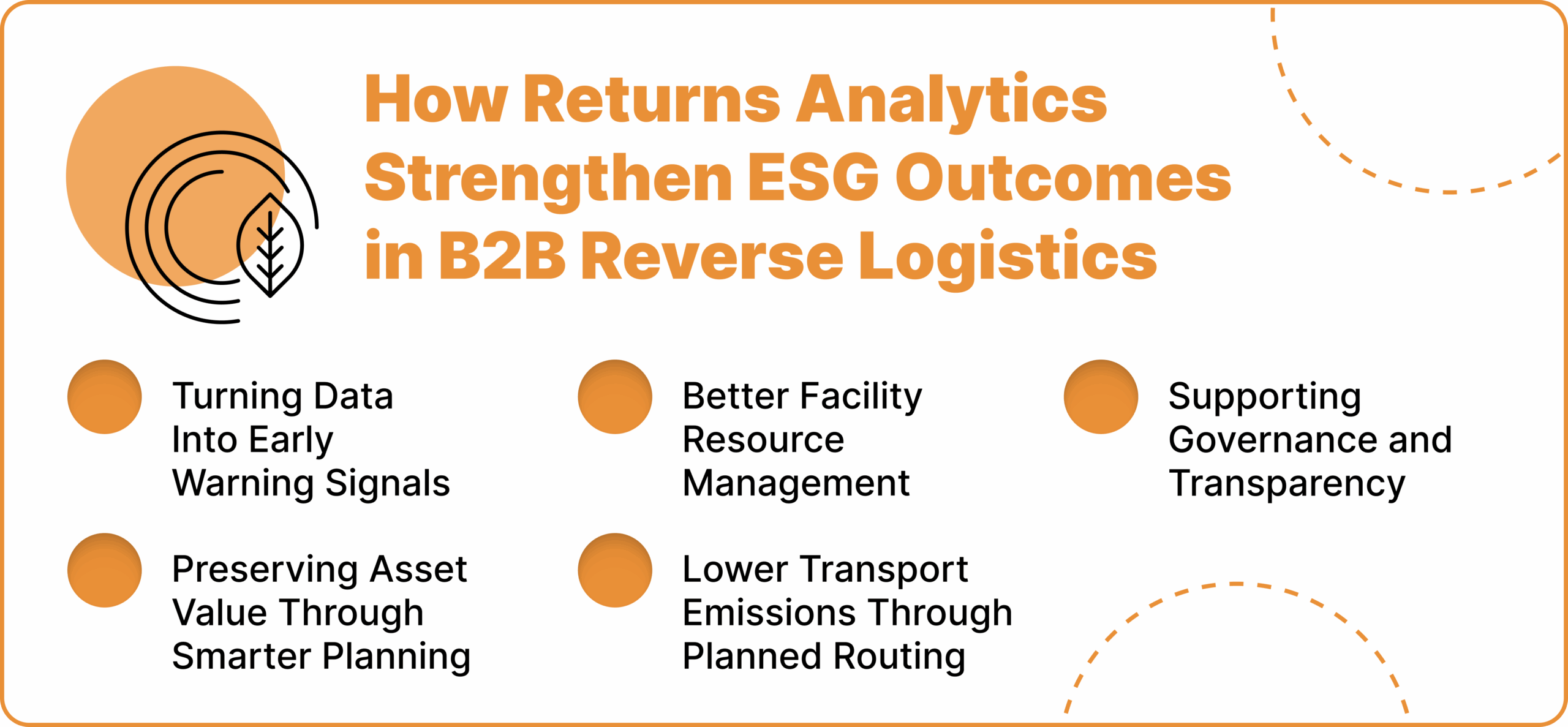
1. Turning Data Into Early Warning Signals
Returns analytics studies historical data across the supply chain to identify when returns are more likely to spike. Those early warning signals help reduce that pressure by allowing you or your logistics team to plan storage zones, prepare recycling bins, and gather repair parts, thereby facilitating the reuse of returned products rather than sending them straight to disposal. This way, you can support the circular economy and reduce environmental costs.
2. Preserving Asset Value Through Smarter Planning
Forecasting helps your company protect returned items by preparing repair stations, cleaning tools, and training staff. This way, you can easily ensure the returned products are immediately reusable because they receive timely maintenance rather than degrading in storage.
For example, a distributor with accurate forecasting can process returned controllers more quickly and reduce packaging waste by preparing the right materials before the items arrive. This simple shift will go a long way toward protecting natural resources and reducing the carbon footprint of replacement units.
3. Lower Transport Emissions Through Planned Routing
Transport is one of the biggest contributors to greenhouse gas emissions in reverse logistics. However, with returns analytics, your company can reduce fossil fuel consumption by grouping return deliveries into planned routes instead of last-minute pickups. A planned route uses less energy, reduces pollution, and brings order to the green supply chain. It also reduces friction for carriers, allowing them to plan loads with less idle time and less empty mileage.
4. Better Facility Resource Management
Returns forecasting, powered by predictive analytics and other tech solutions, guides the use of internal resources, such as labor, lighting, ventilation, and staging zones. When returns arrive without warning, your company may be forced into panic or scramble mode, and facilities use more energy than needed.
But by planning these returns more effectively, your company can move items efficiently through repair, recycling, or redeployment. This way, less energy is used, waste is minimized, and materials keep moving at the right pace.
5. Supporting Governance and Transparency
Returns analytics creates organized digital records that your company can leverage to support ESG compliance reporting. These records show what works by tracking waste reduction, recycling volumes, packaging waste decisions, and return outcomes. This way, your corporate governance is much stronger, and you can also demonstrate to customers exactly what you are doing and how those sustainability actions reflect the company’s values in practice.
Harvard professor George Serafeim, a leading expert in ESG measurement, often emphasizes how “better data supports better decisions.” A sentiment that completely applies here. See it his way: better data supports better sustainability outcomes, better data supports better recovery outcomes, and better data supports better progress.
How B2B Reverse Logistics Turns ESG Gains Into Profit Wins
The same actions that reduce waste often increase revenue, which makes sustainable B2B reverse logistics financially beneficial. Here is how that works:
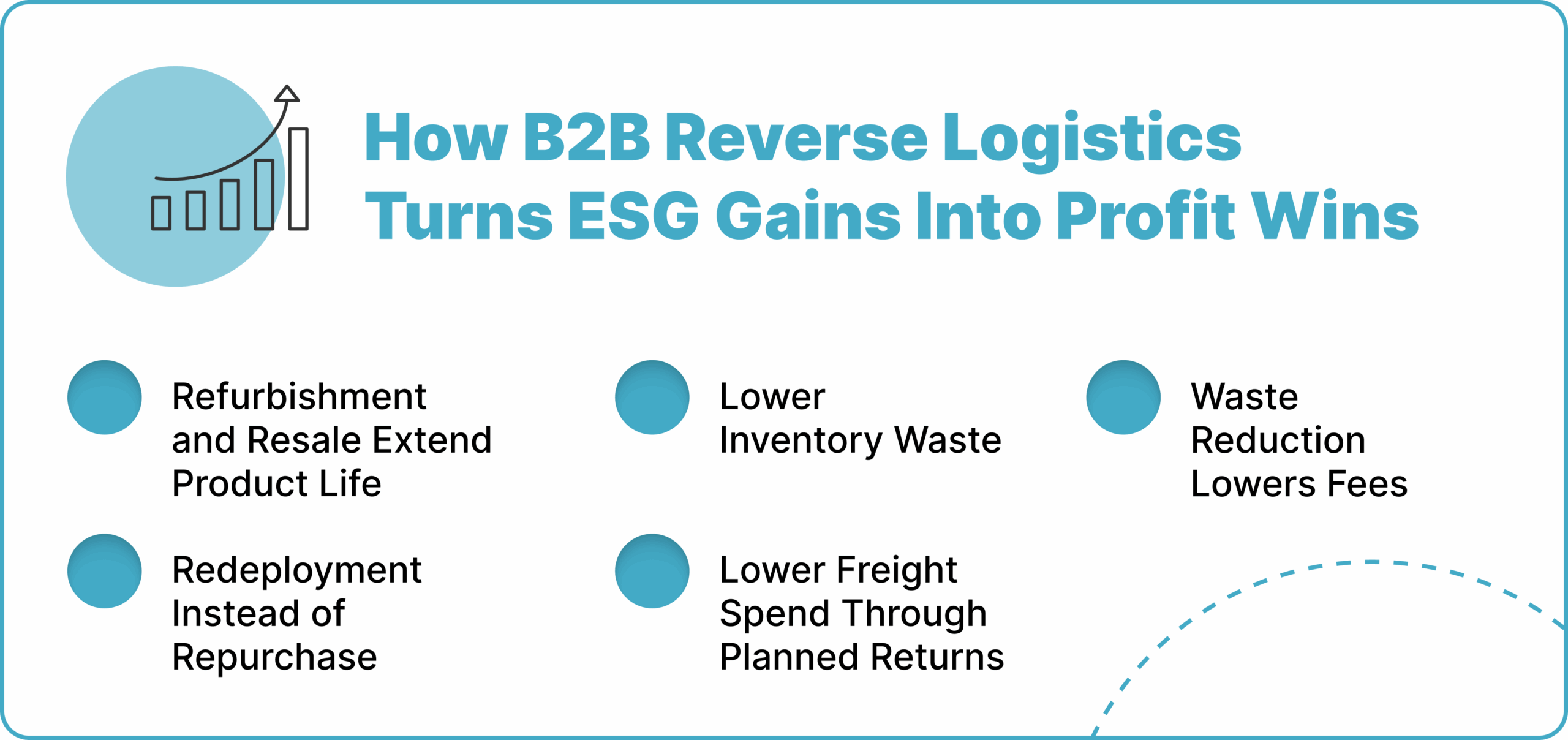
1. Refurbishment and Resale Extend Product Life
Returned items often hold more value than expected. When companies refurbish products such as telecom equipment, industrial gear, or commercial appliances, they return them to service and avoid the cost of buying new materials. This way, there is less consumption, natural resources are protected, and a profitable resale channel is created.
2. Redeployment Instead of Repurchase
Returned units can be moved to different branches, project sites, or customers who need them. By redeploying them, you can avoid new purchase orders, reduce waste, cut energy use in manufacturing, and support corporate sustainability goals. Every redeployed unit is one less item produced and one less item sent to landfills.
3. Lower Inventory Waste
Forecasting helps companies avoid overstocking parts that customers may soon return, which protects against expired goods, spoiled packaging materials, and large volumes of waste. It also reduces storage costs and pollution associated with uncontrolled disposal.
4. Lower Freight Spend Through Planned Returns
When returns arrive on schedule, freight teams select better routes, fill trucks more consistently, and reduce fuel consumption per trip. This cuts transportation spend while lowering carbon emissions—another example of sustainability and profit working as one system.
5. Waste Reduction Lowers Fees
Many industries pay fees for landfill access, battery disposal, or hazardous material handling. Sustainable B2B reverse logistics routes items to recycling, reuse, or resale instead. This reduces waste volume, cuts disposal fees, and helps companies protect the environment with each return cycle.
ReverseLogix Is the Hidden ESG Engine
Sustainable B2B reverse logistics empowers you to reduce waste, protect natural resources, and generate revenue simultaneously. By leveraging ReverseLogix for your forecasting and returns analytics, your company can gain more control over returns that once caused stress.
ReverseLogix also supports the circular economy by extending equipment lifespans, reducing packaging waste, and lowering the carbon footprint of transport. They also advance corporate sustainability goals by demonstrating to customers and communities that the company supports responsible business practices. Get a Demo to see how our solution works.
Frequently Asked Questions
It supports environmental sustainability by reducing packaging waste, lowering greenhouse gas emissions, and helping companies reuse materials that would otherwise enter landfills. These actions protect natural resources and strengthen a company’s sustainability goals.
A structured returns program improves ESG compliance by documenting waste reduction, tracking recycling outcomes, and supporting responsible disposal. It also creates clear reporting for corporate governance teams who measure social and environmental impacts.
Reverse logistics reduces the environmental footprint of a business by cutting fossil fuels usage through planned transport, lowering plastic pollution through recycling programs, and minimizing waste during equipment recovery and refurbishment.
Yes. When companies reuse equipment, repair units, or redirect goods to other businesses, they support a circular economy. This reduces the need for new materials, lowers water usage, and keeps products out of landfills.
Strong returns programs help companies support sustainable business goals by reducing consumption, lowering packaging materials use, and encouraging energy-efficient repair activities. These efforts also support local communities through responsible waste management.
Get a Demo
Discover how you can jump-start your returns management efforts with ReverseLogix.