The “free” on a returns page is about the customer experience. But someone always pays. Most brands give free returns like it’s a gift, and they never follow the money trail. It all leads back to them. The cost of free returns shows up in shipping, in warehouse hours, in product that comes back worth less than it left. And almost none of it appears on the happy banner that promised “free returns, no questions asked.”
This article covers the real cost of free returns, the tradeoffs brands make when offering them, and how to keep the policy without losing margin.
Article Brief:
- Free returns shift the cost from the customer to the retailer through return shipping, warehouse labor, and lost product value.
- National Retail Federation data shows returns occur at a scale that many brands underestimate.
- The solution isn’t eliminating free returns, it’s pricing and managing them with full visibility into their true cost.
What Free Returns Actually Cost
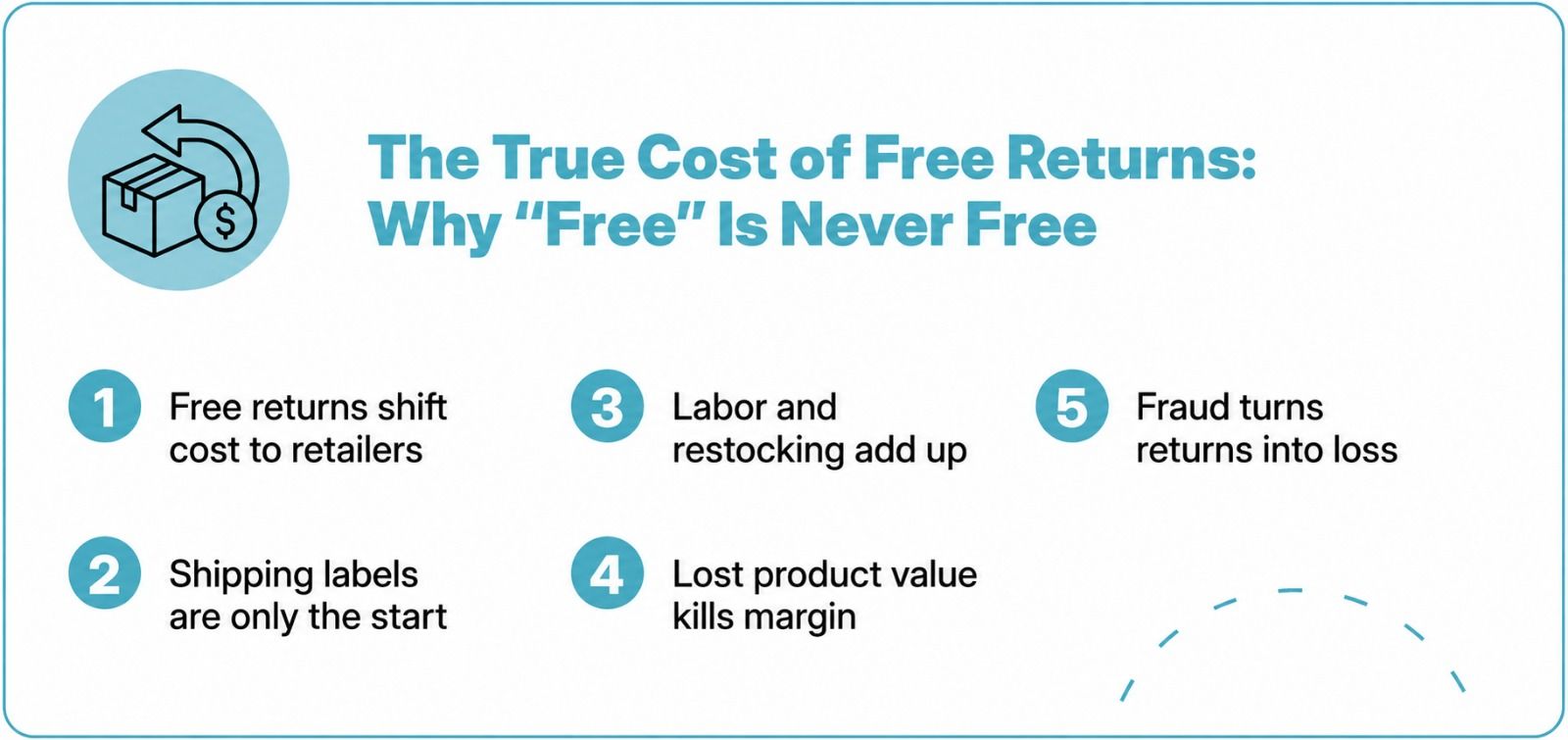
The prepaid shipping label is the smallest piece of what a free return costs. Behind it is a chain of expenses the customer never sees, and they add up fast. The National Retail Federation says U.S. retailers processed about $890 billion in returned merchandise in 2024. Shipping, inspecting, and restocking each of those returns can cost anywhere from 20% to 65% of the item’s original value. By offering free return shipping, you take on the whole chain, not just the postage.
Return shipping fees come first, and they are rarely a one-and-done fee. There can be multiple legs before a returned item reaches a warehouse, and the retailer pays each leg. Then there’s reverse logistics: someone has to receive the returned item, open it, inspect it, and decide where it should go. That labor costs the same whether the item resells or not.
The real money is in lost product value. Too many returned goods can’t be resold at full price. They’re marked down, bundled, or written off, and the difference between the item’s worth and its recovery is a loss the prepaid label never suggested. Then you add refund processing on top of that, whether you’re issuing cash refunds or store credit, and the per-return cost goes up again.
And then there’s returns fraud, which doesn’t usually make it onto the spreadsheet. Some of the biggest hidden costs of a generous return policy are wardrobing (customers buy, use, and return) and false claims. Free returns make things easier for both honest and dishonest buyers.
Are Free Returns Worth It? The Financial Tradeoffs Brands Make
Free returns are a bet, and many brands make it on purpose. Free return shipping can increase conversion rate by removing the last hesitation before checkout. The result is increased customer satisfaction and retention rates, as buyers know they will not lose money due to a mistake. If you take out the policy, you can see lost sales piling up as people abandon their carts. The perk often pays for itself in volume, as customers have been trained to expect free returns.
The other side of the bet is what happens when return volumes go up. The policy that won the sale now brings a flood of returns, and free returns go from a marketing cost to a drain on margin. If too many of those orders come back, a brand can get more orders and still lose money.
The tension is that the biggest players set customer expectations, and they can absorb the cost at scale. Most brands think they can’t opt out without looking like they are penny-pinching next to a competitor that offers free returns on everything. They match the policy whether margins can support it or not.
The math differs for every seller. A high-margin product can pay for free returns and still be profitable. A low margin item in a category with high return rates can’t. Free returns make sense for some businesses and quietly sink others. The deciding factor is whether you know your own per return numbers or just assume you can afford it.
How to Offer Free Returns Without Losing Money
You can keep your margin and your customer experience smooth, but it takes more than a banner. When an item does come back, the goal is to pay less for returns, process them more cheaply, and keep the revenue in-house.
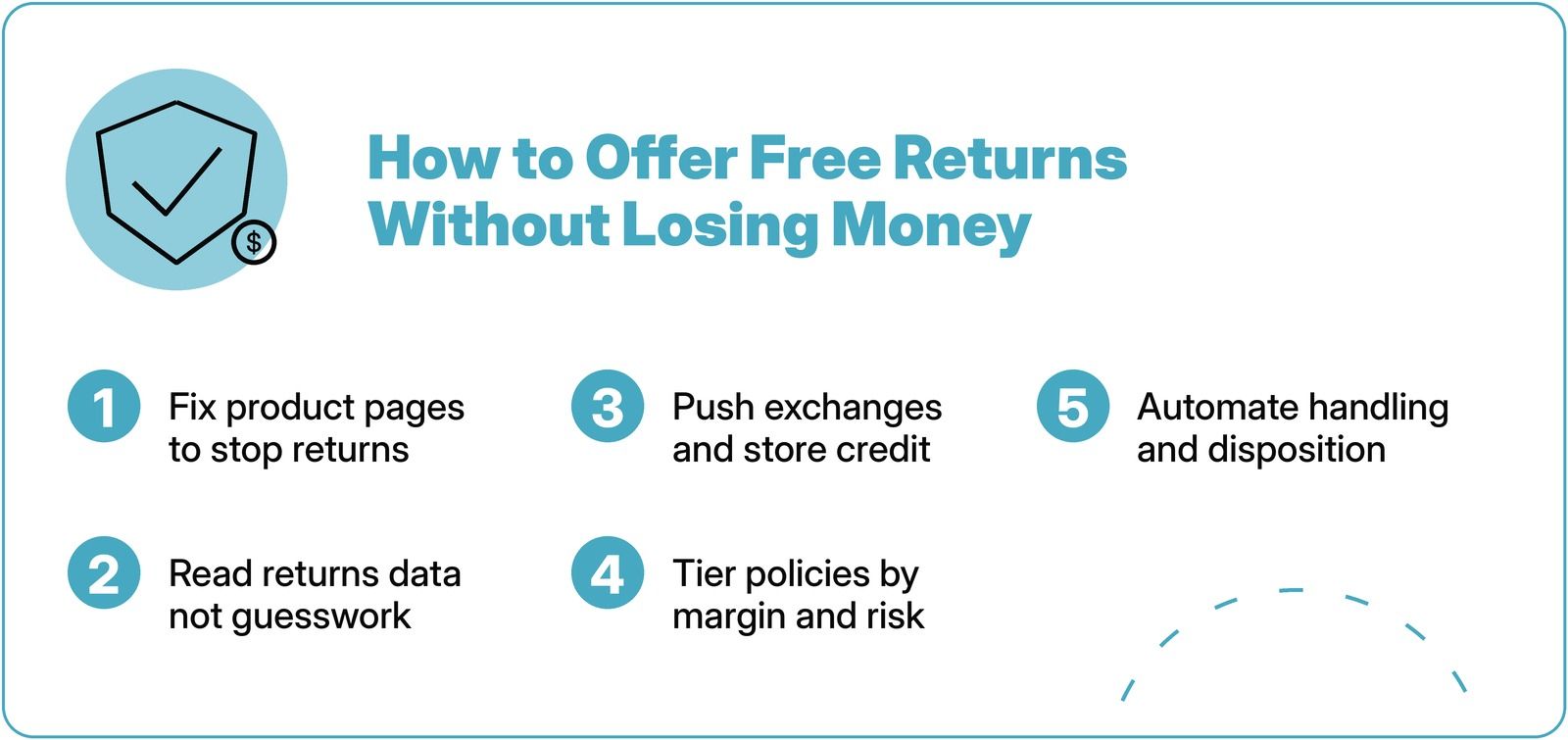
1. Cut Off Returns at The Source
A big chunk of online returns is due to products not matching the listing. Better product descriptions, cleaner product pages, correct sizing and honest photos mean less disappointment with online orders. Each return you stop is a total cost you avoid.
2. Read Your Returns Data Instead of Guessing
Returns data show you which product categories and return reasons are driving the bulk of your costs. When you can see one category is generating returns way above the rest, you can fix the listing, drop the product or adjust the policy around it.
3. Steer Toward Revenue Retention
Before giving a cash refund, offer store credit or an exchange. This keeps the money in your business and often keeps a customer who would have walked away. You can also tier the policy, free returns for loyal customers, or full price orders, lighter conditions on clearance or high risk categories. Terms can differ for each order.
4. Make Each Return Less Costly to Handle
Fast receiving, inspection and restocking that protect inventory accuracy improves your reverse logistics and reduces your per-return cost all around. That’s where a returns management platform such as ReverseLogix can help. Our platform turns scattered returns data into the visibility you need to make every one of these calls with real numbers, not guesswork.
Why Customers Want Free Returns
Customers value free returns for four reasons:
- Risk-Free Shopping: Free returns remove the fear of a poor purchase. Shoppers can buy knowing they can return an item that does not meet expectations.
- Enhanced Convenience: Returns are simpler when there is no extra cost.
- Increased Trust: Offering free returns signals a commitment to customer satisfaction, which builds trust in the brand.
- Competitive Expectations: Free returns are common enough that customers now expect them as standard.
How to Write a Free Returns Policy
A free returns policy has to fit both customer expectations and what your operation can support. Here is how to write a returns policy that works for customers and for your margin.
Offer Free Returns as a Loyalty Perk
One option is to offer free returns as a perk for loyal customers: members of a loyalty program or customers with a history of frequent purchases. This rewards loyalty, limits the cost of returns and gives others a reason to join the program.
Create a Free Shipping Threshold
Another option is a spending threshold: free returns on orders above a set value. Customers above the threshold get free returns, and the business gets a higher average order value. Set the threshold to suit your business model and customer base.
Make Free Returns Work for You With ReverseLogix
Free returns are never free, but they can be managed. ReverseLogix shows you what each return costs you in shipping, labor and lost product value. The platform automates smarter disposition to protect product value, keeps customers informed at every step, and reports on the full returns lifecycle so that leadership can see exactly where the money goes. Wondering what your free returns really cost? Get a demo today.
Frequently Asked Questions
Are free returns worth it for online retailers?
It depends on your margins and your return rates. Free returns lift conversion rate and customer loyalty, which can outweigh the cost for high-margin products. But for low-margin items in categories with high return volumes, the policy can erase the profit on every sale. The answer comes from your own per-return numbers, not the competitor’s banner.
How does return fraud inflate the cost of free returns?
Return fraud is one of the biggest hidden costs of a free return policy. Wardrobing, where buyers use an item and send it back, along with false damage claims and label abuse, all rise when returns carry no friction or fee. Because the customer pays nothing, the dishonest ones face no barrier, and the retailer absorbs every fraudulent return as pure loss.
What return policy works best for small online merchants?
Small online merchants usually can’t afford to match the biggest players on free returns across the board. A tiered return policy often works better: free returns on full-price orders or for repeat customers, and conditions such as return fees or store credit for high-risk categories. The aim is a return policy that protects margin without scaring off new customers.
How do free returns affect profit margins?
Free returns hit profit margins from two directions. They raise costs through return shipping, reverse logistics, and lost product value, and they invite higher return rates because buyers face no consequence for sending items back. A brand can grow revenue and still shrink margin if its free return policy drives a wave of returned goods it can’t resell at full price.
Get a Demo
Discover how you can jump-start your returns management efforts with ReverseLogix.