Why Returns Forecasting is the Missing Link in Demand Planning

In 2025, demand planning will never be complete without a robust returns forecasting structure. However, retailers and manufacturers often make the mistake of believing that just because they were able to set up a sales forecast and pipeline, the demand planning process is complete. But planning that focuses solely on sales overlooks the potential product returns and their impact on the supply chain and finances.
Product returns are not side events; they are a major stream of goods that reshapes future demand. Without returns forecasting, the demand planning process is often misleading because returns alter inventory positions, reorder schedules, and warehouse needs. Yet most planning models continue to treat returns as random noise.
But why are returns more predictable than many assume, and why does failing to account for them create blind spots in supply chain management?
The Blind Spot in Traditional Demand Planning
Traditional planning looks forward by projecting sales into future demand. It uses historical sales, point of sale systems, trade promotion management, and market trends to build a forecast. The approach creates a forward-only view, which is a problem because returns alter those numbers in real-time.
If planners forecast 100,000 units of demand and the retailer actually sells them, but 20% of these are returned, the true demand is 80,000. Without incorporating returns data, retailers are forced to carry inflated stock and tie up inventory (including raw materials), which leads to higher holding costs and wasted resources.
Ignoring returns also reduces supply chain visibility. Demand planners will struggle to project future demand when they cannot predict how much stock will flow back into the reverse logistics operations. These blind spots are more significant in categories like apparel and electronics, where return rates are higher than average.
Why Returns Are Predictable, Not Random
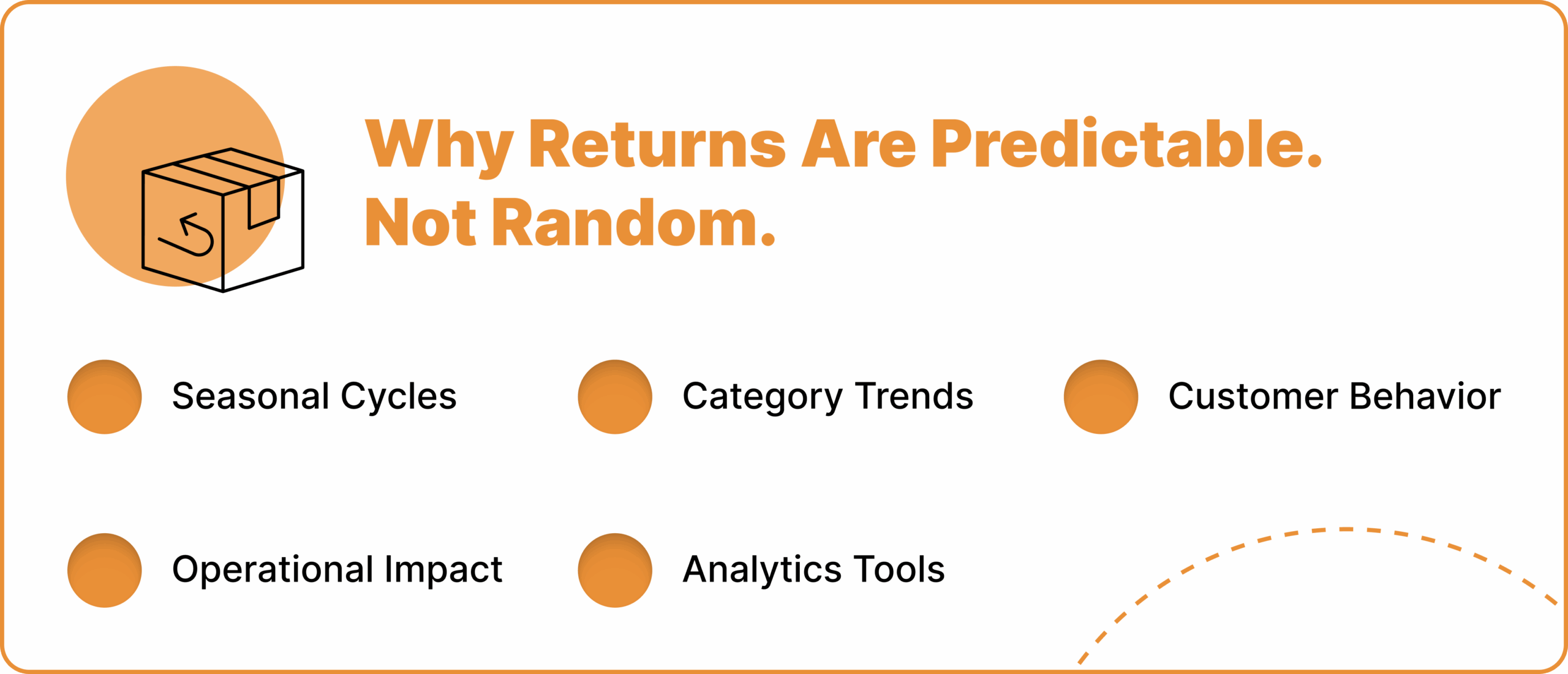
Returns are not unpredictable. The patterns are usually clear and repeatable. And treating them as though they are misses a major opportunity to sharpen the demand forecasting process. Here is why:
1. Seasonal Cycles
Retailers and manufacturers have come to expect a surge of product returns after the holiday season. For example, in many markets and depending on the product, return volumes rise up to 20–30% higher than baseline during January, and these peaks can be forecast with the same confidence as holiday sales spikes.
2. Category Trends
Fashion, footwear, and electronics have consistent return rates. A study in the Journal of Consumer Research shows that online apparel can reach 30–40% returns, while in-store purchases are closer to 10%. When a category consistently follows this pattern, it is irresponsible not to forecast it.
3. Customer Behavior
Consumer behavior adds another layer of predictability. For example, practices like bracketing (buying multiple sizes or colors to return most later) have become common in online shopping. Retail therapy habits also drive predictable overbuying. The good news is that these patterns can be measured through data collection and integrated into models that project future demand.
4. Operational Impact
When planners assume every sale is final, they miscalculate the burden on the reverse supply chain. A warehouse may expect to ship 50,000 items, so the manufacturer may reorder based on that figure. If 15,000 come back, the business faces bloated inventory and costly markdowns. Simple returns forecasting can prevent these errors.
5. Analytics Tools
Many companies already have all the data they need to make accurate decisions. Historical sales, return data, and reverse logistics processes contain key signals. But analyzing it all and then making a correct decision can be cumbersome. However, by leveraging data analysis, statistical forecast models, and machine learning, companies can predict future performance with accuracy.
How Returns Forecasting Redefines Demand Planning Accuracy
Returns forecasting changes the definition of accuracy in the demand planning process and shifts the focus from gross demand to net demand, which is what matters for financial performance and inventory management.
1. Inventory Alignment
Without returns forecasting, retailers end up buying more than they need. With it, they avoid excess inventory and free cash tied up in more stock than necessary. This way, you can improve cost control and efficiency gains.
2. Replenishment Precision
Forecasting return flows means planners can adjust purchase orders. If 20,000 jackets are likely to come back, replenishment orders can be cut back by the same amount. That keeps the balance between demand shifts and future supply.
3. Warehouse Management
Returns are inbound stock that takes up real space. Forecasting allows companies to allocate resources, staff, and storage in advance. This creates a smoother warehouse management system and avoids bottlenecks.
4. Financial Stability
Accurate forecasts protect financial performance. They reduce lost sales from stockouts and reduce waste from overstocks. Returns forecasting strengthens operational planning by tying cash flow to real demand, not inflated estimates.
5. Supply Chain Visibility
When returns forecasting is merged with forward sales forecasts, the supply chain gains a single, unified view of inventory. This helps demand planners react to market shifts with accurate data. It also supports product portfolio management by showing which items create the highest reverse flows.
Why Returns Forecasting is Now Non-Negotiable
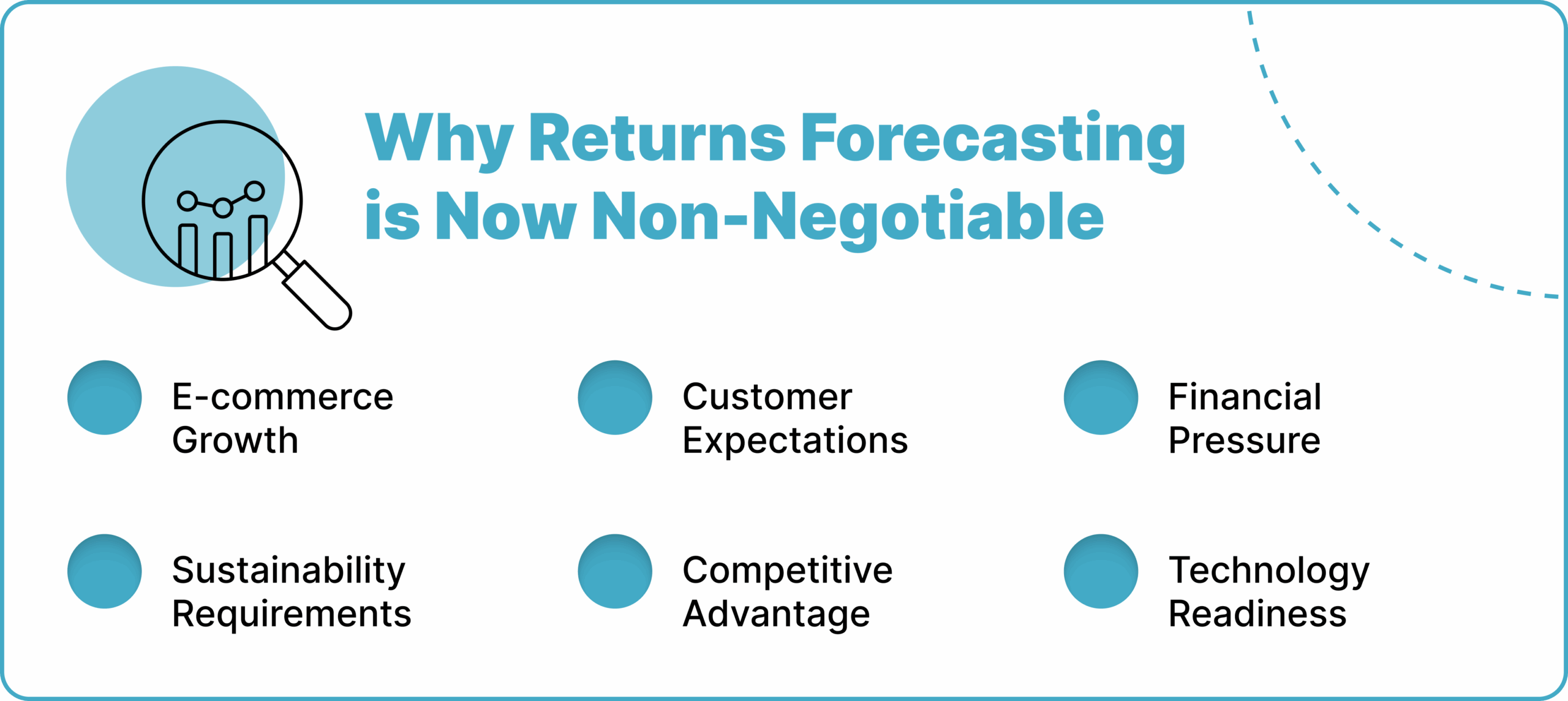
The market has changed, and returns forecasting is no longer optional. Several forces make it necessary for modern supply chain operations.
1. E-commerce Growth
Online orders have return rates as high as 30%. As digital sales continue to expand, so do reverse logistics processes. And ignoring this reality means ignoring a major portion of customer demand.
2. Customer Expectations
Flexible return policies have trained customers to buy freely. They expect returns to be simple, and they act accordingly. Retailers who fail to plan for this will misjudge demand and disappoint customers. As Professor Dale Rogers from Arizona State University explained, “Returns are now part of the customer experience, not the exception.”
3. Financial Pressure
Shipping fees, labor shortages, and supply chain disruptions have increased the cost of managing returns. Companies that forecast returns can reduce waste, allocate resources better, and protect margins. Those who ignore returns data will likely see profits eroded by surprise volumes.
4. Sustainability Requirements
Returns add emissions, packaging waste, and extra transport miles. But when customers and regulators are demanding responsible action, sustainable practices are a must. And planning for returns allows companies to design reverse logistics operations that improve customer satisfaction and reduce environmental damage.
5. Competitive Advantage
Retailers who apply returns forecasting will achieve sharper demand forecasts, more accurate data, and stronger supply chain visibility. This delivers a competitive advantage in markets where margins are thin and demand shifts happen fast.
6. Technology Readiness
Advanced analytics, real-time data, and demand planning software now make returns forecasting practical. Companies can integrate return data into existing supply chain management systems, creating accurate forecasts that fit with cross-functional process planning.
How ReverseLogix Transforms Your Returns Forecasting
ReverseLogix is built with meaningful metrics and game-changing insights in every module. With end-to-end returns management and best-in-breed tracking and analytics, ReverseLogix is the returns forecasting solution that will deliver accurate demand planning that transforms the sales process.
Gain total visibility across the entire returns journey and optimize performance to stay competitive and increase your edge in real-time. Operationalize your data to make it usable and understandable. Access customized reporting based on departments, user roles, or locations so that distributed teams can always stay in sync. Put ReverseLogix in your hands and unlock more value from every return.
Frequently Asked Questions
Returns forecasting adds accuracy to the demand planning process by including return data alongside sales forecasts. Traditional demand forecasting projects forward sales, but demand planners need to know what portion of that demand will come back. When planners integrate returns, they get accurate forecasts of net demand, which supports operational planning, cost control, and efficiency gains across supply chain operations.
Returns forecasting depends on data analytics to turn raw return data into predictive models. By analyzing historical data from point of sale systems, warehouse management system logs, and reverse logistics processes, companies can project future demand and future performance with accuracy. Advanced analytics and machine learning can identify demand shifts and consumer behavior patterns that signal higher return risk, giving companies the ability to react with real time data rather than outdated estimates.
Inventory management without returns forecasting creates blind spots. If planners ignore reverse logistics operations, they often carry excess inventory, tie up raw materials, and increase waste. Forecasting returns allows businesses to align inventory levels with customer demand, reduce waste, and avoid lost sales from stockouts. It also supports trade promotion management by showing how promotions impact both sales and expected returns, creating a more accurate picture of future demand.
Modern demand planning software and analytics tools make it easier to integrate returns forecasting into the wider supply chain management process. These systems pull in accurate data from multiple sources, analyze historical data, and produce a statistical forecast that reflects both sales and returns. By linking demand planning software with reverse logistics processes, businesses can improve customer satisfaction, strengthen financial performance, and achieve efficiency gains.
Companies that build returns forecasting into demand planning see expected benefits across every stage of supply chain operations:
Increased customer satisfaction by meeting customer expectations with accurate stock levels.
Cost control by reducing excess inventory and waste.
Improved product portfolio management through insights into which products create the heaviest return flows.
Heightened company efficiency by aligning reverse logistics processes with forward demand.
Competitive advantage through more accurate forecasts, stronger financial performance, and sharper response to market shifts and economic trends.
Get a Demo
Discover how you can jump-start your returns management efforts with ReverseLogix.