What Does an Asset Recovery Plan for Returns Look Like?

Asset recovery is not new, but many manufacturers still view returns as a loss and treat the whole process as waste. Others treat returns as inventory, and that is the shift business leaders need to make. For every three or four products moving forward through your supply chain, one comes back.
When these returned goods, whether unused, damaged, unwanted, or aging, are overlooked, mishandled, or discarded, the result is lost value, lost money and missed opportunity. Done correctly, asset recovery turns reverse logistics into a recovery channel.
This article makes the case for investing in asset recovery programs, particularly in sectors such as electronics and industrial equipment, where each return remains valuable.
Asset Recovery Is Value, Not Waste
A UPS-commissioned study notes that high-tech companies, for example, recover on average 28% of the initial value of returned assets. The losses are significant when asset recovery is ineffective. Asset recovery is the process of getting the most value from returned items.
Typically, it includes refurbishing, reselling, repairing, or reusing equipment, tools, or electronics that would otherwise be scrapped. The goal is to recover value, not just recycle or dispose of materials. That changes how manufacturers and retailers look at a returned product.
According to the U.S. Reverse Logistics Association, companies lose billions annually by failing to recover usable assets in the United States alone. A recovered product saves landfill space, reduces the need for new materials for replacements, lowers environmental impact, and avoids downtime.
Reverse Logistics Makes Asset Recovery Possible
Asset recovery depends on strong reverse logistics, because companies cannot recover what they cannot track. If your team doesn’t know where an item is, how it’s moving, what condition it’s in, or what it can be used for, they can’t extract residual value.
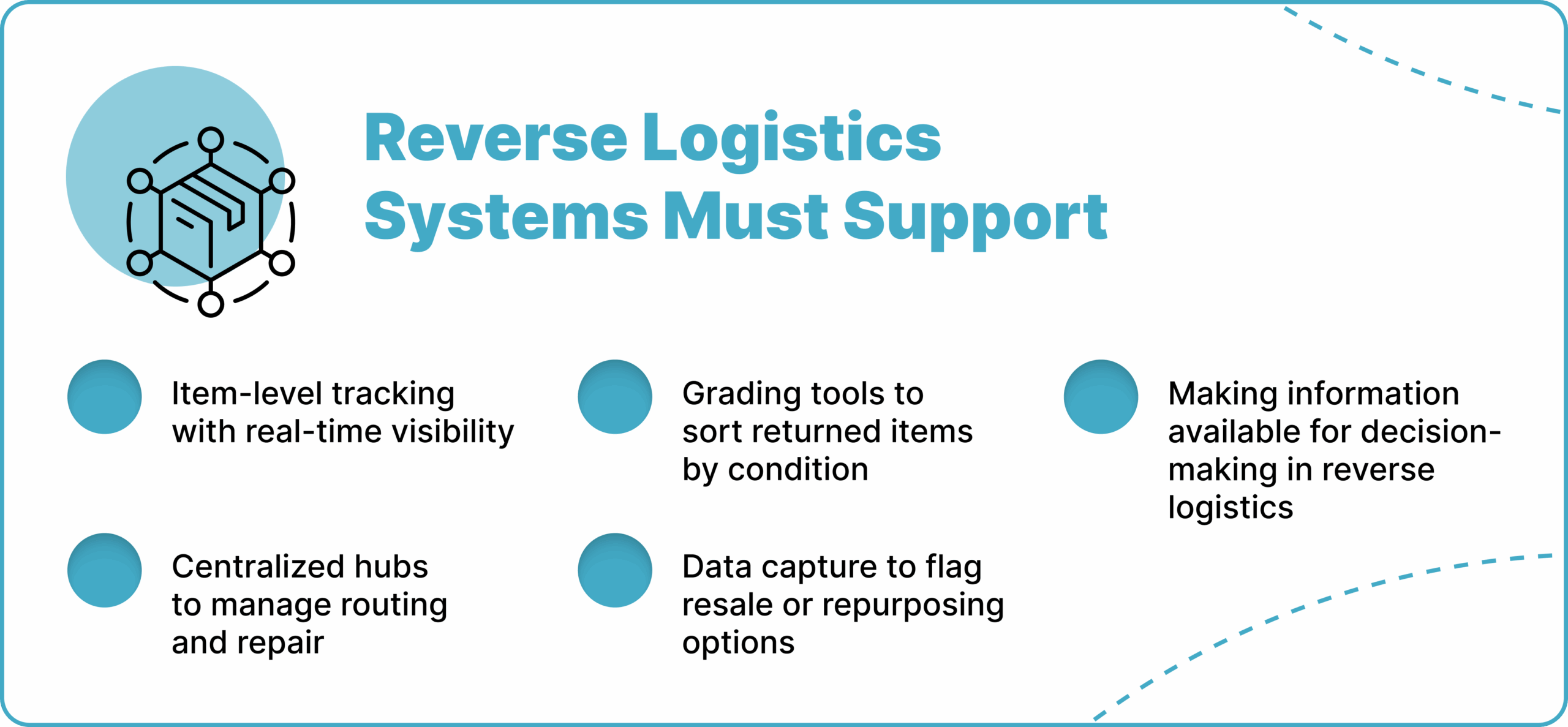
Reverse logistics systems must support:
- Item-level tracking with real-time visibility
- Centralized hubs to manage routing and repair
- Grading tools to sort returned items by condition
- Data capture to flag resale or repurposing options
For example, consider a medical device company that builds a centralized triage center to handle equipment returns. It can reduce waste and recover resale-ready parts. That success begins with a system that makes every return visible, from intake to redeployment.
Where Asset Recovery Pays Off
The business case for asset recovery starts with numbers. Your CFO needs cost savings, new revenue, or fewer write-offs. Asset recovery can deliver those.
Take an electronics distributor that rebuilds its asset recovery system. With better data on return condition and faster grading, it can reduce annual write-offs within a year.
Return categories with high asset value:
- Channel returns from overstock or failed delivery
- End-of-life units that are no longer sold but still usable
- Warranty returns that are functional or easily repaired
- Internal equipment that’s out of cycle but in demand elsewhere
ROI Levers:
- Tax credits from donations or reuses
- Refurbished resale to secondary markets
- Internal redeployment to reduce new buys
- Spare parts harvesting to support service contracts
- Avoided disposal costs (landfill fees, transport, regulatory fines)
ROI in Electronics and Equipment Industries
Industries that rely on durable goods gain the most from asset recovery.
Electronics (Consumer and Enterprise)
Electronics have short product cycles. But a “returned” tablet may still have market value.
For instance, a PC brand that builds internal grading systems for returned laptops can capture more resale value per device on average by integrating secure data wiping and repair, which boosts customer trust and recovery rate.
Returned electronics often sit in warehouses, but those products lose value by the hour. With the right process, the company can recover fast, repackage, and resell with a margin.
Industrial Equipment
Tool rental and construction brands face high asset churn. Many still discard used gear without review. A manufacturer that launches a refurbishment program for field diagnostics tools, for example, can recover more of each asset’s original cost.
Spare parts from failed units can support regional service teams. The key is repair tracking: data systems that let technicians flag components for reuse, without paper forms.
Telecom and IT
Telecom companies often replace routers and modems after contract expiration. Rerouting these devices to certified wipe-and-resell centers saves money and cuts e-waste disposal costs.
Internal reuse is another benefit. Recovered units can go to small-business customers, saving the cost of new shipments.
How to Build the Business Case for Asset Recovery
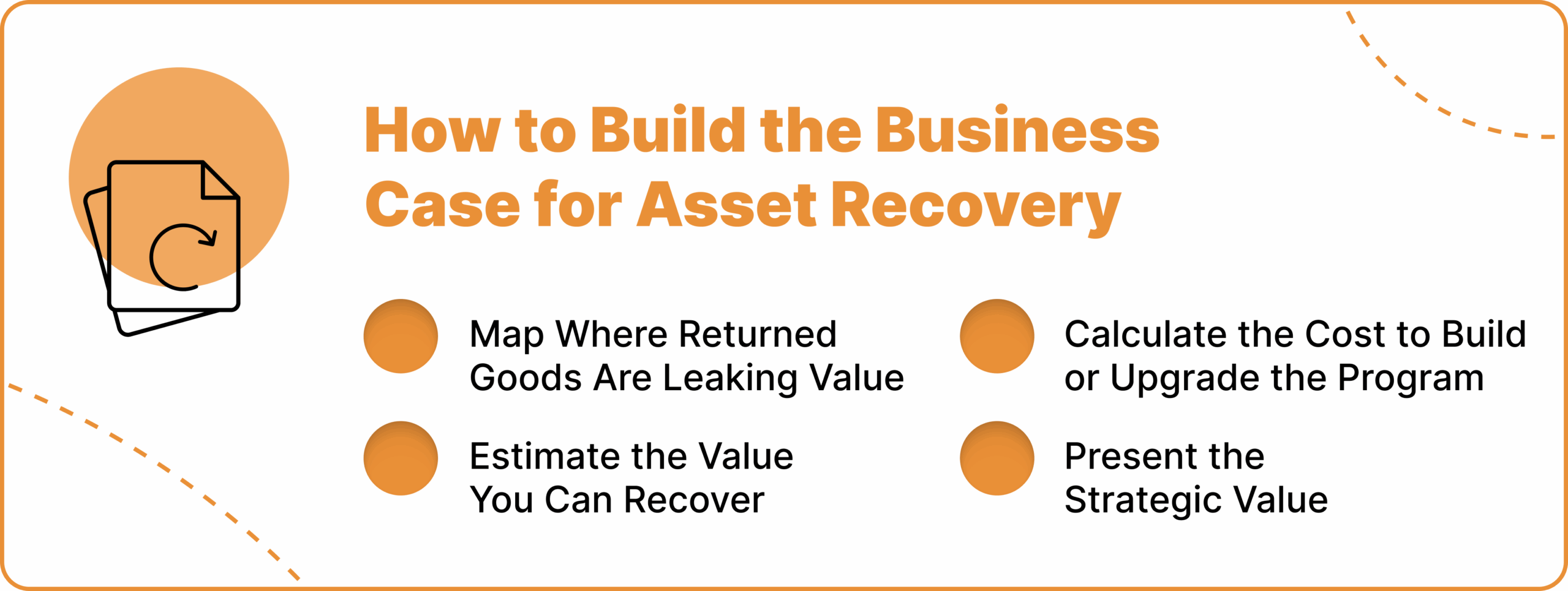
Asset recovery succeeds on metrics, not goals. To win buy-in from finance or operations, you need a clear plan.
The steps below show how to measure and pitch the investment, including identifying return types, value levers, and potential cost savings.
1. Map Where Returned Goods Are Leaking Value
- Identify return categories: warranty, undelivered, damaged
- Audit time to recovery, processing cost, and end disposition
- Track how many items go to the landfill or long-term storage
2. Estimate the Value You Can Recover
- Benchmark resale or reuse value per product type
- Include disposal avoidance, tax write-offs, and internal redeployment
- Show what portion of your supply chain can be served with recovered assets
3. Calculate the Cost to Build or Upgrade the Program
- Identify technology needs (e.g., ReverseLogix)
- Estimate the break-even point and payback time
- Include staffing, training, software, and repair tools
4. Present the Strategic Value
- Highlight sustainability goals, but tie them to cost
- Link the recovery program to inventory agility and customer satisfaction
- Show how asset recovery reduces the need for new materials and lowers the risk of delay
Every business has products that could be reused. With better tools and better tracking, the return can be just as valuable as the first sale.
Why You Can’t Treat Asset Recovery Like a Side Project
Asset recovery must be part of your main supply chain. Too many companies put it under customer service or warranty, but returned goods need the same speed, data, and control as outbound shipments.
Returns matter because:
- They cost money when ignored
- They help manage inventory when reused
- They deliver environmental gains without adding cost
- They shorten cycle time for replacements and field repairs
The most effective asset recovery programs work because they are built into the operations process.
Five Steps to Build an Asset Recovery Plan
Step 1: Evaluate Return Streams to Identify Recovery Opportunities
Consider a global electronics brand that disposes of every returned product without checking whether it can be resold or what it is worth. Many returned electronics have only a minor fault, so that approach costs the company a significant amount of money.
Asset recovery starts with knowing what comes back, and what it’s worth.
Before you build workflows, you need visibility. Identify the types of returned goods your company processes. These may include:
- Products damaged in delivery
- Goods returned via online returns
- Items rejected by the end consumer
- Assets reaching the end of life after lease or warranty periods
Now sort them into return reasons and recovery types. Track which products still hold valuable materials, resale potential, or parts that can be reused. Tools such as product scanning, warranty validation, and return reason codes can help optimize reverse logistics operations and eliminate guesswork. The goal is to create a clear map of where recovery value lives across your returned product lifecycle.
Step 2: Create a Fast, Rules-Based Triage System
Asset recovery depends on speed and structure. Returned goods lose value quickly, and each delay cuts resale margins or limits part recovery. A structured triage system is the core of any recovery program.
Segment returned products into clear categories:
- Scrap
- Recyclable
- Repairable
- Resale-ready
- Refurbishable
- Parts harvesting
This categorization should happen fast, ideally at the return hub or depot. Use automated systems that capture data in real time, track condition, and recommend disposition routes based on defined rules. Today, artificial intelligence and image-based grading tools can flag cosmetic flaws, assess damage, and streamline triage.
With AI, a consumer electronics distributor can cut triage time by 60%, recover more items, and reduce unnecessary recycling. Make sure your triage team uses consistent criteria and has access to product-level history and financial data.
Step 3: Build Recovery Pathways
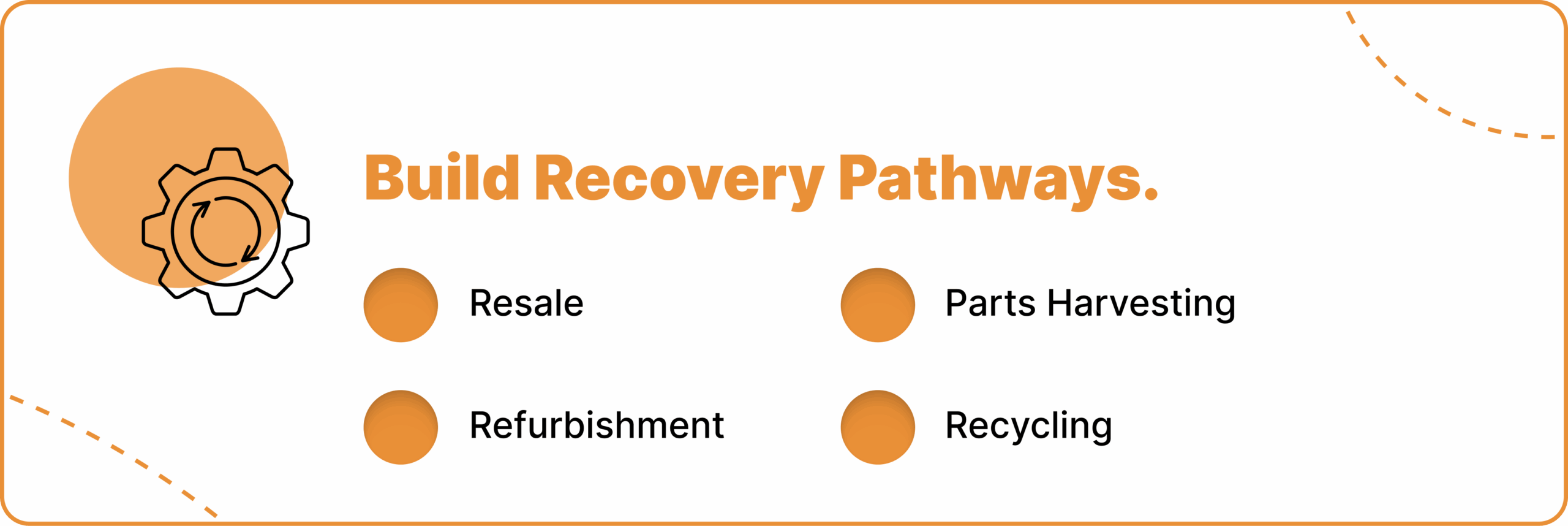
Returned items need somewhere to go. Asset recovery works when products move quickly into their next best use, so manufacturers and retailers must define and build recovery pathways tailored to each product category.
Here are the four most common paths:
1. Resale
Sell working or like-new items through secondary markets, outlet stores, or B2B sales channels. Add cleaned-up inventory to existing online platforms using a separate product page. Store credit can also be offered for returned items with high residual value.
2. Refurbishment
Repair or refresh damaged goods. This may include part replacement, firmware updates, or cosmetic restoration. Use certified repair centers or build internal teams for high-volume product lines.
3. Parts Harvesting
Strip returned assets for usable components. This helps reduce demand for raw materials, lower carbon emissions, and fill gaps in field service or warranty fulfillment.
4. Recycling
Send unusable items to qualified recycling programs. Collaborate with partners that comply with environmental regulations and safely recover materials.
Each path should have service-level agreements, cycle time targets, and cost thresholds in place. The best recovery teams use data analytics to compare outcomes and continuously improve. Resale might bring in higher value today, but refurbishment may scale better over time.
Step 4: Integrate Asset Recovery Into Your Supply Chain and Operations
To drive ROI, the reverse logistics process must operate as efficiently as outbound logistics. That means recovery programs must connect with:
- Warehouse management systems
- Inventory management platforms
- Finance, tax, and compliance tools
- Customer service and returns portals
Integration enables real-time decision-making, shorter processing times, and tighter cost control. It also supports value chain optimization by ensuring that nothing sits idle or moves without purpose.
For instance, a tool manufacturer will see gains if it builds recovery into its inbound returns and warehouse systems. Recovered assets can be directly integrated into demand planning, saving millions in procurement costs and reducing transportation expenses associated with unnecessary orders.
Link your recovery program to operations KPIs like:
- Time-to-resale
- Reuse rate by volume
- Reduction in landfill waste
- Recovery rate per product family
Tying these metrics to operations, finance, and sustainability efforts helps get broad leadership support.
Step 5: Measure What Works and Improve What Doesn’t
Recovery must be managed with the same discipline as production or delivery.
Set clear key performance indicators (KPIs) from day one. Review performance monthly. Adjust based on results.
Track these core metrics:
- Asset recovery rate
- Cost per unit triaged
- Average resale margin
- Value recovered per return
- Time from return to resolution
- Reduction in total disposal volume
- Impact on brand reputation and customer experience
Use this data to flag poor-performing product lines, identify underused recovery paths, and reallocate resources. The goal is continuous improvement, not perfection on day one.
Recovery isn’t static. Consumer behavior changes, supply chains shift, and markets open and close.
Building flexibility into your process gives you a long-term advantage. Asset recovery should change with the business.
Treat Every Return as an Asset
Returned items are part of your value chain. Asset recovery reduces costs and makes the business more flexible, and it starts with treating returns as inventory.
Efficient repair management saves money and keeps customers satisfied. With the right system, you can resolve issues quickly and maximize the value of returned products. ReverseLogix is built for businesses handling electronics and high-tech products. Request a demo to see how ReverseLogix can improve your returns process and build customer loyalty.

Frequently Asked Questions
Q1. How can better packaging improve asset recovery in reverse logistics?
Sustainable packaging plays a major role in protecting returned products during reverse transit. Poor packaging leads to damage, which reduces the chance of value recovery. Companies that design reusable or modular packaging improve return condition, lower repair needs, and help maintain resale value. This is especially useful in equipment-heavy and electronics industries, where surface damage can cause a unit to fail inspection.
Q2. Can asset recovery be integrated with online returns and customer credit policies?
Yes. Leading retailers now connect online return portals with customer profiles and credit systems. This helps determine refund or store credit eligibility based on return condition and item resale potential. When built into the policy, this approach rewards behavior that supports sustainability, like sending back items with original packaging or within short return windows. It also helps the company assess recovery value faster.
Q3. What are the best practices to identify which materials or products are worth recovering?
The best starting point is to segment return reasons and sort by material type, age, and resale demand. Tools that scan serial numbers or component lists can flag which materials can be resold or repurposed. Some businesses use AI tools to determine future value based on item condition and market history. Prioritizing items with short refurbishment times and high resale prices can make the recovery process more efficient.
4. What steps should a company take to improve recovery after failed delivery or damaged returns?
When delivery fails or returned goods arrive damaged, a few key steps improve recovery:
Document the item’s condition with photos at arrival
Sort items by repair potential vs. recycling needs
Use automated triage tools to reduce human error
Follow documented practices for cleaning, repackaging, and routing
These steps help move items back into circulation or toward secondary markets. A strong recovery program ensures each failed delivery still holds measurable value for the company.
Get a Demo
Discover how you can jump-start your returns management efforts with ReverseLogix.