Building Stronger Supplier Relationships Through B2B Reverse Logistics

Summary
- Poor returns management damages supplier trust and delays credits.
- Streamlined B2B reverse logistics improves communication, accuracy, and contract compliance.
- Automation, visibility, and real-time data help reduce disputes and build lasting supplier partnerships.
- Platforms like ReverseLogix give companies the tools to track returns, support supplier needs, and protect business relationships.
Distributors often look to forward logistics to strengthen supplier partnerships while overlooking the impact their B2B reverse logistics has on trust, communication, and long-term reliability. In the modern freight environment where returns are now a main feature of the supply chain, sustaining that blind spot is costly. For instance, when returns are mishandled, whether due to late shipments, missing records, or damaged products, it’s the supplier relationship that suffers most.
Returns are not just a product issue. They’re a contract performance signal. And suppliers tend to remember business partners or distributors who return items on time, stick to the agreed terms, and create delays that ripple through operations. Modern B2B reverse logistics platforms address these weaknesses by building transparency, reducing risk, and helping both parties honor their commercial terms.
When reverse logistics is organized and visible, suppliers become partners—not adversaries, promoting effective supplier collaboration .
When Returns Break Trust
Poor returns management creates stress between supply chain partners. What seems like a small delay in one company’s process can feel like a broken promise to another. Distributors that fail to facilitate returned items with proper documentation, fail to meet return windows, or allow stock to sit idle risk more than just increased storage fees, because it can significantly impact their risk management. They weaken vendor relationships and introduce friction into future negotiations.
One large distributor recently cited poor reverse logistics as a major contributor to pricing disputes, negatively affecting customer satisfaction. Their procurement teams missed refund deadlines because their returns process lacked structure. Suppliers pushed back, refused credits, and flagged the buyer for noncompliance.
These problems are not rare in the current e-commerce climate. They stem from a lack of shared systems, poor visibility, and outdated manual processes. In the world of contract compliance, even small errors create long-term strain.
B2B Reverse Logistics as a Tool for Transparency and Trust
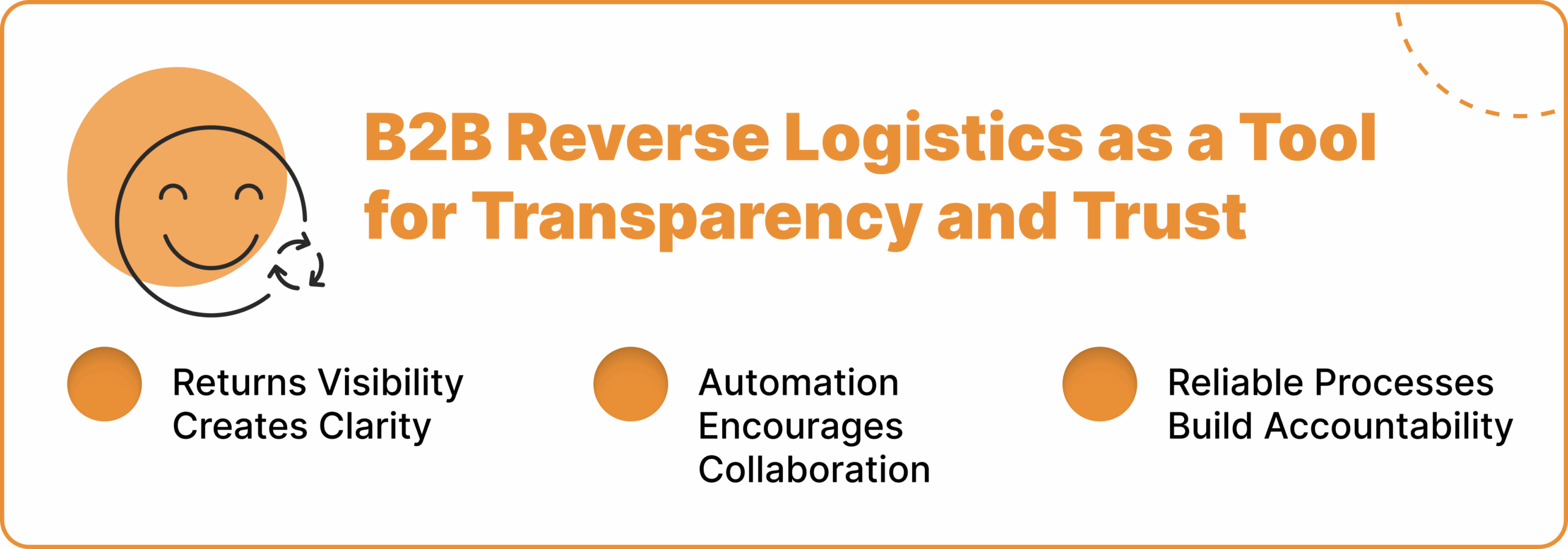
A structured B2B reverse logistics system does more than reduce costs—it supports cost savings and better supplier collaboration. When returns are handled quickly, accurately, and documented, partners respond with trust.
1. Returns Visibility Creates Clarity
When suppliers can track returns through shared portals or reports, uncertainty disappears. They know what’s being returned, when to expect it, and the condition of the products. Instead of relying on emails or phone calls, they use real-time data exchange, which prevents disputes and enables suppliers to plan their inventory and production levels more effectively to handle returns. When that visibility is present, it reduces warehouse strain, supports better returns forecasting, and minimizes costly disputes.
2. Reliable Processes Build Accountability
When the B2B reverse logistics is predictable, suppliers view their partners as organized and dependable. Consistency in return timing, packaging, and documentation shows respect for shared agreements. Some companies are even using RFID tags and scanning systems to track return progress and verify item conditions.
These systems reduce the risk of manual errors and reinforce accountability. For instance, a global distributor can see a significant decrease in return-related supplier complaints after standardizing return labels and packaging. But for that to happen, the message has to signal clearly that they care enough to be precise.
3. Automation Encourages Collaboration
Automation in reverse logistics reduces friction by flagging missing documents, automatically sending updates, and ensuring that parties adhere to agreed timelines. When all return activity is logged and accessible, communication improves across supply chain partners. Automated workflows enable faster approvals and fewer disputes, especially when returns are tied to warranty terms or recall programs.
As McKinsey & Company noted in a 2023 logistics report, “shared systems between suppliers and customers cut resolution times by 30% and reduced returns-related conflicts by half.”
The Business Case for Better Supplier Relationships Through Reverse Logistics
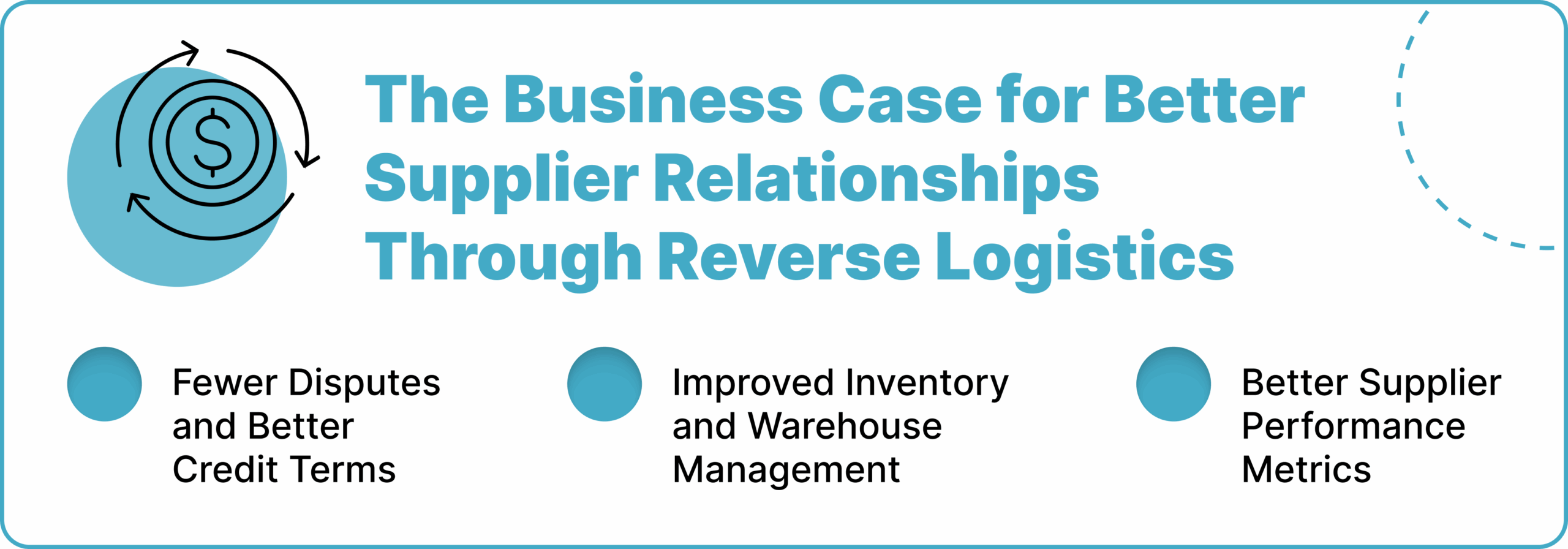
When reverse logistics is structured, supplier relationships become smoother, and the business sees gains that extend beyond the warehouse, which supports continuous improvement.
1. Fewer Disputes and Better Credit Terms
Suppliers are quicker to issue credits when returns are accurate and traceable. Clean documentation means fewer invoice mismatches and faster resolution. Procurement teams can negotiate better terms with suppliers they treat fairly. A pattern of return-related issues weakens negotiation power, while a record of clean returns builds credibility.
2. Improved Inventory and Warehouse Management
Returned products take up warehouse space and tie up inventory dollars. A system that tracks return status and conditions in real time helps reduce waste and speed up the return-to-stock process. When returned items are quickly inspected, processed, or redirected, the company gains warehouse space, saves on storage fees, and maintains balanced inventory levels.
3. Better Supplier Performance Metrics
Modern reverse logistics tools give procurement and inventory teams clearer data on supplier responsiveness and contract compliance. They track how often suppliers honor credit terms, how quickly they process returns, and how well they respond to documentation requirements.
This creates a feedback loop where suppliers improve performance and buyers stay ahead of risk.
ReverseLogix: Enabling Returns-Based Supplier Collaboration
ReverseLogix gives businesses a centralized returns platform that supports supplier trust and contract accuracy. The platform simplifies returns for both internal users and supplier partners through automation, clear documentation, and shared data.
Features on the platform that make this possible include:
- Business intelligence tracking
- Automated return approval and scheduling
- Integration with ERP and warehouse systems
- Audit trails that support contract compliance reviews
- Shared return status dashboards with supplier visibility
When returns are clean and consistent, suppliers respond with loyalty and speed. That kind of performance builds long-term advantage and improves customer satisfaction. For instance, a North American electronics distributor leveraging the platform can cut supplier return disputes by a significant margin in one year. And it wouldn’t be because of better negotiation. It will be because of a better overall process.
Returns Are the Relationship Stress Test
Reverse logistics reveals the health of a supplier relationship. When things go smoothly, it shows that both companies share values: speed, accuracy, and transparency. When operational efficiency is poor, it highlights where trust breaks down.
Companies that treat returns like a side task risk more than just delays, potentially attracting regulatory scrutiny. They weaken vendor partnerships that are vital to long-term performance and cost control. B2B reverse logistics is no longer just a process—it’s a strategy for building lasting business relationships.
Frequently Asked Questions
B2B reverse logistics affects supplier relationships by influencing trust, timing, and contract accuracy. When returns are processed late or incorrectly, suppliers lose confidence. A structured reverse logistics system ensures shared expectations and fewer disputes.
Return visibility helps suppliers plan inventory, issue credits faster, and reduce misunderstandings. With real-time updates on returned items, suppliers can track shipments, check item conditions, and respond to issues without guesswork.
Automation ensures return requests are processed quickly and accurately. It reduces manual errors, delivers real-time updates, and helps buyers and suppliers adhere to agreed timelines. This supports open communication and fewer delays.
Reverse logistics systems record every step of a return, from approvals to receipts. This helps procurement teams confirm that returns comply with the terms of supplier contracts. It also provides audit trails during compliance reviews.
Tools like ReverseLogix improve supplier collaboration by automating returns, tracking item status, and sharing real-time data. These features help both sides manage returns faster, reduce risk, and build more reliable business relationships.
Get a Demo
Discover how you can jump-start your returns management efforts with ReverseLogix.