E-commerce Return Policies That Generate Revenue

An e-commerce return policy isn’t merely a formality. It can actually be one of the best ways to increase conversions and keep customers coming back. A good policy establishes clarity and confidence, which is why 67% of shoppers check a store’s return page before buying. That behavior signals that shoppers want simple, easy return policies.
Below, we’ll show you how to treat your return policy like a revenue lever rather than a cost center. When it’s written clearly and placed in the appropriate spots, it gives shoppers peace of mind and reduces abandoned carts, as well as protects your margins. You’ll also learn what to include, what to avoid, and how to make your returns process work for you.
Key Takeaways:
- 67% of shoppers check the return policy before buying, so you make sure yours instills confidence.
- Longer return windows and plain language encourage conversions without raising return rates.
- Predictive analytics and AR tools can lower return rates by 15-30%.
- Real-world examples show that generous policies don’t have to hurt your bottom line.
- Return management software makes it easier to scale your return policy as your business grows.
What is an E-commerce Return Policy?
An ecommerce return policy is a set of clear rules that explain how customers can return or exchange items that they purchased online. It typically covers which products qualify, how long customers have to return them, and how refunds or exchanges are handled. A retail return policy also explains who pays for shipping and what condition items must be in. The goal is to set the proper expectations and make the process easy to follow for everyone.
The 7 Essential Components of a Modern Refund Policy
A modern refund policy should be transparent, fair, and easy to understand. At a minimum, it needs to include:
- Return Window: Most online stores offer 30 to 90 days. Short windows can lead to hesitation, while longer ones have been shown to increase purchase intent by up to 45%.
- Item Condition: Explain whether items must be unused, in original packaging, or with tags attached.
- Refund Method: Will you offer store credit, full refunds, or exchanges? Make it clear what to expect.
- Shipping Costs: Let customers know who pays for return shipping and if restocking fees apply.
- Exceptions: Call out any non-returnable items, such as final sale products or gift cards.
- Return Process: Include steps for initiating a return, such as using a portal or contacting support.
- Refund Timeline: Share how long it takes to receive the refund after the return is approved.
All of these elements work together to create a refund policy that makes sense for you and the customer.
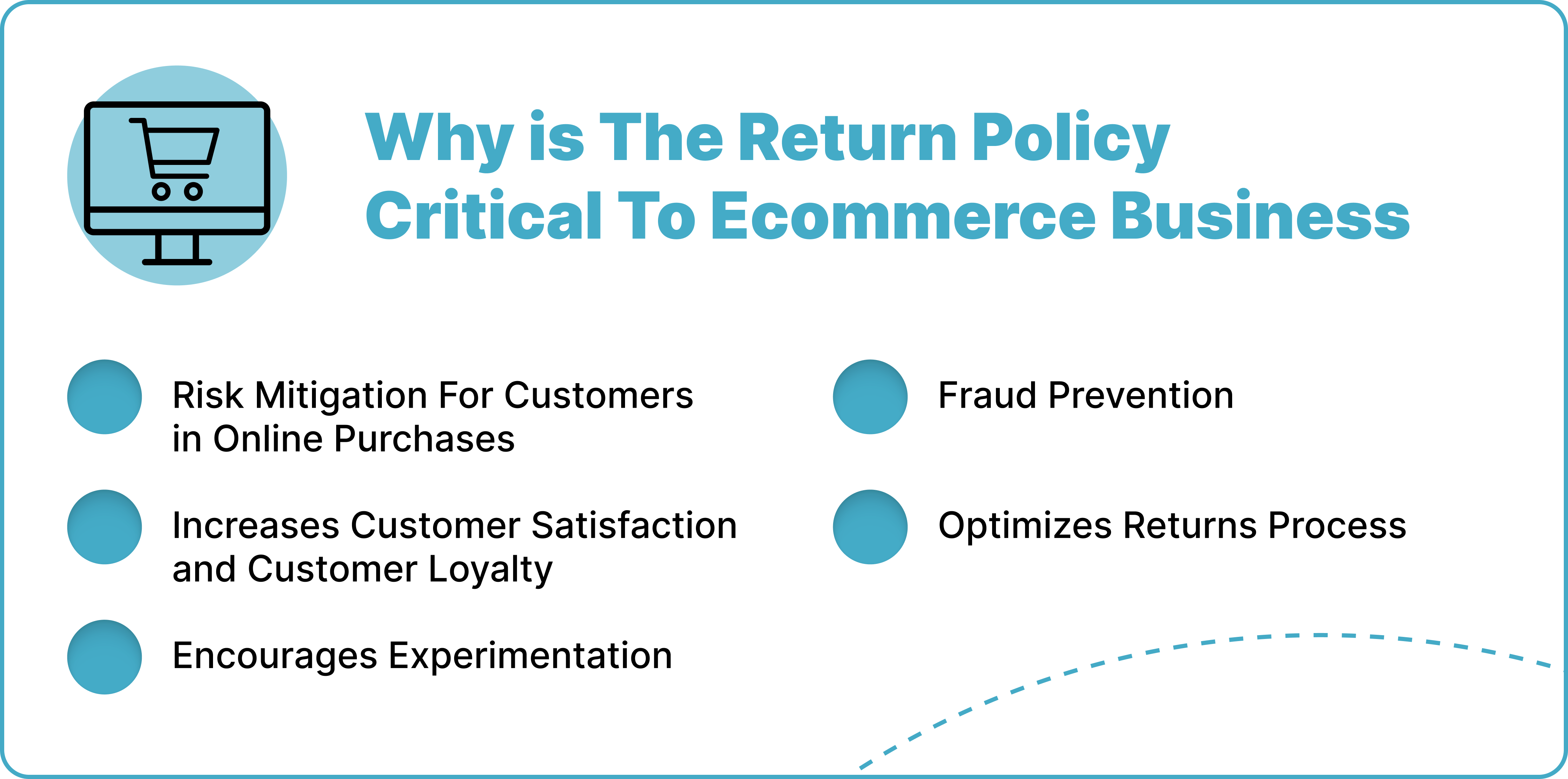
Why Your E-commerce Return Policy is Critical for Business Growth
A clear, well-placed ecommerce return policy explains how to send something back, as well as gives shoppers the confidence to buy and a reason to return to your store later. Below, we’ll break down how the proper policy can increase conversions, set you apart from competitors, and protect your bottom line.
Reducing Purchase Anxiety to Increase Conversions
Shoppers often hesitate when they’re not sure if they can return an item. A generous return policy eliminates that worry by acting as a simple risk reversal. This taps into the “endowment effect,” a feeling that makes customers more likely to keep something once it’s in their hands.
Clarity is also essential. A confusing or hard-to-find policy leads to more questions and more abandoned carts. A clear return policy can reduce customer service inquiries by up to 40%, freeing up your team and keeping customers moving through checkout.Furthermore, the connection to repeat business is proven, as 92% of consumers say they’ll buy again if the returns process is easy.
| Related Article: What a Great Customer Experience Feels Like During Returns A smooth returns experience plays a significant role in how customers remember your brand. This article breaks down what customers expect during the returns process and how minor improvements can lead to higher satisfaction and loyalty. It’s a useful follow-up if you’re looking to connect return policies directly to customer experience outcomes. |
Strategic Return Policies as Competitive Differentiator
Many retailers stick with the default 30-day return policy. However, brands that extend their windows to 60 or 90 days often see better results. These longer windows are seen as a sign of trust, and they also encourage customers to spend more.
One example is Patagonia’s “Ironclad Guarantee,” which lets customers return or exchange almost anything, at any time. It signals that the brand stands behind its products. This kind of approach turns the return policy into a brand asset, particularly for those that compete on quality or value.
Protecting Profit Margins by Reducing Return Fraud
Return fraud costs U.S. retailers an estimated $101 billion each year. Common examples include “wardrobing,” where customers buy something, use it, and return it as new.
To reduce this, return policies need to include clear rules around item condition and proof of purchase. Many businesses also use data to spot patterns, like repeat returns from the same customer or items frequently flagged for abuse.
Structured policies and precise data reduce fraud while still making returns fair for everyone.
Common Return Policy Mistakes that Cost You Sales
Even a generous return policy can backfire if it’s hard to find or difficult to understand. One common mistake is hiding the return policy in the website footer or checkout fine print. Shoppers want to see it early, ideally on product pages, so they know what to expect before buying.
Another mistake is using legal terms that confuse people. If your policy feels too strict or unclear, customers might leave instead of asking questions.“Final sale” language can also push shoppers away, especially if you don’t explain why the item isn’t returnable. And if you’re not looking at return rate data when you plan your inventory, you’re missing a chance to make better product decisions.
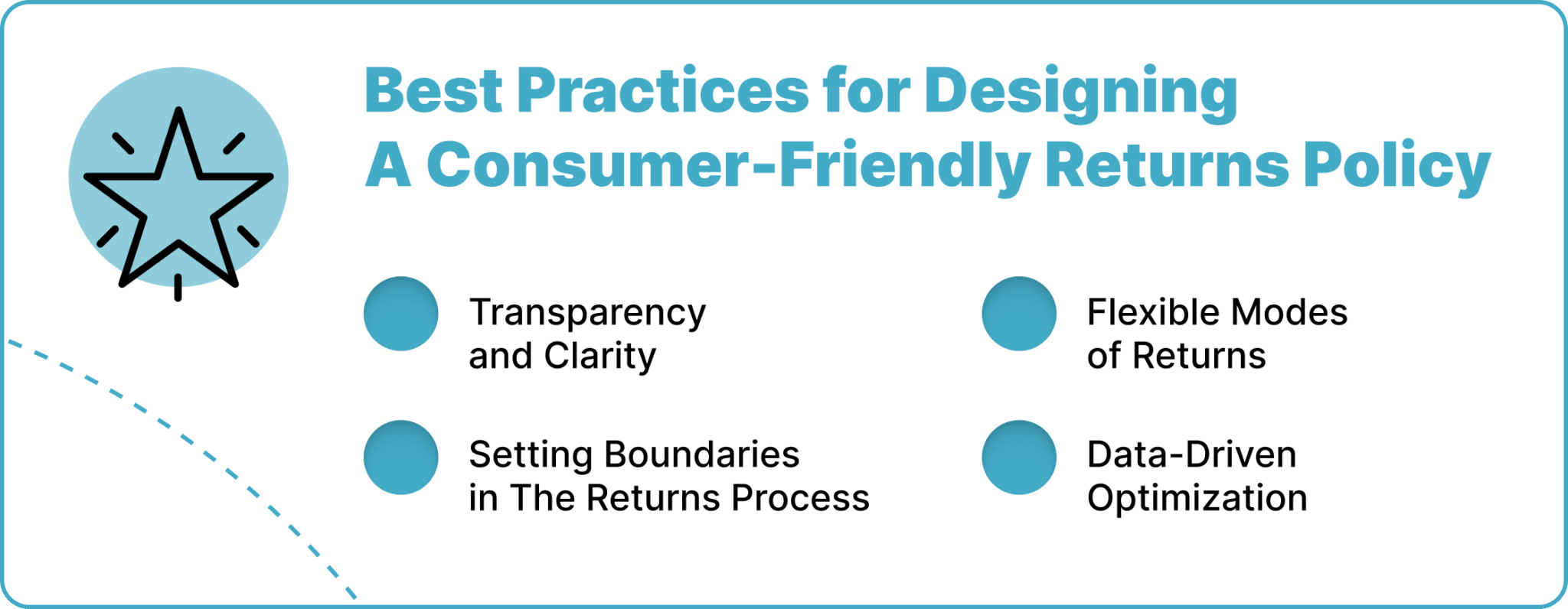
How to Write an Effective E-commerce Return Policy: A Step-by-Step Framework
Writing a clear, fair e-commerce return policy doesn’t have to be complicated. These steps will ensure you create a policy that sets expectations, encourages purchases, and keeps customers coming back. Each part focuses on making your return terms easy to understand and easy to follow.
Step 1: Benchmark Your Industry and Competitors
Begin by looking at what’s common in your product category. For example, fashion brands often offer free return shipping, while electronics retailers might charge restocking fees.
The average ecommerce return rate falls between 20% and 30%, but it varies widely by category. Check a few competitor websites, particularly those using Shopify, and take notes on their return windows, shipping policies, and tone. Use this to find a starting point that makes sense for you.
Step 2: Define Your Return Window Based on Product Type
Your return window should match your product and customer expectations. A simple approach is to use a tiered setup: offer 30 days for lower-priced or everyday items, and 60 to 90 days for high-ticket or seasonal products.
Longer return windows might seem like a risk, but they can actually lower return rates. Why? Shoppers don’t feel rushed to send things back, and many end up keeping the item after all.
Step 3: Choose Your Refund Method (Exchanges vs. Refunds)
Decide whether you’ll offer full refunds, store credit, or exchanges. Each one has a different effect on customer behavior.
Full refunds establish trust and are suitable for first-time buyers. Store credit can keep revenue in your business and is often used when return shipping is free. Many fashion brands now lead with an “Exchange First” strategy, offering an exchange before presenting the refund option. This approach is growing, with around 40% of fashion brands using it today.
Offering free return shipping for exchanges can increase exchange rates by up to 58%.
Step 4: Write in Plain Language (Not Legalese)
Use clear, direct language. When you write a return policy, instead of “Merchandise must be returned in the original condition within thirty (30) days,” try, “You can return items within 30 days if they’re unused and in original packaging.”
Aim for a 7th- to 8th-grade reading level. This makes the policy easier to understand and less intimidating. Customers are more likely to follow the rules, as well as finish the purchase, when they know exactly what to expect.
Step 5: Address Expectations and Edge Cases Transparently
Some situations need extra explanation. If you extend returns during the holidays, say so up front. A common approach is to allow returns on purchases made in November through January 15th.
Also, explain how you handle damaged or defective items, international returns, and “final sale” products. Customers want to know what happens when something goes wrong.
Step 6: Optimize Policy Placement for Maximum Visibility
Your ecommerce return policy should be easy to find. Don’t bury it in the footer. Add it to product pages, the cart summary, and post-purchase emails.
Showing your policy on product pages can increase conversions by 11-18%. It reassures shoppers when they’re deciding whether to buy.
If your policy includes exceptions or more detailed items, add a dedicated FAQ page to cover common questions in plain language.
Ready-to-Use E-commerce Return Policy Template
A clear return policy makes life easier for your team and your customers. Below is a simple e-commerce return policy template you can copy and customize. Just fill in the details that match your business, like return timeframes and refund options.
Return Window
You can return items within [xx] days of delivery.
Refund Options
We offer [full refunds/store credit/exchanges]. Refunds are issued to the original payment method within [xx] business days after we receive your return.
Return Shipping
[We provide a prepaid label/Return shipping is the customer’s responsibility]. If the item is damaged or incorrect, return shipping is free.
Non-Returnable Items
The following items can’t be returned: [List any exceptions: final sale, gift cards, personalized items].
How to Start a Return
Go to [returns portal URL or contact method] and follow the steps to request a return.
Need Help?
Email us at [support email] with your order number and any questions.
Real-World Return Policy Examples: What Works and Why
Looking at how leading brands handle returns can shape your own ecommerce return policy. These companies use clear terms, smart incentives, and customer-focused features to turn returns into a strength.
Zappos: The Gold Standard for Customer Trust
Zappos offers a 365-day return window and free shipping both ways. That long timeframe gives customers freedom to decide, without any pressure. The two-way shipping also removes a common barrier to buying shoes online.
This approach increases lifetime value by making customers more likely to return and recommend the brand. Zappos sets the standard for return policy examples built around convenience and trust.
Warby Parker: Risk Reversal for High-Consideration Purchases
Buying glasses online can be tough, but Warby Parker solves this with their “Home Try-On” program. Customers pick five frames, try them at home for free, and only pay for what they keep.
After purchase, their return policy is 30 days to return or exchange frames. This removes doubts about fit and style, two of the biggest reasons people avoid buying eyewear online.
REI: Balancing Generosity with Operational Sustainability
REI used to offer lifetime returns, but now limits them to one year. This change protects against abuse while still providing plenty of time for actual customers to decide.
They require proof of purchase and exclude items that show excessive wear. This return policy lines up with REI’s values: offering quality products that last, without encouraging misuse.
Everlane: Using Transparency as a Brand Differentiator
Everlane focuses on clear communication. Their return policy explains the cost of returns and encourages store credit by offering a small incentive. For example, customers get free return shipping if they choose credit instead of a refund.
This honest approach fits Everlane’s brand promise of transparency, and it also reduces lost revenue by nudging customers toward exchanges or credit.
How to Reduce Your Return Rate While Maintaining a Generous Policy
A generous ecommerce return policy lets customers make decisions more confidently, but that doesn’t mean you have to accept high return rates. The proper tools and tactics can lower returns while keeping your policy customer-friendly. Here’s how to reduce returns without scaling back flexibility.
Leveraging Better Product Data and Visuals
One of the biggest reasons for ecommerce returns is product confusion. In fact, up to 56% of returns are tied to poor product content, and 30% come from inaccurate or misleading descriptions.
Clear photos, 360-degree views, and detailed sizing guides can help. Encourage customers to upload real-life images and reviews, as it shows new customers what they’d be getting. This is particularly important for apparel, furniture, and other items where fit and scale matter.
| Related Article: Rethinking Returns Strategy to Trace and Tackle the “Why” of Product Returns High return rates often point to deeper product or content issues. This article explains how to analyze return reasons, connect them to product data, and fix the root causes. It’s a helpful next read if you want to reduce returns without tightening your return policy. |
Using Predictive Analytics to Flag High-Return Products
Not every product is returned at the same rate. Using analytics lets you identify patterns, like specific sizes, colors, or items that consistently come back.
Predictive tools use return reasons and purchase history so you can fix issues before they grow. Some brands have reduced return rates by 15-20% with this data-driven approach.
Fixing the source of returns improves your e-commerce return policy, as well as protects your profits and improves customer satisfaction.
Implementing Virtual Try-On and AR Tools
Virtual try-on and augmented tools let customers see products in their size or on their bodies before they buy. Warby Parker and IKEA both use this approach to reduce size and fit-related returns.
These tools add convenience, and they can lower return rates by 22-30% by closing the gap between what shoppers expect and what they receive.
For items like eyewear, clothing, furniture, and home goods, these features can have a sizable impact.
Scaling Operations with E-commerce Returns Management Software
As your business grows, handling returns manually becomes more challenging. That’s where e-commerce returns management software comes in. A system like ReverseLogix automates key parts of the return process, from customer requests to tracking and refunds.
Manual returns lead to mistakes, missed updates, and slower processing. With software, you can create return rules, route items automatically, and track every return in one place. It also flags patterns like return abuse and product quality issues.
A flexible return policy only works if you can manage it well. That’s why companies use returns software to keep things simple for customers and easy on the backend.
Want to see what it looks like in action? Try the ROI Calculator to see how much time and money you can save.
Transforming Rules from a Cost Center to a Competitive Advantage
A clear, well-placed ecommerce return policy answers questions, builds trust, drives sales, and protects your margins. When you treat returns as part of the customer journey, rather than just a post-purchase task, you turn a potential pain point into a reason shoppers come back.
Next Steps:
- Review your current return policy for clarity, visibility, and accuracy.
- Benchmark your return window and refund method against top competitors.
- Add your return policy to product pages and cart summaries.
- Use analytics to identify high-return products and fix root causes.
- Explore e-commerce returns management software to improve tracking and reduce manual work.
Ready to see how a streamlined returns process can transform your customer experience? Schedule a demo with ReverseLogix to see our platform in action.
Frequently Asked Questions
Yes, in most cases, a company can say “no refunds,” but it depends on local laws. In the U.S., businesses can set their own return policies as long as they clearly post them at the time of sale. However, some states require refunds or exchanges under certain conditions, like defective products.
Start by reviewing the store’s return policy to confirm you met the requirements. If the policy supports your claim, contact customer support with your order details. If that fails, customers can dispute the charge with their payment provider or file a complaint with a consumer protection agency.
The most common reason for ecommerce returns is that the product doesn’t match expectations. This usually comes from unclear photos, missing details, or inaccurate descriptions that cause confusion about size, fit, or features.
Some customers might exploit lenient policies for practices like “wardrobing” (wearing an item and returning it). Restocking fees can deter such behavior.
It’s all about attracting and keeping customers. A consumer-friendly return and refund policy builds trust and gives the customers an excuse to spend more on your platform. Because they know they can quickly return the purchased items if needed.
Analyze return trends to identify reasons for returns (e.g., sizing issues and product descriptions). Use this data to improve product offerings and communication strategies. It will potentially reduce unnecessary return shipping costs in the long run and enhance customer satisfaction.
You can start by training staff to handle returns courteously and efficiently. Empower them to offer solutions like encouraging the exchange of items with equal value or within the same purchase price, facilitating a seamless refund process, or offering store credit whenever possible to maintain a positive customer experience.
Works Cited
E-commerce Product Return Rate – Statistics and Trends
NRF and Appriss Retail Report: $743 Billion in Merchandise Returned in 2023
Get a Demo
Discover how you can jump-start your returns management efforts with ReverseLogix.