

Reverse Logistics Management for every return, repair and recall
What reverse logistics is, how the process runs, and what the software does with each returned unit.
Reverse logistics management is the work of bringing products back from customers and channel partners and deciding what happens to each one. Reverse logistics software is a system that tracks every product coming back from a customer or channel partner and decides, from its condition, whether to restock, resell, repair, recycle or scrap it. It is built for brands, manufacturers, retailers and 3PLs that handle consumer, B2B, warranty and recall flows. ReverseLogix is reverse logistics software that runs initiation, receiving, inspection, repair and disposition in one system and posts the result to the ERP and commerce platform you already run.
Returns teams using ReverseLogix include:





What Is Reverse Logistics, and Why Is It Harder Than Shipping Out?
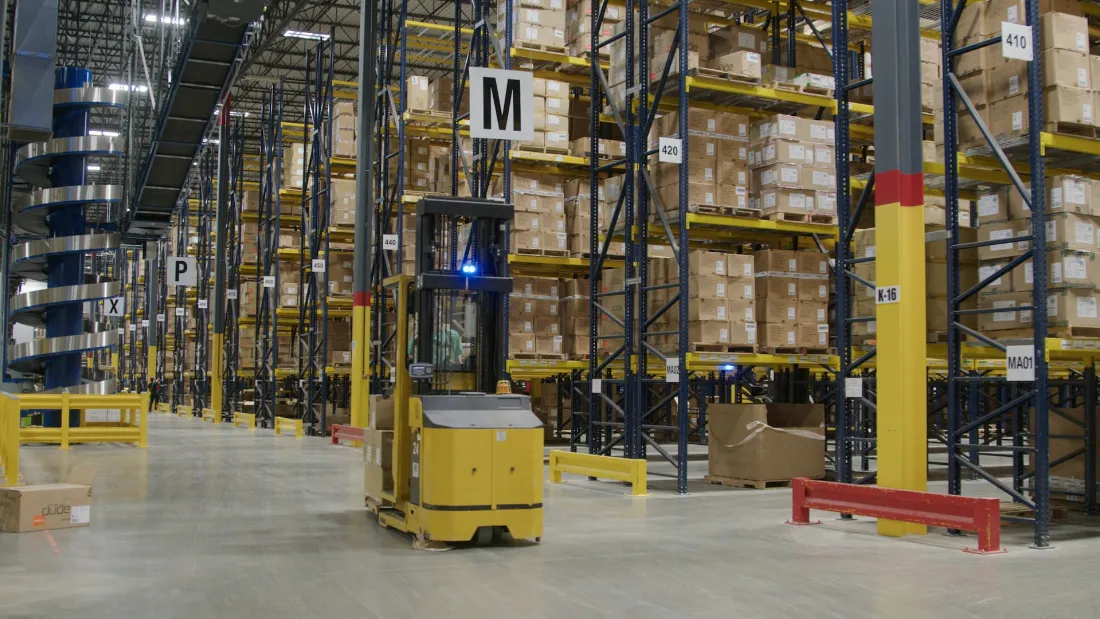
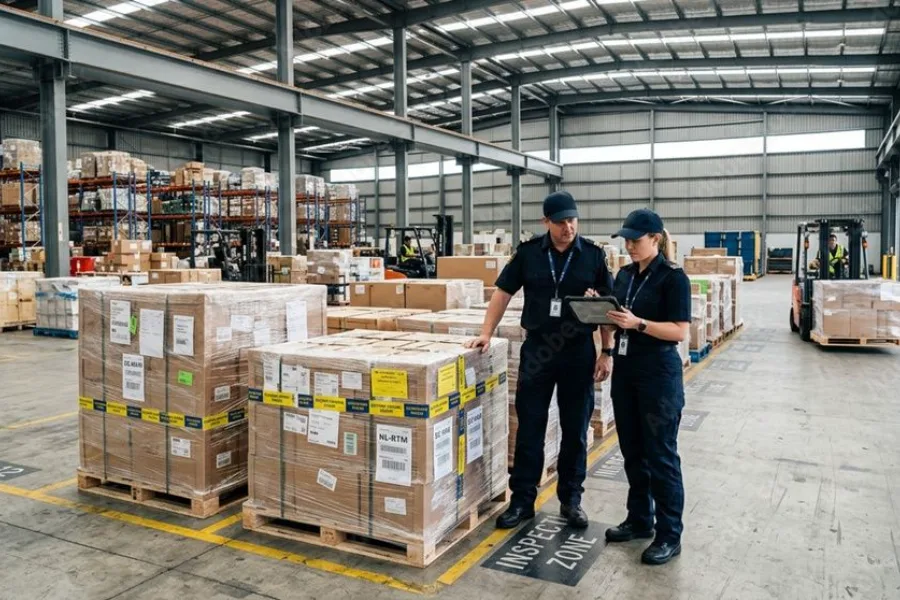
A trailer of returns backs up to the dock on Monday morning. Half the boxes have no paperwork. Reverse logistics is the flow of products back from the customer or channel to the seller, the manufacturer or a disposition end point, and everything that decides what happens to each unit. The National Retail Federation and Happy Returns projected that 19.3% of online sales would be returned in 2025, and $849.9 billion of merchandise in total. That volume arrives one unit at a time.

Returns are one-off events
An outbound order repeats. The same product ships the same way to a known address. A return arrives at a random time, in an unknown condition, for a reason someone typed into a box.

Every unit needs a decision
Restock, resell, repair, refurbish, recycle or scrap. The right answer depends on the grade, the cost to fix it and what the SKU is worth. Without data, someone guesses, and the guess is usually the cheapest pallet.

Most of the cost is labor and lost value
Freight is the visible part. Appriss Retail’s 2026 Total Retail Loss Benchmark Report puts the average cost of processing a return at about 30% of the item’s value. Handling, inspection and markdowns make up much of it.

The record is split across systems
The order sits in commerce. The receipt sits in the warehouse system. The credit sits in the ERP. The tracking sits with the carrier. The repair sits with service. Nobody has one history of the unit.
How Does a Reverse Logistics Process Run, From Request to Resale?
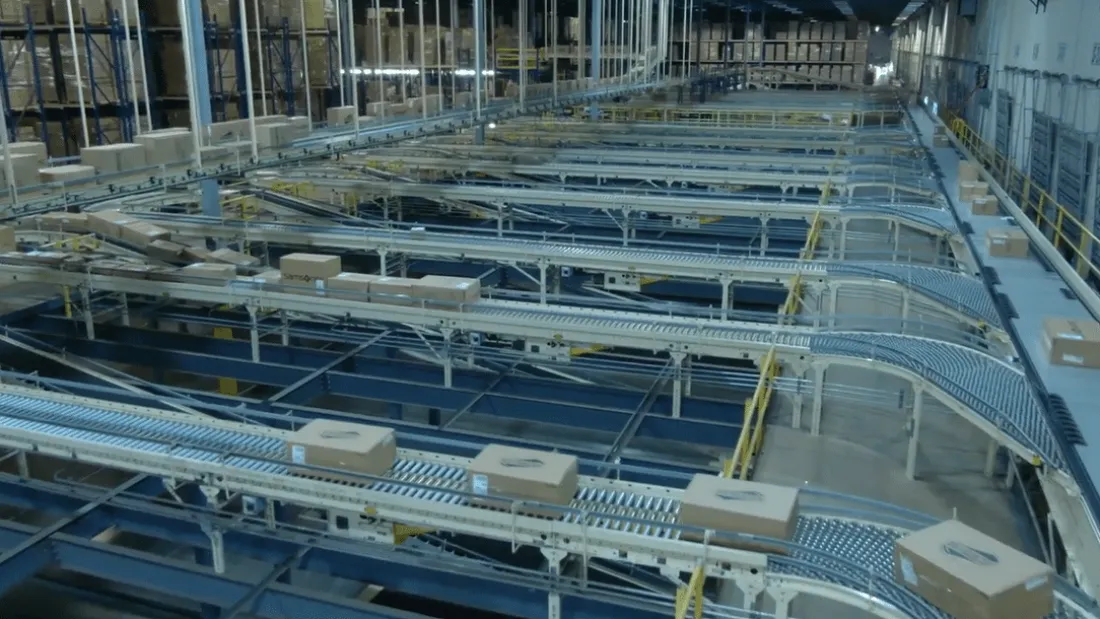
Initiation and authorization
A customer clicks return, or a dealer emails a list. The system applies the rules for that product, channel and reason before anything ships. Serial and warranty entitlement are checked at request, photo or video evidence attaches to the claim, and the RMA is authorized or declined. For a failed unit under warranty, a replacement can go out first.
See: returns initiation, RMA software, warranty management
Transport and receiving
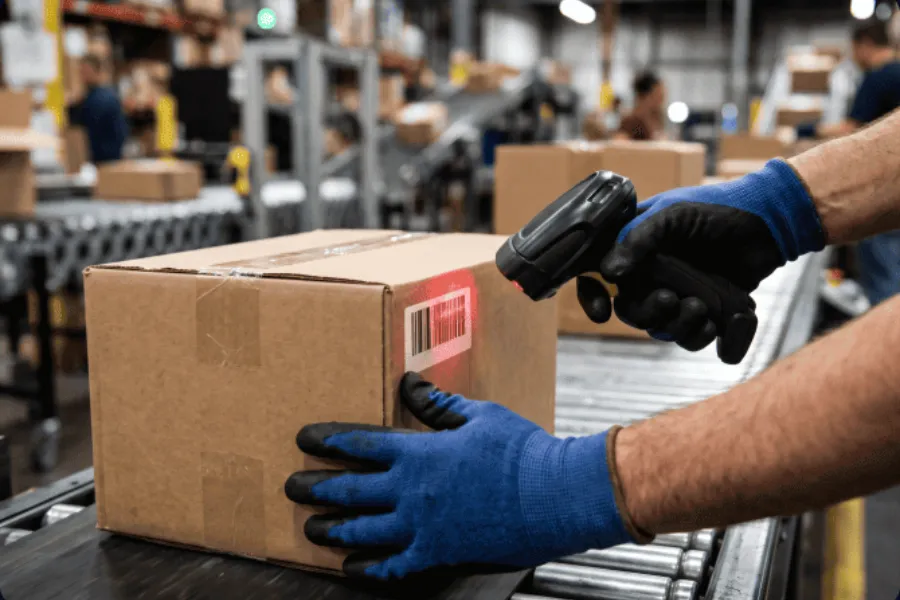
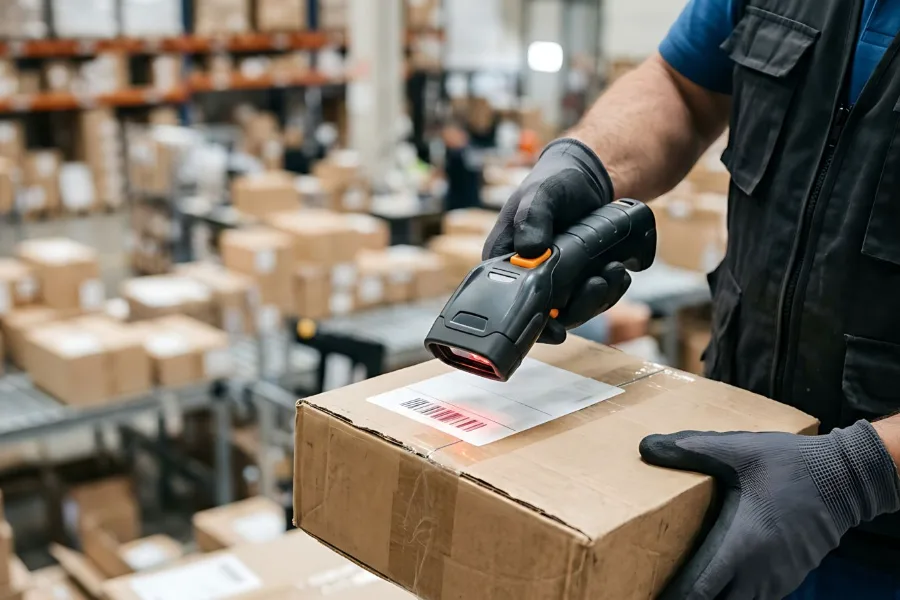
The label is issued and the unit is in transit. When it arrives, someone scans it against its RMA. A carton with no RMA is flagged at the dock. Carriers and 3PLs move the freight. ReverseLogix records each scan, so the refund step has a receipt to work from.
Inspection, grading and disposition
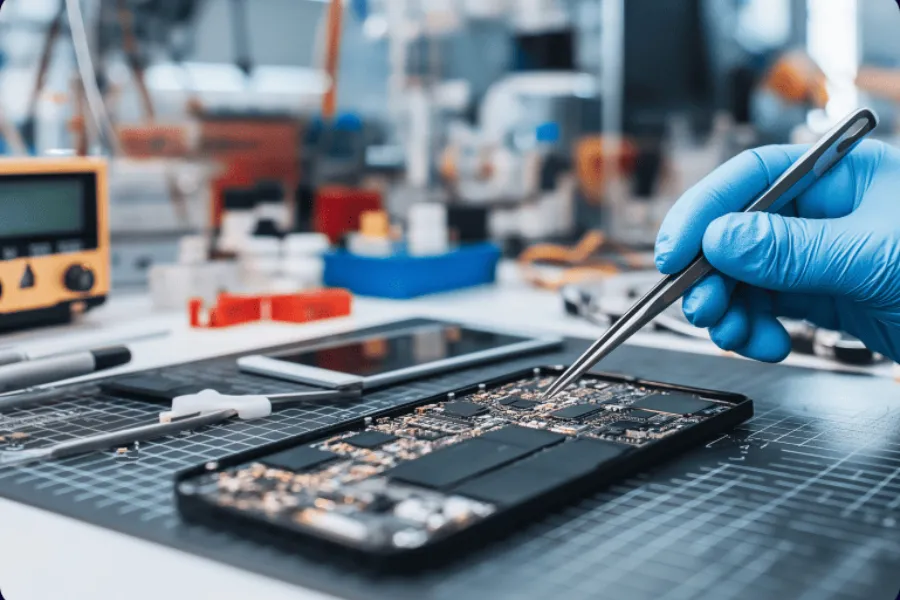
Each unit is graded against criteria set for its SKU. Beyond economical repair (BER) scoring compares the cost to fix a unit with a threshold your team sets. The system then routes the unit to restock, resale, repair, refurbishment, return to vendor, recycling or scrap, and writes that route to the record.
See: returns processing, Vision AI
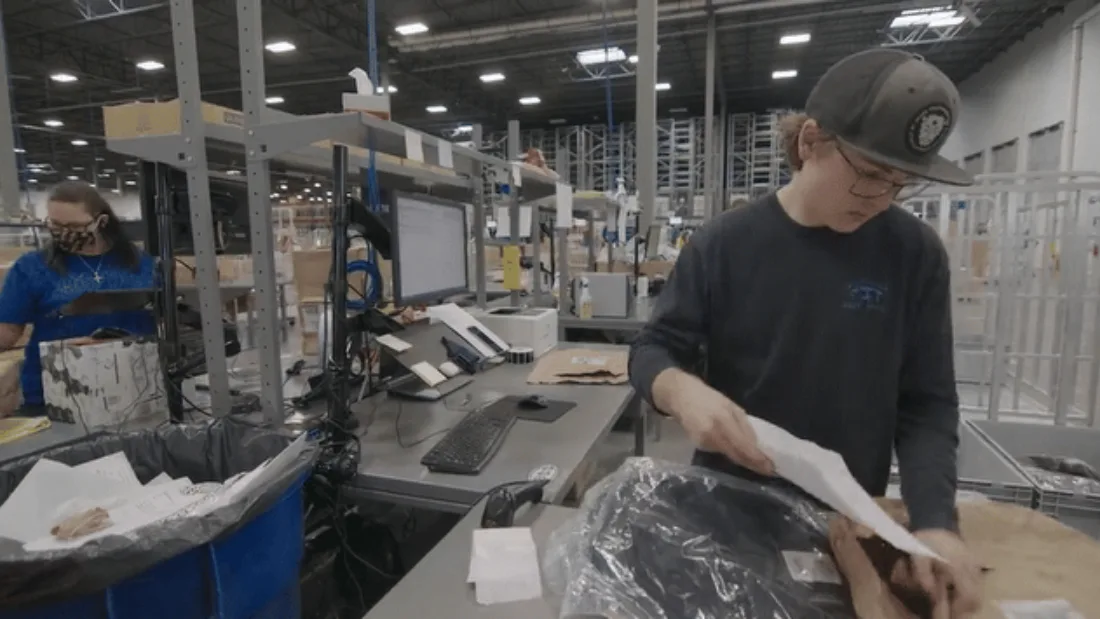
Recovery, repair and reporting
Repairs carry technician assignment, and the customer approves a quote before work starts. Resold and refurbished units keep their grade with them. Returns-side and parts stock sit in the inventory module. Analytics by SKU and reason show where returns come from, and credits and inventory changes post to your ERP.
| Condition at inspection | Typical route | Recorded on the return |
|---|---|---|
| Consumer return, unopened, within window | Restock after scan | Grade, return reason, route, serial, timestamp |
| B2B bulk return from a dealer | Lines validated, valid lines authorized, rejected lines separated | Line result, order match, return window check, route, timestamp |
| Warranty claim, failed unit | Replacement or parts shipment, unit to depot for inspection or repair | Entitlement result, fault reason, BER score, serial, timestamp |
| Unit under a recall or quality hold | Hold and route per the quality team’s instruction | Hold reason, instruction received, route, serial, timestamp |
| Marketplace return | Matched to the order, graded, routed by channel rules | Marketplace order match, grade, route, serial, timestamp |
Example configuration. Programs set their own grades, thresholds and routes.
What Does Reverse Logistics Software Do?
A pallet of unopened boxes sits at the dock with no paperwork. A dealer emails a list of twelve items. A customer waits on a refund that depends on a scan nobody has done. Reverse logistics software gives each unit one record from the first request to the final route. Rules are applied at request. The disposition is decided from the grade and the data.
The result posts to the systems of record, so finance, service and the warehouse read the same history. Medical device teams and home improvement teams run the same record with their own rules. See the medical devices and home improvement industry pages. If you are weighing ReverseLogix against Loop, Narvar, AfterShip or Optoro, the compare pages set the scope of each side by side.
See: RMA software, medical devices, home improvement, compare returns platforms
One record, every flow
- Consumer returns with photo or video evidence attached at request
- B2B and dealer returns checked line by line before authorization
- Warranty and repair with entitlement, quotes and technician assignment
- Recalls and quality holds routed per your quality team’s instruction
How Does the ReverseLogix Reverse Logistics Platform Work?
Consumer and B2B returns start in one process with configurable rules for windows, conditions and reasons. RMA authorization carries photo or video evidence. Receiving and inspection grade each unit at SKU level, with BER scoring to settle repair or replace. Repair management includes customer-approved quotes. The disposition route is written to the record. Inventory covers returns-side and parts stock, and analytics break results out by SKU and reason. ReverseLogix integrates with SAP, Oracle, NetSuite, D365, Epicor, SyteLine, Shopify and major marketplaces. The ReverseLogix team scopes and implements the workflows.
- The reason, photos and video for every request
- The grade and BER score for every received unit
- The route each unit took and when it was set
- Returns-side and parts stock counts beside the unit history
- Returns by SKU and reason, so repeat causes show up
See: returns processing, Vision AI
Your ERP, WMS and Commerce Platform Stay the Systems of Record
ReverseLogix authors returns in one place and posts to your systems of record. It integrates with SAP, Oracle, NetSuite, D365, Epicor and SyteLine, and with Shopify and major marketplaces through API. It works alongside your warehouse management system. It does not replace any of them. Where your process does not match a standard template, the ReverseLogix team scopes and implements the configuration.
See: integrations
What Reverse Logistics Software Does Not Do
It does not replace your ERP or WMS. Those stay the systems of record for orders, inventory and finance. It does not prevent fraud or guarantee detection. It surfaces signals and keeps the evidence, and your team decides what to do with each case. It does not give hazardous materials or regulatory advice. Your compliance and quality teams own those rules, and the software runs their instructions as workflow steps.
It does not move freight. Carriers and 3PLs do that, and the software records what they scan and deliver. It does not fix a bad policy. A return window that invites abuse or a reason list nobody trusts will show up in the data faster, and someone still has to change the policy.

ReverseLogix doubles the amount of returns we used to be able to do. It is a lot faster process, so customers get their money back faster.
Hayden Rice, Returns Specialist, Amer Sports
Sporting goods and outdoor apparel
Your next questions, answered


Reverse logistics management: vendor comparison
Six vendors show up on most returns shortlists. This comparison shows what each one publishes about the work that starts after the label is printed.
| Capability | ReverseLogix | Loop | Narvar | AfterShip | Inmar | Optoro | ClaimLane |
|---|---|---|---|---|---|---|---|
| Primary focus | End-to-end returns, warranty, repair and recommerce, B2B and B2C | Exchange-led consumer returns for direct-to-consumer brands | Consumer returns, order tracking and notifications | Consumer returns, warranty portal and order tracking | Pharmaceutical returns; retail returns business sold to DHL in 2025 | Retail returns and recommerce, part of the Blue Yonder suite | Warranty, returns and repair claims |
| Receiving, grading and disposition | Yes | Three grades; warehouse partners connect by API | Routing to sites; in-house grading not stated | Yes, four grades | Pharmaceutical processing only | Yes | Optional warehouse module |
| Warranty claims | Yes | Yes, warranty portal | Not documented | Yes, warranty portal | Not published | Secondary | Yes |
| Repair depot and parts | Yes | Not documented | Not documented | Not documented | Not published | Not a focus | Yes |
| B2B and dealer returns | Yes, bulk RMAs | Not documented | Not documented | Not documented | Pharmaceutical trade returns only | Primarily B2C | Yes |
| Recommerce and resale | Yes | Not documented | Not documented | Not offered | Moved to DHL | Yes | Not published |
| ERP integrations | SAP, Oracle, NetSuite, Dynamics 365 | NetSuite through a connector | SAP, Oracle, Dynamics 365 | NetSuite | Not published | Inside the Blue Yonder suite | SAP, NetSuite, Business Central |
Based on each vendor’s public website, as reviewed for our comparison pages in September 2026. “Not documented” and “Not published” mean we did not find it on the vendor’s site. Select a vendor name for the full comparison.
Reverse logistics management: questions and answers
Reverse logistics is the flow of products back from the customer or channel to the seller, the manufacturer or a disposition end point. It covers returns, repairs, recalls and recycling, plus the decisions that set what happens to each unit. Forward logistics moves goods to the customer. Reverse logistics handles everything that comes back.
Reverse logistics software is a system that tracks each returned product from the first request to its final route. It applies return rules, records inspection and grade, decides restock, resale, repair, recycling or scrap, and posts the result to the ERP. ReverseLogix is reverse logistics software for brands, manufacturers, retailers and 3PLs.
A WMS runs the warehouse and an OMS runs orders, and both are built around outbound flows. Reverse logistics software handles the parts they do not: return rules, evidence, grading, repair quotes and disposition. It works alongside both, and your WMS, OMS and ERP stay the systems of record.
Returns management is the part of reverse logistics that handles the request, authorization, receipt and refund for a returned item. Reverse logistics is wider. It also covers repairs, warranty claims, recalls, refurbishment, resale and recycling. Most teams use the two terms for the same work, and the software covers both.
There are four steps. First, initiation and authorization: the customer asks and the rules decide. Second, transport and receiving: the unit travels and is scanned against its RMA. Third, inspection, grading and disposition: the unit is graded and routed. Fourth, recovery, repair and reporting: value is recovered and the record is closed.
Brands, manufacturers, retailers and 3PLs that take back product need it, especially when they run more than one flow. Consumer returns, B2B and dealer returns, warranty claims and recalls each need their own rules. It fits teams whose returns record is split across a spreadsheet, a warehouse system and an ERP.
ReverseLogix integrates with SAP, Oracle, NetSuite, D365, Epicor and SyteLine, and with Shopify and major marketplaces through API. Credits, replacements, inventory changes and repair requests post to your ERP from the returns record. Your ERP stays the system of record, and the ReverseLogix team scopes and implements each integration.
It depends on your flows, rules and integrations. ReverseLogix uses configurable workflows scoped and implemented by the ReverseLogix team, so your return windows, grading criteria, disposition routes and system connections are set up for your process. A specialist can walk through your flows and scope what your setup would involve.
The 5 R’s are returns, reselling, repairs, repackaging and recycling. They describe the routes a product can take once it comes back: accepted as a return, sold again, fixed, repackaged for resale, or broken down for materials. Reverse logistics software records which route each unit takes and what value it recovers.
Any company that takes products back uses reverse logistics. Retailers and ecommerce brands handle customer returns. Manufacturers run warranty claims, repairs and parts returns. Distributors manage dealer returns, and 3PLs process returns for their clients. The more channels and product types a company has, the more it needs one system to run them.
Reverse logistics is used to move products back from the customer and recover their value. That covers customer returns, warranty and repair, recalls, return to vendor, refurbishment and resale, and recycling or disposal at end of life.
Further reading: Reverse Logistics Association.
See Where Your Returns Process Loses Value
A specialist walks through your initiation, inspection and disposition flow and shows where the record breaks, before any demonstration.


