What a Great Customer Experience Feels Like During Returns

A
- Customers judge the whole experience by how the return feels from start to finish—making customer experience the center of every return.
- A great return feels simple because the company removes friction, respects time, and communicates clearly across digital channels.
- Customers want a fair refund timeline, an easy way to request help, and human support when it’s needed.
- When refunds arrive on time, customers feel reassured and stay open to buying similar products from the same brand.
Low prices, fast shipping, and fancy packaging are all great, but the returns experience is increasingly playing an outsized role in how your shoppers make their buying decisions. If you get everything right but miss it during the returns process, the customer experience takes a big hit.
The returns process shapes the customer experience more than many retailers and manufacturers realize because it exposes the company’s ability to listen, communicate, and serve with care. In this article, we will explain exactly what customers are expecting when they make returns.
Returns Start The Moment Customers Decide Something Feels Wrong
Your customer’s returns experience begins before the return label is printed because customers form opinions the moment they decide the item no longer fits their lives, and they want a process that doesn’t complicate things for them while they try to get their money back. That means they want zero friction, clear policies, and a straightforward process that matches what they were promised. Any deviation from these puts their entire returns experience in the danger zone that we do not want.
On your part, as either a retailer or a manufacturer, it is important to ensure that your company is reading returns patterns early and actively taking the steps to remove stress from the returns process because that is where the customer journey is made or broken.
What Customers Expect the Moment They Initiate a Return
For the most part, when a customer initiates a return, it is a disappointing situation because the product they were excited about does not fit for one reason or another. At this point, they do not need a complex process to further complicate things. They just want a clear return window, clear refund timing, clear instructions, and your ability to ensure those can shape their returns experience. That is why clarity is so important.
Your customer also wants a choice in the returns process because individual circumstances preceding the returns vary. Some may want to drop off the parcel at a store, while others may want to schedule a pickup or even leverage digital channels for speed on a busy day. Customer loyalty will skyrocket when these channels work without delay.
Customers appreciate honest information because trust is built through direct words and reinforced when you back it up with action. They want to know when the refund will hit their account, when the company will receive the parcel, and how the return will move through the entire reverse logistics or returns management process. That level of transparency directly impacts customer satisfaction because customers can see that you respect them.
What the First Five Minutes Should Feel Like
The first few minutes after the return is initiated can set the emotional tone of the entire process and determine whether you will have repeat business from that customer. With the advancement of technology, customers have come to expect a fast, self-service portal that responds without hesitation. Basically, they want the company to remember past orders, remember return reasons, and guide them with gentle clarity. When the process feels smooth, your customers automatically feel valued.
Many customers prefer QR codes because they eliminate printing stress and simplify returns. But whether or not that is available, the return labels should appear instantly, as waiting can build unnecessary tension. And when options are provided for them on time, it also enhances overall perception.
The Customer Journey During the Rest of the Return
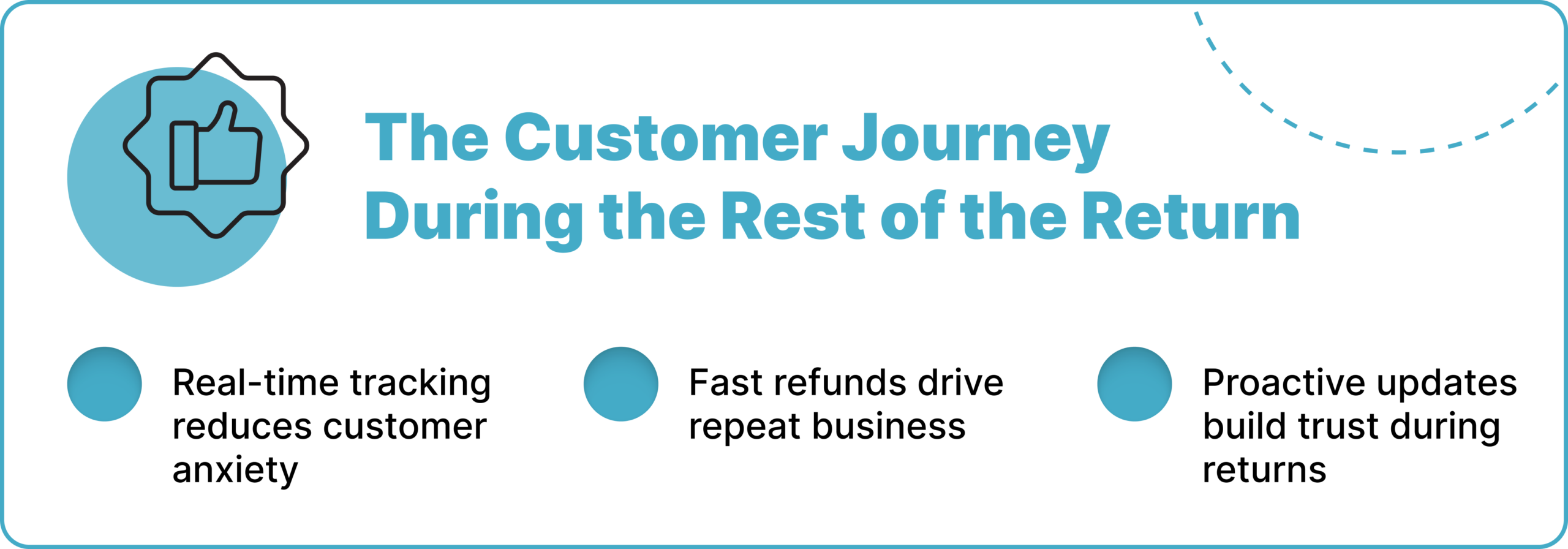
Customers want real-time tracking because silence during transit can cause worry, especially in this day and age, when so much information is available. Your customers want to see each scan and feel the comfort of movement because those updates and alerts signal progress and reduce or eliminate fear from the process, especially for first-time “returnees”. Even a simple message like: “your return is on the way” or “your refund has started” can go a long way. Strong communication shapes customer experience because people want confirmation that the company sees them.
Money holds emotion, so the timing of a refund is critical. As I mentioned, trust is reinforced when backed by action. So, it is not enough to just communicate promptly; you also have to back it up with quick actions. And in this case, the main action is to ensure your customers get their refunds as quickly as possible.
They ultimately reward this reliability with repeat business because trust grows through predictable actions.
The Emotional Side of a Great Returns Experience
Ideally, your returns policy should specify acceptable reasons and criteria for returning a product. When the customer’s returns meet those criteria, they expect you to accept them with no resistance on your part. For example, if your policy allows customers to return products that do not fit them. When they do that, pushing back just makes the entire process feel weird or tedious, which you want to avoid.
These small details strengthen relationships, and customers can feel that preparation in every moment of their return. When the returns process is smooth, the customer experience is a hit, and they have confidence in your brand, which, in financial terms, means they are more likely to buy again. A stress-free returns process makes people remember how a company treated them during their moment of need, and customers want to stay with a brand they value.
What Happens Behind the Scenes to Make This Experience Possible
Smart routing shapes the customer experience by ensuring smooth shipping and shortening the gap between drop-off and refund. This is why clear visibility is so critical; it helps teams respond with accuracy throughout the reverse logistics process. When a customer calls or sends a message, the team answers with confidence because they see real-time data. This reduces stress for the waiting person and builds trust throughout the journey.
Better inventory control brings products back into circulation faster. When your company processes returns with speed, new customers see more product offerings, which strengthens revenue and supports healthy sales cycles.
How ReverseLogix Helps You Ensure Better Customer Experience
ReverseLogix is the only AI returns management platform designed to manage the entire returns journey. With built-in intelligence, returns shift from a cost center to a source of insight and action. AI drives faster decisions across every step, from approvals to routing and resale. Brands like Samsonite, DHL Supply Chain, and Electrolux use ReverseLogix to improve returns outcomes across the globe. You can also use it to improve the customer experience.
Request a Demo today to see how it works for you.

Frequently Asked Questions
A smooth return helps customers feel respected during a stressful moment. When the process is clear, customers stay open to the company’s product or service and view the whole experience as fair. This emotional shift shapes loyalty and supports future sales.
[Unverified] Returns forecasting helps retailers prepare for refund timing, stock movement, and communication demands across channels. This preparation supports customer journeys because customers want fast updates, clear steps, and a return that aligns with their values.
[Unverified] When customers feel heard during the return, they stay connected to the same brand and remain loyal customers. A predictable refund path, simple instructions, and quick responses help retain customers and keep them from turning to competitors that may offer similar products.
[Unverified] Customer surveys reveal what customers find stressful during returns. Many customers request clearer communication or faster confirmation messages. Retailers use this data to develop processes that support customer experience and increase repeat business.
Communication shapes trust because customers feel vulnerable during a return. They want calm, direct messages that explain where the parcel sits and when the refund will reach their account. Retailers who build consistent communication gain stronger relationships with consumers.
Get a Demo
Discover how you can jump-start your returns management efforts with ReverseLogix.