B2B Reverse Logistics Strategies: What’s Different and Why It Matters
Summary
- B2B reverse logistics is fundamentally different from B2C — it involves higher stakes, complex workflows, and supplier-driven rules.
- Manual processes lead to lost inventory, delayed credits, and damaged relationships — automation is essential.
- Platforms like ReverseLogix help businesses track, manage, and analyze B2B returns from initiation to resolution.
- Smarter returns management reduces costs, improves customer retention, and strengthens the entire supply chain.
Just because a returns management system can handle customer returns, it should not be assumed that it can handle B2B returns. This is because, unlike the customer returns, the B2B reverse logistics isn’t just about collecting an unwanted product and refunding a customer. It’s a different model, operating on different rules. For example, the dollar value is higher, the volumes are in bulk, and the cost of a mistake is multiplied.
Failure to understand the difference is why many retailers and manufacturers that overlook the distinct nature of B2B returns are bleeding money in freight, losing track of high-value inventory, and damaging partnerships they’ve spent years building. This article outlines how to approach B2B reverse logistics with precision, explains why this approach is crucial, and how companies utilizing a smarter returns platform, such as ReverseLogix, are transforming their reverse channels into sources of control, compliance, and savings.
Why B2B Reverse Logistics Requires Its Own Strategy

The strategies for managing reverse logistics in B2B supply chains differ for five major reasons:
1. Policy, Not Preference Trigger Returns
In B2C, customers return products because they dislike them. However, in the B2B context, returns typically happen because of reasons like expired shelf life, warranty compliance issues, shipment damage, or contractual defects. These returns are driven by returns policies, not emotions like those in B2C, and these policies vary among suppliers. This is why managing B2B returns and reverse logistics is more about coordination than customer service.
2. High-Volume, High-Value Returns Mean Bigger Risk
A single B2B return might include hundreds of items, worth tens of thousands of dollars or even millions. So, one shipping error or missed authorization can result in significant loss of revenue. This is because you are processing a refund for a $20 item; you’re fixing a $200,000 problem.
3. Returns Management Must Work Across Systems
Managing B2B reverse logistics and returns requires synchronization between ERPs, inventory platforms, and transportation providers. Although it is possible to track these manually via spreadsheets, it slows everything down and often invites mistakes.
4. Returns Affect Long-Term Business Relationships
A delayed B2B return can jeopardize an entire supplier relationship. For example, when inaccurate data is present, it can delay credits or repayments, potentially harming future orders. Unlike one-time retail customers that may or may not stick around, B2B buyers represent long-term accounts, and every return has an impact on retention.
5. B2B Reverse Logistics Isn’t Optional
For many commercial customers, an efficient returns process is just part of the deal. They expect proactive communication, prepaid return labels, return windows, and documentation trails. As McKinsey noted in a 2023 supply chain report: “B2B buyers now expect the same speed, visibility, and control they’ve grown used to in consumer ecommerce — but with 10 times the transactional complexity.”
Six Strategies to Build a Smarter B2B Reverse Logistics Process
Getting your B2B reverse logistics right starts with establishing the right structure. These six strategies enable retailers and manufacturers to regain control and reduce waste in post-sale operations.
1. Centralize and Automate the Returns Process
Having a central hub for managing returns is the first fix. However, it is the combination of that warehouse with software solutions like ReverseLogix that creates a single source of truth, tracking every return authorization, condition report, and shipment movement. This way, you will eliminate confusion when working with third-party logistics providers, warehouse teams, and suppliers. A global electronics company can see a significant drop in return-related shipping errors after consolidating its B2B returns workflow into a single system.
2. Integrate with ERP and Inventory Platforms
Disconnected systems can break the B2B returns process because the average B2B return involves critical facets, such as credit memos, serial tracking, inventory restocking, and supplier validation. If all of these live in separate tools, mistakes are bound to happen. However, by connecting reverse logistics tools with ERP platforms, you can ensure finance, operations, and logistics work from the same data.
3. Define Clear Rules for Return Authorizations
Every supplier relationship comes with unique return conditions. You can’t treat them all the same, but you can organize them under a shared logic. Having an established centralized system helps create rules for which returns need inspection, which require supplier approval, and which can be auto-authorized. That precision reduces back-and-forth and speeds up the approval process.
4. Track Return Patterns to Improve Forward Logistics
Gartner’s 2024 Supply Chain Insights report found that: “Companies using reverse logistics data to inform upstream changes reduced outbound returns by up to 22% over 12 months.”
Return data tells you what’s going wrong upstream. For instance, through the data, you can answer critical questions, such as whether certain parts are failing early or if specific customers are misunderstanding orders. B2B returns often reveal problems with product quality, shipping processes, or performance at the fulfillment center. Tracking this helps improve the reverse logistics in the future.
5. Prioritize Bulk Return Coordination
Commercial buyers often prefer to return items in bulk to save on freight. However, this naturally demands scheduling, labeling, and return kits. A B2B returns platform like ReverseLogix enables customers to request bulk pickups, group return SKUs, and generate coordinated labels, thereby reducing touchpoints and transit costs.
6. Build Feedback Loops into Returns Management
Return reasons shouldn’t disappear into reports. Whether it’s damaged packaging materials, faulty barcode placement, or concerns about product quality, that feedback must reach the product teams and suppliers. This continuous loop ensures your reverse logistics work actually improves future outcomes.
Why B2B Reverse Logistics Matters More Than Ever
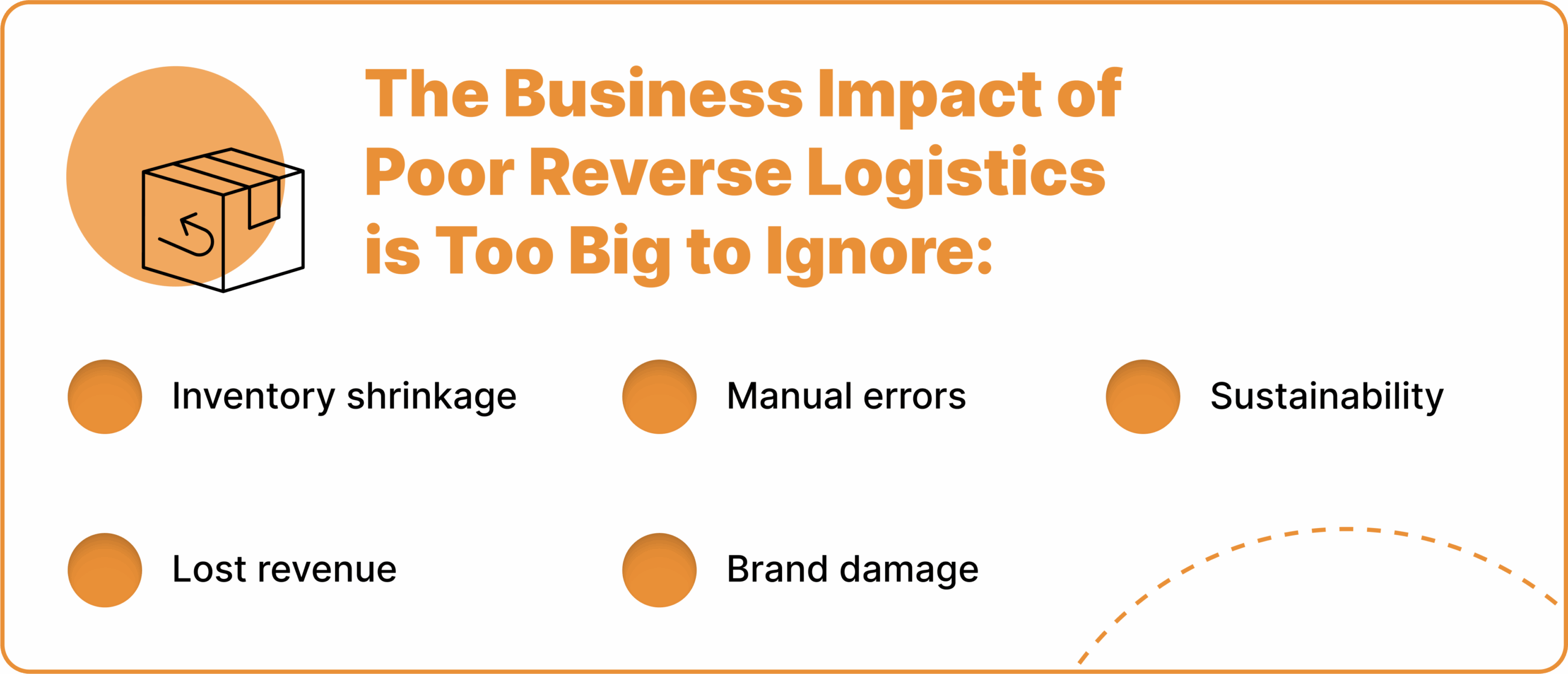
The business impact of poor reverse logistics is too big to ignore:
- Inventory shrinkage: Returned goods can go unprocessed for weeks, tying up working capital
- Lost revenue: Slow refunds or credits strain customer relationships
- Manual errors: Processing returns manually leads to inaccuracies in customer records and reports
- Brand damage: Failure to honor supplier return policies harms trust
- Sustainability B2B buyers are under pressure to implement sustainable returns practices. This means reducing waste, avoiding the overuse of raw materials, and ensuring returns are processed in a manner that aligns with their ESG mandates.
The good news? With a structured return system and data-backed processes, this area presents an opportunity to save money, enhance the customer experience, and minimize friction across the entire supply chain.
Build Resilience in Returns with ReverseLogix
Leading manufacturers and retailers utilize ReverseLogix to enhance the reverse logistics process by addressing what slows them down after the sale. With real-time tracking, supplier-specific workflows, and inspection tools built in, they gain visibility across the full B2B returns process — from the moment a customer initiates a return to when it’s received, assessed, and credited. It’s not just about cost savings. It’s about customer retention, fraud prevention, and creating a foundation for circular economy operations.
Connect with us today to feel the difference in your reverse logistics operations.
Frequently Asked Questions (FAQs)
B2B reverse logistics refers to the process of returning goods between businesses — such as retailers sending unsold stock to manufacturers, or distributors returning faulty inventory to suppliers. It involves managing returns at scale, tracking conditions, handling documentation, and ensuring items are credited or reused properly.
B2B returns are larger in volume, higher in value, and driven by contracts or warranty terms — not consumer preferences. The returns process is more complex, often involving supplier agreements, serial tracking, and bulk shipments.
Companies face issues like inconsistent supplier return policies, manual errors, high shipping costs, lost inventory, and misalignment across systems. These challenges can lead to financial loss, customer dissatisfaction, and reduced efficiency.
Returns management software like ReverseLogix automates the return request, authorization, and tracking process. It integrates with ERP and warehouse systems, manages documentation, and offers real-time visibility, helping companies improve control and reduce processing time.
When businesses manage B2B returns effectively, they reduce waste, improve supplier relationships, recover value from returned products, and create a more responsive supply chain — all while saving time and money.