

Appliance Returns Management Software for returns you cannot just put in a box
Coverage checked, repair or replace decided, every unit recorded from first claim to last part.
The refrigerator is still on the porch and the delivery crew is gone. The dealer says it arrived dented. The homeowner says it was fine. ReverseLogix is appliance returns management software for manufacturers, retailers, dealer and installer networks and repair depots, across major and small domestic appliances. It runs intake, entitlement, inspection, beyond economical repair (BER) determination, disposition and recovery in one system, and posts records to the ERP and WMS you already run.

Returns teams using ReverseLogix include:


Where Appliance Returns Lose Money
A washer fails in month eight. Before anyone opens a claim, a technician, a dealer, a depot and a finance team have each made a decision about it. Appliance returns lose money in the gaps between those decisions.
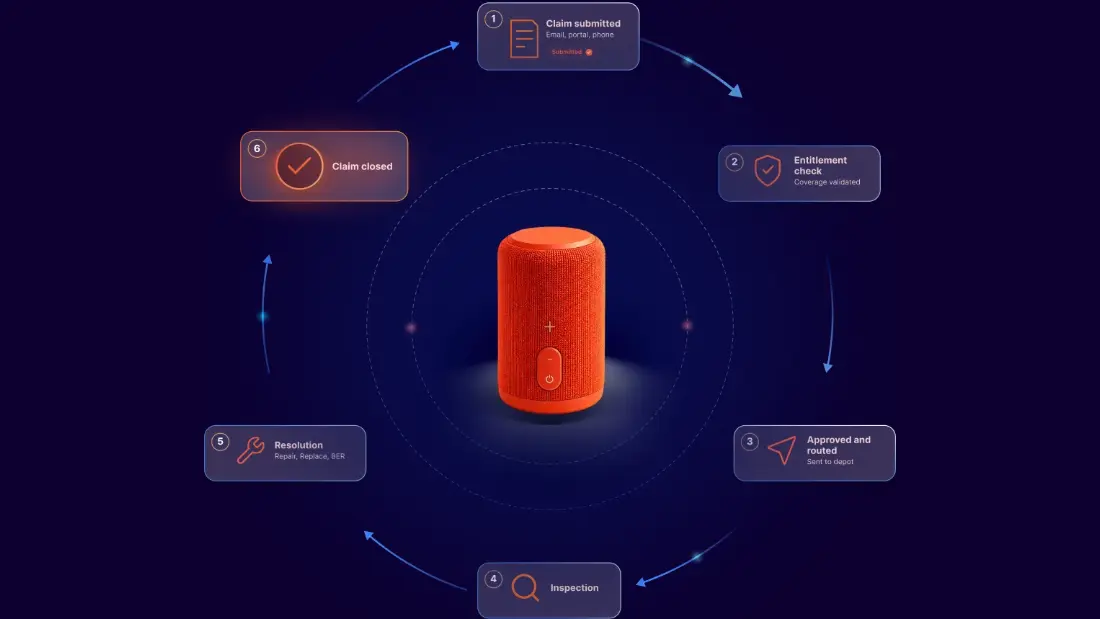

Freight can cost more than the unit is worth
Reverse LTL, two-person handling and haul-away can add up to more than a major appliance can recover. Whether the unit moves at all is an economic decision.

The disposition call is made on the kitchen floor
A technician standing next to the appliance decides repair, replace, part harvest or concession. That call comes before the warranty claim and sets everything after it.

Four parties own one return
Manufacturers carry warranty accrual. Dealers and installers own install-date entitlement and delivery damage. Retailers own the markdown. Depots own parts and first-time fix. Recovery leaks at the handoffs.

Small appliances flip the math
With small domestic appliances, unit value is low enough that processing cost decides the outcome. A kettle returned for a loose lid can cost more to handle than it will ever sell for.
How Does an Appliance Return Move Through One System?
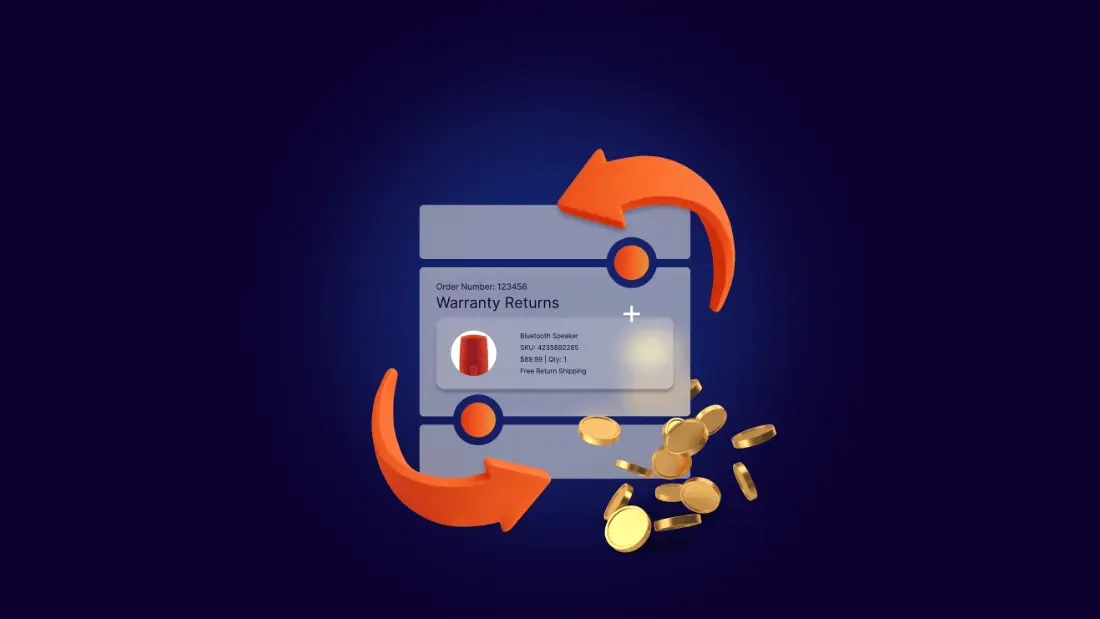
Intake and entitlement
Coverage gets decided before anything is authorized. Consumer, dealer and B2B requests come in through one process, with serialized registration and entitlement checks at request. Configurable rules apply return windows, warranty checks and final-sale conditions. Two-tier reasons capture the fault itself, with photo or video evidence attached.
See: warranty management, returns initiation
Inspection, BER and repair routing
Condition capture and BER scoring set the repair-or-replace threshold, so a failing unit can reach an outcome without a physical return. In the depot, repairs carry technician assignment, with labor and service cost on a quote the customer approves before work starts. Repeat repairs are counted per unit, and units past the threshold route to scrap or part harvest.
See: returns processing
Disposition, refurbishment and recovery
Grading drives the exit state. Units go to restock, refurbishment and recommerce, part harvest, return to vendor, damage allowance or recycling. A unit reclassified during repair carries a corrected SKU and serial, so A-stock does not re-enter as A-stock.
Parts and recommerce
Put-away rules keep refurbished stock separate and stored by appliance class. Returns-side and parts inventory sit in the platform, and refurbished units move into resale and recommerce.
See: recommerce
| Condition at inspection | Typical route | Recorded on the return |
|---|---|---|
| Delivery damage, unit never installed | Damage allowance or return to vendor | Grade, fault reason, route, serial, timestamp |
| Open box, works, cosmetic marks | Refurbishment and recommerce | Grade, fault reason, route, serial, timestamp |
| Repaired and reclassified in the depot | Restock or resale under the corrected SKU and serial | Grade, fault reason, route, corrected SKU and serial, timestamp |
| Field repair beyond economical repair | Replace, unit scrapped locally or part harvest | BER score, fault reason, route, serial, timestamp |
| Unit that cannot be reused | Recycling | Grade, fault reason, route, serial, timestamp |
Example configuration. Programs set their own grades, thresholds and routes.
Can Consumer, Dealer and B2B Returns Run in One Record?
A dealer sends a spreadsheet of returns. A homeowner sends one photo of a cracked door seal. Both land in the same system. Bulk upload validates each line against return windows, warranty status and final-sale rules, then separates valid lines from rejected ones before authorization. Dealer, installer and B2B account returns run beside consumer returns, so nobody reconciles two lists. A large global appliance manufacturer runs consumer and B2B intake, exchanges, replacements, repair requests and end-of-life takeback this way, with product registration and a branded returns portal in one system. It reports $25M+ savings after deployment.
See: B2B bulk returns
One record, every channel
- Consumer claims with photo or video evidence attached at request
- Dealer and installer returns with install-date entitlement checked
- B2B bulk upload validated line by line before authorization
- Credits, replacements and repair requests posted to your ERP
Where Does Warranty Leakage Show Up?
A claim arrives against a serial number the system has already seen. Warranty Week reports that US-based manufacturers paid $30.37B in warranty claims in 2025, so small leaks add up. ReverseLogix surfaces patterns that indicate leakage. It does not prevent fraud or guarantee detection.
- Duplicate or invalid serial numbers submitted against warranty
- Claims filed outside the entitlement window or against the wrong install date
- Repeat-claimant patterns across consumer and dealer channels
- Units authorized for return but never received
- Refurbished units re-entering stock without a corrected SKU and serial
Your ERP Stays the System of Record
ReverseLogix authors returns in one place and posts to your systems of record. It integrates with SAP, Oracle, NetSuite, D365, Epicor and SyteLine. It does not replace your field service system, and it exchanges data with ERP, CRM and field service platforms. The inventory module covers moves, transfers, stock monitoring and purchase intake. Warehouse inventory normally stays in your WMS, and the ERP holds the record. Where your process does not match a standard template, the ReverseLogix team scopes and implements the custom configuration.
See: integrations
Records for EPA 608 and WEEE Audits
An auditor asks what happened to one refrigerator. ReverseLogix is not a compliance system and does not manage regulatory obligations. It keeps the record. Every return carries a traceable history of intake, inspection, disposition and repair, so a specific unit can be reconstructed during an audit. Physical disposal and hazardous material handling sit outside the platform. Where a program runs a dedicated compliance or environmental management system, ReverseLogix connects to it and tracks the linkage instead of replacing it.
In North America, programs handling refrigerant-containing units carry obligations under EPA Section 608. The obligation sits with the program and its certified technicians, and ReverseLogix retains the associated return and repair record. In Europe, producer obligations for the collection, treatment and reporting of large household appliances fall under the WEEE Directive (2012/19/EU). ReverseLogix supplies the returns data those reports draw on.

When we turned ReverseLogix on, it was instant visibility into the warranty volume that we had.
Stephanie Kalch, Senior Director of Customer Service, North America, Samsonite
Luggage and travel goods, warranty and repair
Your next questions, answered
Article
After the Returns Process: Where a Damaged or Open-Box Major Appliance Actually Goes
Read the article →

Article
Installation Damage or Warranty Claim?
Read the article →
Calculator
How much are returns costing you? Run the ROI calculator
Run the numbers →
Compare
How does ReverseLogix compare with other returns platforms?
See how we compare →
Frequently asked questions
Appliance returns management software runs a returned or failed appliance through intake, entitlement, inspection, BER determination, disposition and recovery in one system. ReverseLogix serves manufacturers, retailers, dealer and installer networks and repair depots at enterprise volume, across major (white goods) and small domestic appliances. It is not a consumer warranty product.
BER scoring evaluates the unit against a configurable threshold and routes it to an outcome that does not require moving it, such as a damage allowance or local disposition. The decision and its reason are written to the return record, so finance can see why a unit never shipped back.
Bulk upload validates each line against return windows, warranty status and final-sale rules, then separates valid lines from rejected ones before authorization. Dealer, installer and B2B account returns run in the same system as consumer returns, so one team works from one record instead of reconciling separate lists.
Yes. Grading drives the exit state, routing units to restock, refurbishment and recommerce, part harvest, return to vendor, damage allowance or recycling. Units reclassified during repair carry a corrected SKU and serial, so A-stock does not re-enter as A-stock. Put-away rules keep refurbished stock separate by appliance class.
No. ReverseLogix authors the return record and posts to your systems of record, and integrates with SAP, Oracle, NetSuite, D365, Epicor and SyteLine. It also exchanges data with CRM and field service platforms. An inventory module exists, but warehouse inventory normally stays in your WMS and the ERP holds the record.
Yes. Workflows, validations, return reasons, grades and disposition routing are all configurable. Where a requirement falls outside standard configuration, the ReverseLogix team scopes and implements a custom configuration, so your process does not have to bend to a standard template.
It keeps the record but does not manage compliance. Every return carries a traceable history of intake, inspection, disposition and repair, so a unit can be reconstructed for an audit. Obligations stay with your program. Disposal and hazardous material handling sit outside the platform, and it connects to your compliance system if you run one.
See Where Your Returns Process Leaks Value
A specialist walks through your intake, warranty and disposition flow and shows where recovery is lost, before any demonstration.


