

Returns Software Security and Compliance ISO 27001 and SOC 2 certified
Role-based access, a full audit history on every record, and straight answers for your security review.
Your IT lead has a questionnaire open and a go-live date in the calendar. The returns team wants the platform live. The security team wants to know who can see what, and who changed what. ReverseLogix is returns software that is ISO 27001 and SOC 2 certified, with role-based access and a full audit history on every record. This page says what we hold, what the controls do and what a security review usually asks. Where a detail belongs in a document under evaluation, such as hosting region, encryption or penetration testing, we say so and share it during evaluation.
Returns teams using ReverseLogix include:











Why Does Returns Software Get Stuck in Security Review?
Returns data is customer data. Names, addresses, order history, serial numbers, photos and payment outcomes all sit in one record. A review that starts late, or with vague answers, can hold up a go-live by weeks.

Nobody can say who saw what
Returns tools built on shared logins and spreadsheets cannot show who opened a record or who approved a refund. Security teams see that gap first.

Vendor answers arrive in pieces
The questionnaire goes out, half the answers come back, and the rest wait on a call. The IT team is small and the review queue is long.

Returns data spreads across systems
Photos in email, notes in Excel, labels in a carrier portal. Every extra copy is one more place to protect and one more place to audit.

Access does not match the job
A customer service agent, a warehouse inspector, a finance approver and a 3PL partner need different views. One broad permission set gives too much to too many people.
How Do Role-Based Access and the Returns Audit Trail Work?
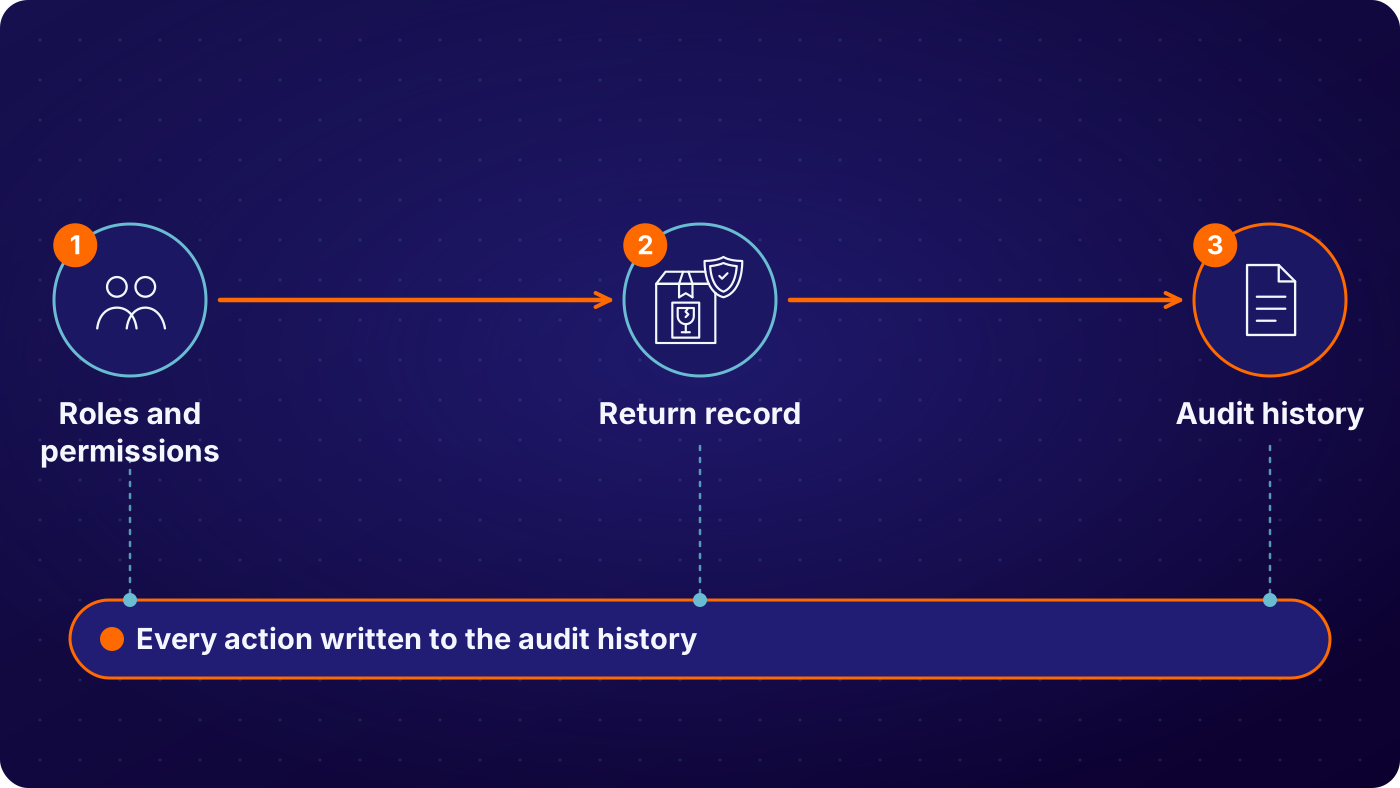
Roles are set before anyone logs in
Your admin assigns each user a role. The role decides which screens, records and actions that person can reach. An inspector can grade a unit. A finance approver can release a refund. Neither sees what the other does not need.
See: platform overview
Work happens on one record
Intake, inspection, repair, refund and disposition all write to the same return record. There is no side spreadsheet and no copy in someone’s inbox, so there is one place to control.
See: returns processing
Every change is written to the history
Each record carries a full audit history. It shows what changed, which user changed it and when. A refund decision, a grade change and a disposition route all leave a trace.
See: analytics

The evidence is ready when the review asks
When an auditor or a customer security team asks who did what, the answer is on the record. Certification detail and questionnaire answers are shared during evaluation, so the review runs in parallel with the project.
See: implementation
| Condition at inspection | Typical route | Recorded on the return |
|---|---|---|
| Service agent opens a return | Role limits the screens and actions the agent can reach | User, role, record, action, timestamp |
| Inspector grades a unit | Grade written to the record with photos | Grade, photos, user, serial, timestamp |
| Finance approver releases a refund | Refund decision follows the approver role | Amount, decision, user, return reference, timestamp |
| Auditor asks who changed a disposition | Full audit history pulled from the record | Old value, new value, user, timestamp |
| Return data posts to the ERP | Posted through API to your system of record | Event sent, result received, return reference, timestamp |
Example configuration. Programs set their own roles, approval rules and thresholds.
Who Sees What Inside a Returns Platform?
Each team sees the part of the return it owns. Customer service sees status, entitlement and customer contact. The warehouse sees receiving, inspection and disposition. Finance sees refund and credit decisions. IT sees integrations and access. A 3PL or repair partner sees only the work assigned to it. Everyone works on the same record, so nobody needs a copy, an export or a forwarded email to do the job.
See: IT teams, operations teams
Access that matches the job
- Customer service: status, entitlement and customer contact
- Warehouse and inspection: receiving, grading and disposition
- Finance: refund and credit decisions
- IT: integrations, users and roles
- Partners and 3PLs: only the work assigned to them
What Can Your Security Team See in the Returns Audit Trail?
Your security team can see who touched a return, what they changed and when. That history sits on every record, not in a separate report someone has to build. Your team can use it for internal audits, customer reviews and dispute checks. ReverseLogix supplies the record and the controls. Your own policies, and your own compliance team, decide how they are applied.
- Which user opened or changed a return record
- Every status change, with a timestamp
- Refund and disposition decisions tied to a user
- Inspection notes, grades and photos kept on the unit
- Events posted to your ERP and the result that came back
How Does Returns Software Security and Compliance Fit Around Your Existing Setup?
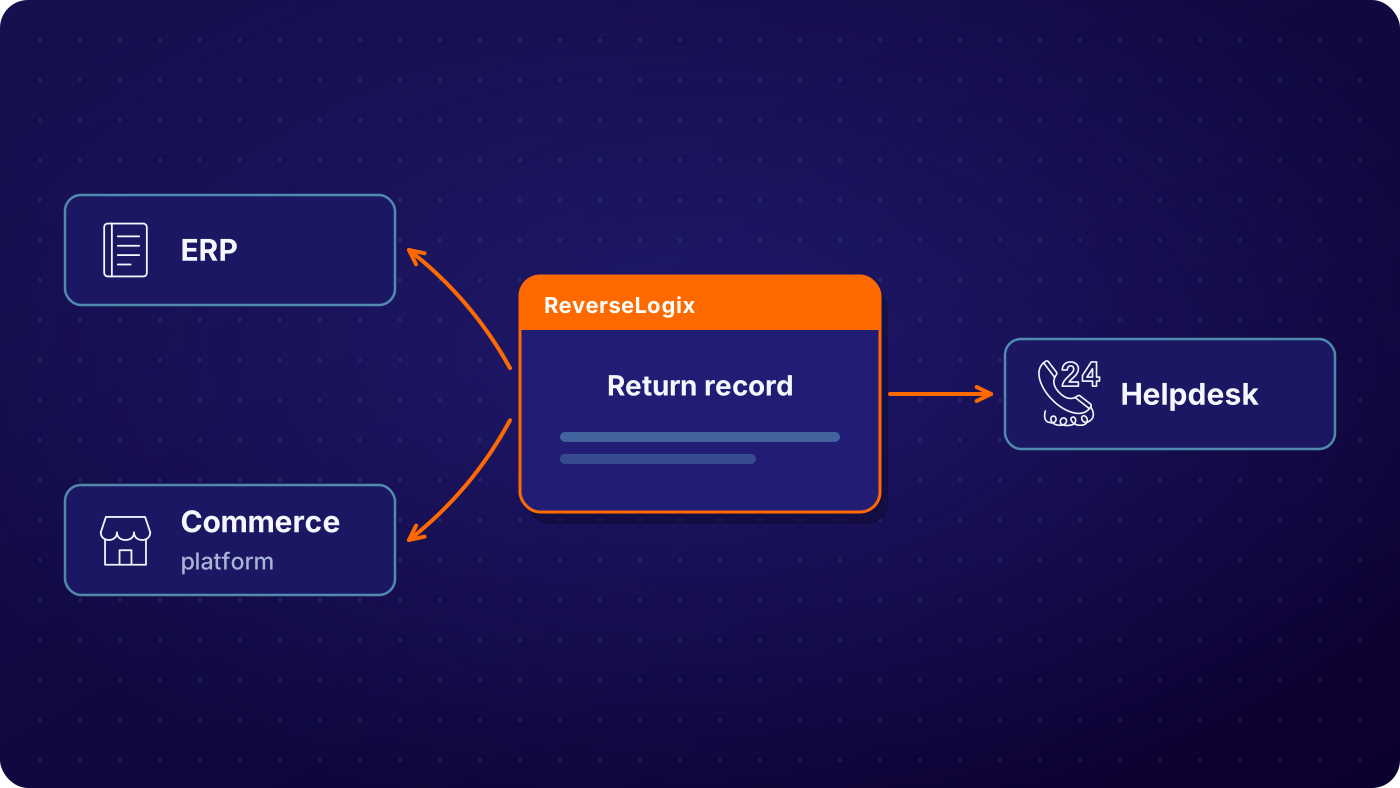
ReverseLogix works alongside your ERP, commerce platform and helpdesk. It is API-first and integrates with SAP, Oracle, NetSuite, Microsoft Dynamics 365, Salesforce and Shopify, among others. Your ERP stays the system of record. What the connection takes on your side, such as mapped fields, a sandbox, UAT and a go-live plan, is scoped with your IT team before work starts. Details on hosting, encryption, single sign-on and penetration testing are shared during evaluation.
See: integrations
Which Security Certifications Does ReverseLogix Hold?
ReverseLogix is ISO 27001 and SOC 2 certified. ISO 27001 is the international standard for managing information security. SOC 2 is an independent audit of the controls a software provider runs. Both apply to the way ReverseLogix handles customer data, and both are shared with prospects during evaluation so your security team can read the detail for itself.
Controls sit inside the product too. Role-based access limits what each user can do, and a full audit history sits on every record. ReverseLogix does not give legal advice, and it does not decide what your own regulators or customers require. Your compliance team owns those rules, and the platform gives them a record to work from.
See: IT teams
Your next questions, answered


Returns software security and compliance: questions and answers
Yes. ReverseLogix is ISO 27001 and SOC 2 certified. ISO 27001 covers how the company manages information security, and SOC 2 is an independent audit of its controls. We share certification documents with prospects during evaluation, so your security team can review the detail against its own requirements before contract.
Yes. Each user is given a role, and the role decides which screens, records and actions they can reach. A service agent, an inspector, a finance approver and a partner each see what their job needs. Your admin sets the roles, and the setup is agreed with your team during implementation.
Yes. Every record carries a full audit history that shows what changed, which user changed it and when. Refund decisions, grades and disposition routes are all part of it. Your security, finance or internal audit team can check a return without asking anyone to rebuild the story from email.
Reviews usually ask about certifications, access control, audit logging, data handling, hosting, encryption, incident response and subprocessors. ReverseLogix answers the certification, access and audit questions plainly on this page. Hosting region, encryption, and penetration testing detail are shared during evaluation, alongside a completed questionnaire if you send one.
Hosting region, encryption standards and penetration test results are shared during evaluation, not published on this page. Ask your ReverseLogix contact early and we will send them with the certification documents. That way your security team can read the specifics and raise questions before the project schedule depends on the answers.
Return data such as customer contact, order details, serial numbers, photos and refund outcomes lives on one return record rather than in email and spreadsheets. Access is limited by role, and the audit history shows who touched it. Retention, data processing terms and your own policies are agreed during evaluation and contracting.
It does not have to. Standard go-live for initiation is 4 to 6 weeks, and the security review can run alongside integration mapping, sandbox work and UAT. Send the questionnaire early, name your reviewer, and the answers and documents can arrive while the project is moving.
Every connection has to be scoped and reviewed. ReverseLogix is API-first and posts returns events to your ERP, which stays the system of record. The project covers mapped fields, a sandbox, UAT and a go-live plan. Credential handling and network details are reviewed with your IT team during evaluation.
Further reading: ISO/IEC 27001, the information security standard (ISO).
Get Your Security Questions in Front of Us Early
A specialist walks through the controls, sends the certification documents and takes your questionnaire, so the review runs beside the project instead of after it.


