

Depot repair software: depot triage, routing, parts and billing on the same record as the return
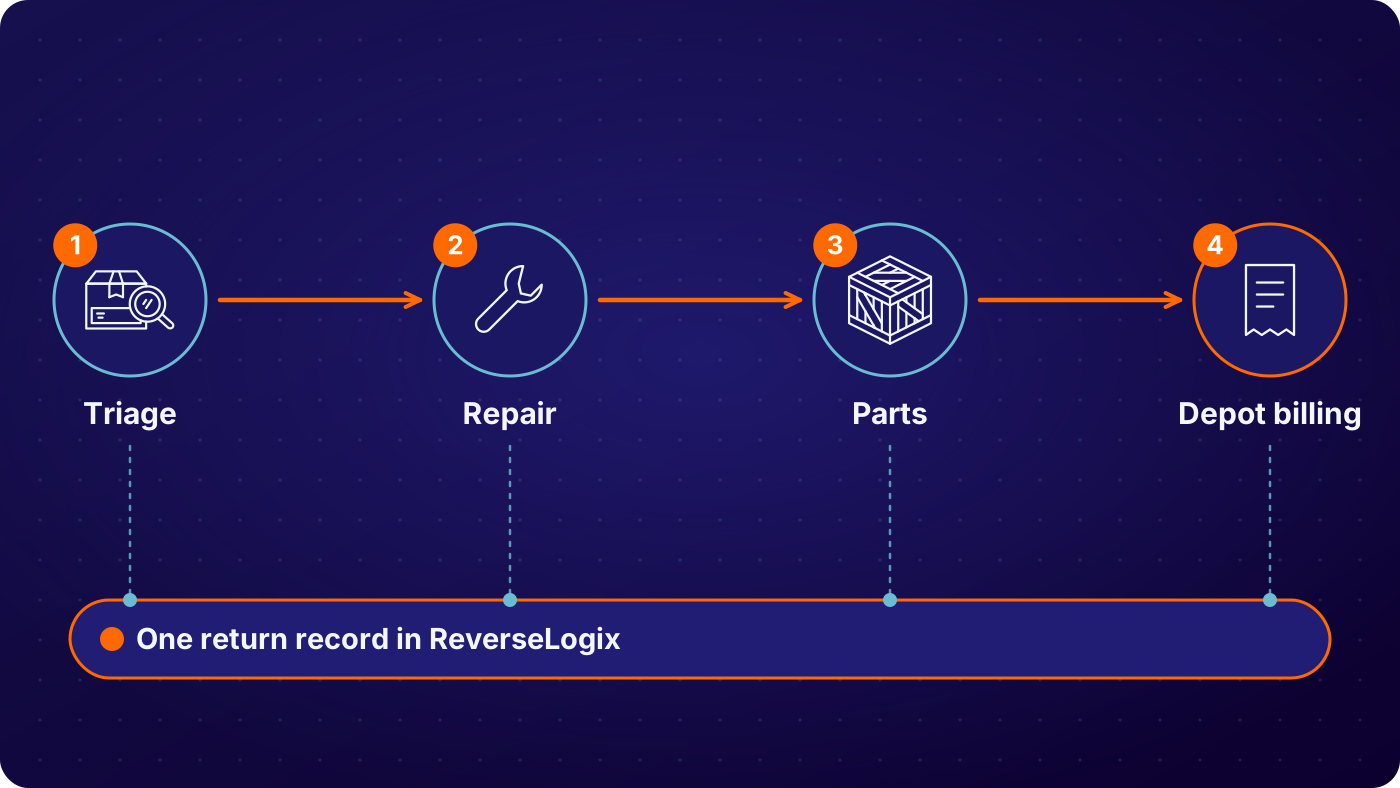
Depot repair software manages returned units through a repair depot: triage, parts, the repair or beyond-economical-repair decision, and billing. A unit reaches the bench with a fault code and a warranty status. ReverseLogix triages it, reserves the parts, decides repair or BER, and bills it on the return record.












State of repair management: what the numbers say
+12 months
Extra legal guarantee in the EU when a consumer chooses repair under guarantee, under the EU Right to Repair Directive applying from 31 July 2026.
European Parliament, Right to Repair Directive (EU) 2024/1799
50-60%
Faster returns at Samsonite than on its legacy SAP system, with warranty and repair on one platform.
Samsonite
$25M+
Savings reported by a large global appliance manufacturer after deploying ReverseLogix across returns, replacements and repair requests.
Large global appliance manufacturer
4-6 weeks
Standard implementation, against 12 to 18 months for an ERP build.
ReverseLogix deployment data
What makes repair management different
- Every unit has a history. A unit on the bench may be on its second repair, covered for parts but not labour, or from a dealer with its own contract. The repair decision depends on that history being in front of the technician.
- Parts set the turnaround. A repair that waits four days for a $12 part costs more than the part. Repair management has to see parts demand at triage, before the unit reaches the bench.
- Some repairs should never start. When the repair cost passes a set share of the unit’s replacement value, the right answer is beyond economical repair: replace, harvest parts or recycle. The repair-over-replace decision belongs to each SKU and applies before labour is spent.
Why repair management needs its own strategy
Repair often runs on an ERP service module built to record an order, plus spreadsheets for everything the module cannot hold: diagnoses, parts used, repeat failures and technician time. Each process change means another customisation. A repair management strategy defines triage rules, BER thresholds, parts policy, in-warranty and out-of-warranty billing, and how repaired units go back to the customer or into stock. It then runs them in one repair management system, on the same record as the return that started the repair.

How to evaluate depot repair software
Triage before the bench. Ask how a unit’s warranty status, repair history and reported fault reach the technician before work starts, and how units are queued by priority and service level.
Beyond economical repair (BER) thresholds by SKU. Beyond economical repair should be a rule, set as a share of replacement cost for each SKU. Check that BER units route to replacement, parts harvesting or recycling without a manual decision.
Parts on the same record. Parts reserved, consumed and harvested should post against the repair, so parts per repair and parts cost show by product. That is spare parts management tied to the repair; confirm how parts stock syncs with your ERP or WMS.
Billing and routing across depots. In-warranty work should bill to the warranty claim and out-of-warranty work to the customer, from the depot that did it. Ask how units route between your own depots and third-party repair partners.
Where a repair depot leaks cost and margin without depot repair software
Repairs that should have been BER. Cost: labour and parts spent on units worth less than the repair. Fix: BER thresholds per SKU, checked at triage.
Units waiting for parts. Cost: turnaround stretches, loaner and advance-exchange stock grows. Fix: parts demand raised at triage, with parts reserved against the repair.
Out-of-warranty work that is never billed. Cost: the depot absorbs repairs the customer should pay for. Fix: warranty status decided at intake, with billing set by that status.
Repeat repairs nobody connects. Cost: the same unit with the same fault repaired twice at full cost, and supplier failures left unclaimed. Fix: repair history on the serial number, with failure codes reported by product.
Bring a month of depot data, and we will show you which repairs a BER rule would have stopped.
What running depot repair software on one system changes
- The return and the repair share one record. The RMA that brought the unit in carries the diagnosis, parts, labour and outcome. Customer service answers status questions without calling the depot.
- Warranty repairs and paid repairs bill correctly. Warranty status set at intake decides who pays. In-warranty repairs post against the claim; out-of-warranty repairs go to a quote, start once the customer approves, and bill through depot billing.
- Your depots and repair partners on one platform. Units route to your own depot or to a third-party repair partner by product, region and capacity, and every repair reports back to the same record.
- Savings, measured. A large global appliance manufacturer reports more than $25M in savings after running consumer and B2B returns, exchanges, replacements and repair requests on ReverseLogix.

What this looks like in practice
A power tool that is not worth fixing. A cordless drill arrives with a failed motor. Triage puts the repair at 70 percent of a new unit, above the 50 percent BER threshold set for that SKU, so a replacement ships and the drill goes to parts harvesting.
A headset repaired under warranty. A headset under warranty arrives with a charging fault. Parts are reserved at triage, the repair takes one bench visit, and the cost posts to the warranty claim.
A suitcase two years out of warranty. A case with a broken wheel housing arrives outside coverage. The depot bills the repair to the customer and ships it back with the repair logged on the serial number.
Two depots, one standard. A manufacturer with depots in Texas and the Netherlands routes each unit to the depot with capacity and the right parts, and both report against one parts and labour standard.
How ReverseLogix depot repair software runs repair as one governed workflow
Receive and triage. The unit arrives on its RMA. Warranty status, repair history and the reported fault are on screen, and the unit is queued by priority.
Diagnose, decide and repair. The technician records the diagnosis. The BER rule decides repair, replace or harvest, and parts are reserved and consumed against the repair.
Bill, ship and report. In-warranty costs post to the claim, and approved out-of-warranty work bills to the customer. The unit ships back or returns to stock, and parts and costs post to the ERP once.

When ReverseLogix is the right fit for repair management, and when it is not
A good fit if
- You run one or more repair depots, or route repairs to third-party partners.
- Repairs are tracked in an ERP service module plus spreadsheets.
- You repair under warranty and out of warranty, and each needs billing correctly.
- Parts availability sets your turnaround time.
- Your annual revenue sits between $50M and $5B or more.
Probably not a fit if
- Technicians repair on site and units never come back to a depot: a field service system covers that.
- You run a walk-in consumer repair shop.
- Your repair volume is a handful of units a week.

Map your depot flow from RMA to repaired unit, parts included.
Data security, access control and compliance
- ISO 27001. A security review from a European service partner lands on a Friday. ReverseLogix is ISO/IEC 27001 certified, so the review starts from an audited information security management system.
- SOC 2. ReverseLogix holds a SOC 2 Type II attestation, so auditors and security teams review controls tested over time.
- Access control. Role-based permissions for your depots and repair partners, single sign-on and a log of rule changes control who can see and change repair data.

Integrations
Repair data moves between the systems you already run, without re-keying at the bench.
- ERP, including the SAP Repair Module: SAP S/4HANA, Oracle, NetSuite, Microsoft Dynamics 365 F&O, Infor SyteLine and Epicor
- CRM, service and field service: Salesforce, HubSpot, Zendesk and Freshdesk, with data exchanged with field service platforms
- WMS and inventory: standard connectors, plus custom systems through a REST API or EDI
- Carriers: FedEx, UPS, DHL, USPS and regional carriers for inbound and return-to-customer shipping

Depot repair software questions, answered
Depot repair software runs the repair of a returned unit: intake against an RMA, triage, diagnosis, the repair-or-replace decision, parts, billing and the unit’s return to the customer or to stock. In ReverseLogix, the repair management technology sits in the same returns management platform as returns and warranty, so the repair shares a record with both.
Field service software schedules technicians to repair on site. A repair management system runs repairs on units that come back to a depot. ReverseLogix exchanges data with field service platforms and does not replace them.
Warranty status is settled at intake from serial number, purchase date and coverage. In-warranty repairs post against the warranty claim. Out-of-warranty repairs go to a quote, and work starts once the customer approves it, with the cost billed through depot billing.
A unit is beyond economical repair when fixing it would cost more than a set share of its replacement value. Thresholds vary by product and contract; ReverseLogix applies them per SKU at triage and routes BER units to replacement, parts harvesting or recycling.
For repair, yes. Spare parts reserved, consumed and harvested post against each repair. The inventory module covers moves, transfers, stock monitoring and purchase intake; warehouse inventory normally stays in your WMS, and the ERP holds the record.
Triage and routing rules, BER thresholds, parts management, depot billing, routing to third-party repair partners, and repair status that customer service and the customer can see.
ReverseLogix is the system of record for each repair: serial number, guarantee status, the work done and the dates. That makes it easier to track repairs made under guarantee and to show the record in an audit. Your compliance team sets the obligations; ReverseLogix keeps the record that shows how each unit was handled.
Standard implementation takes 4 to 6 weeks, based on ReverseLogix deployment data, against 12 to 18 months for an ERP build. Scope depends on depots, partners and ERP connections.
Further reading: Reverse Logistics Association.
See depot repair software run end to end
Bring one unit’s story, from RMA to repaired and shipped, and we will run it on the platform.
4 to 6 weeks
Standard implementation, based on ReverseLogix deployment data.
Book a Returns Assessment with our team.


