

Returns Software Implementation with a go-live plan your IT team can read
Scoped fields, a sandbox, SIT and UAT, then go-live in 4 to 6 weeks for returns initiation.
Your IT lead has three weeks before the code freeze. Sales wants the new returns portal live, finance wants credits to post to the ERP, and nobody has said yet what the integration will ask of the team. ReverseLogix implementation starts with that question. We scope the fields, connect a sandbox, run SIT and UAT with your people, and agree a go-live date that sits outside your freeze. Standard go-live for returns initiation is 4 to 6 weeks. Repair and technician flows extend it, because they add statuses, quotes, parts and a second test cycle. This page shows each phase, what your team does in it, and what you can see while it runs.

Returns teams using ReverseLogix include:











Why Does a Returns Integration Turn Into a Project Nobody Can Size?
Most teams have lived through one of these. A hookup that looked small grows a second phase. Testing passes, production behaves differently, and the date moves into a freeze. These four pains are what a clear implementation plan is built to remove.
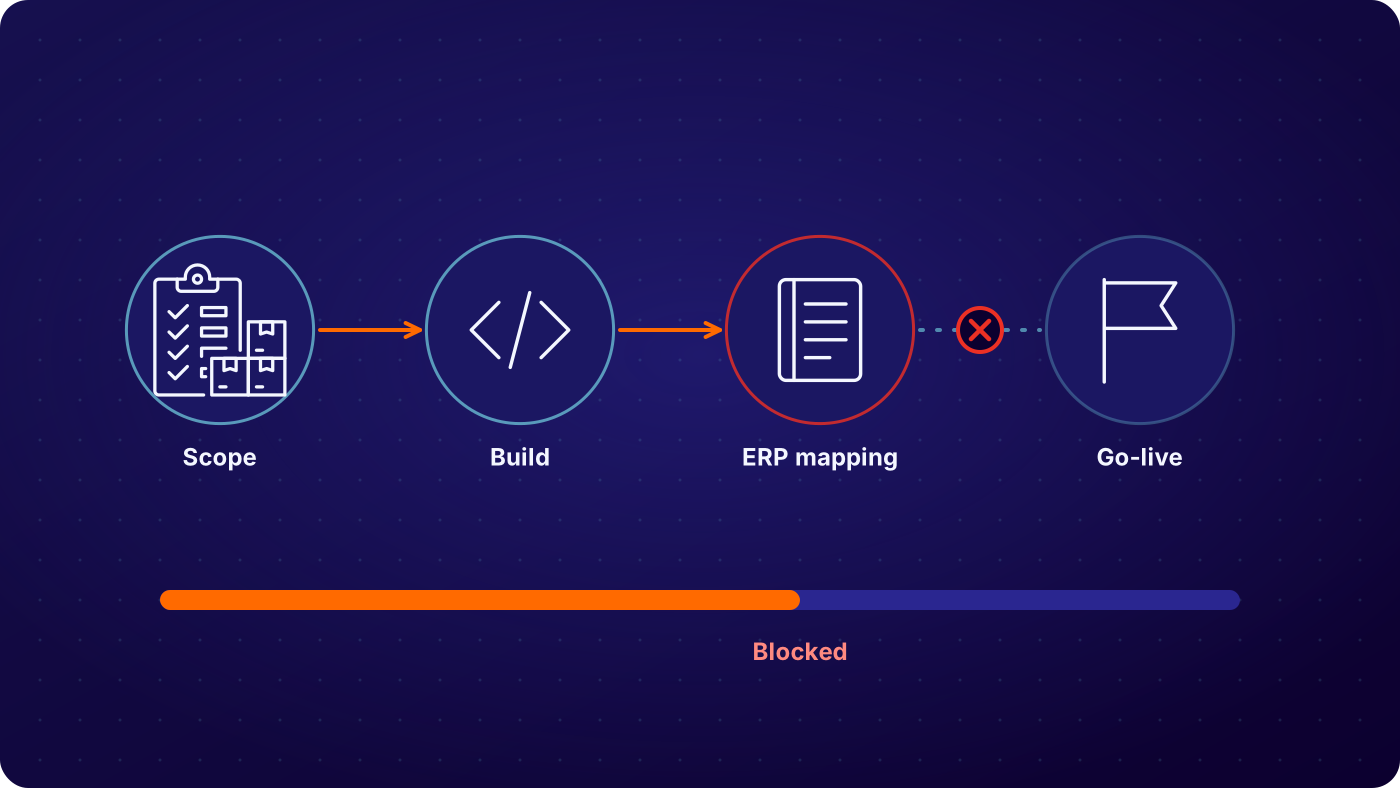

Every ERP, WMS or OMS hookup is its own project
A NetSuite connection does not carry over to a Korber warehouse. Each system has its own objects, its own fields and its own owner. Scope each one on its own, with a named person on your side.

UAT does not behave like production
A test that passes in the test environment and fails live costs weeks. The sandbox is connected to your test tenant with the same fields and message types you will use in production, so a mismatch shows up before go-live.

Go-live collides with the freeze
If the code freeze starts in November, a date in the second week of November is not a date. The plan fixes the go-live window against your freeze and peak calendar before build starts, not after testing.

IT effort stays unknown until IT weighs in
A small IT team cannot commit to work it has not seen. The scope document lists every field, every message and every owner, so your team can size its part before anyone signs.
How Does Returns Software Implementation Work, Step by Step?
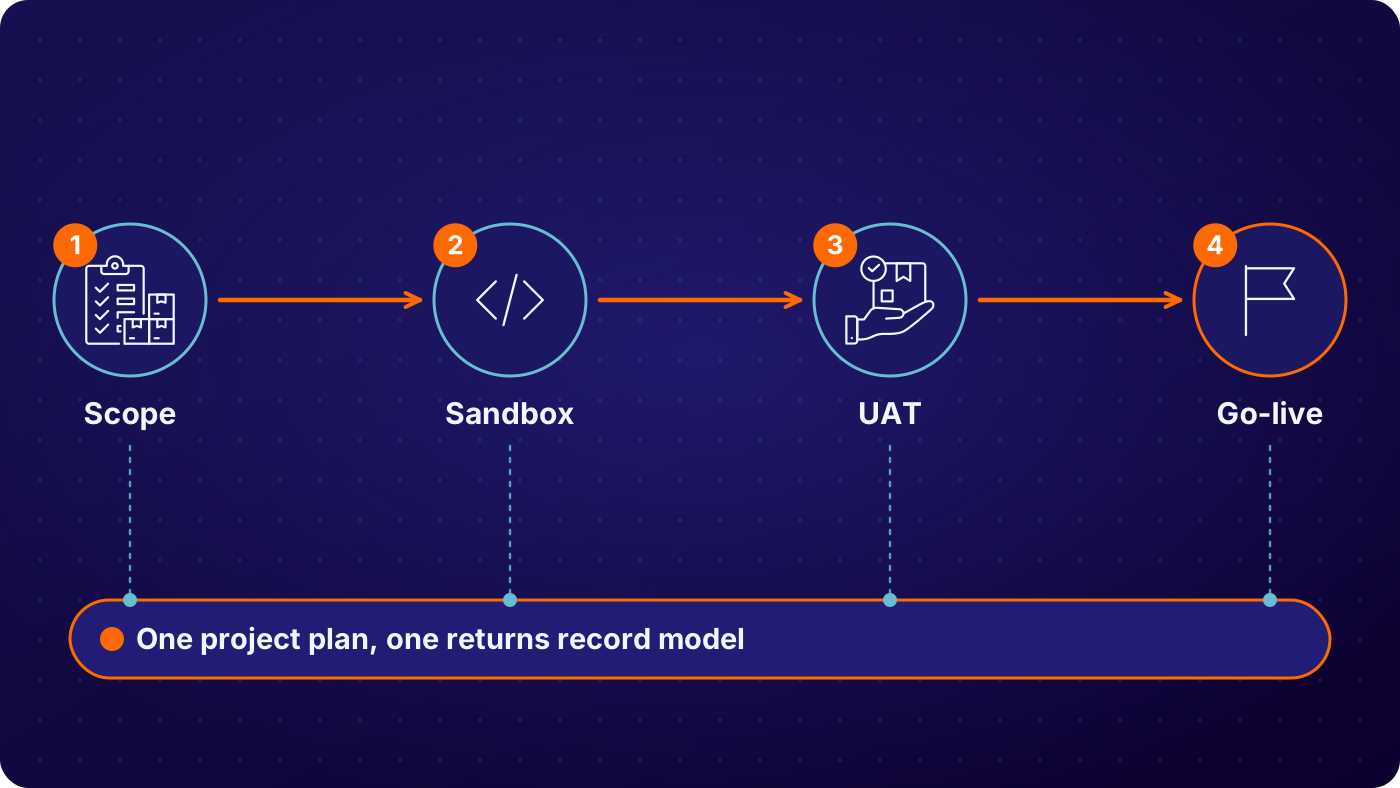
Scope and field mapping
We agree which returns flows go live first and which systems they touch. Then we map every field: order, SKU, customer, RMA, refund or credit, and the owner of each. You get one mapping document to review with your ERP, OMS and WMS owners. Changes after this point go through a change list, so the scope stays visible.
See: returns initiation, integrations
Sandbox and SIT
We connect a ReverseLogix sandbox to your test environment. Messages flow both ways, and system integration testing checks that each one posts to the right object with the right fields. Errors and payloads are visible to both teams, so nobody has to guess what a failed message contained.
See: platform
UAT with your team
Your returns, customer service and finance people run test cases on real scenarios: a standard return, an exchange, a missing item, a refund at custody transfer. Defects are logged and ranked. Blockers stop go-live and everything else moves to a later release. Your team signs off the results.
See: returns processing

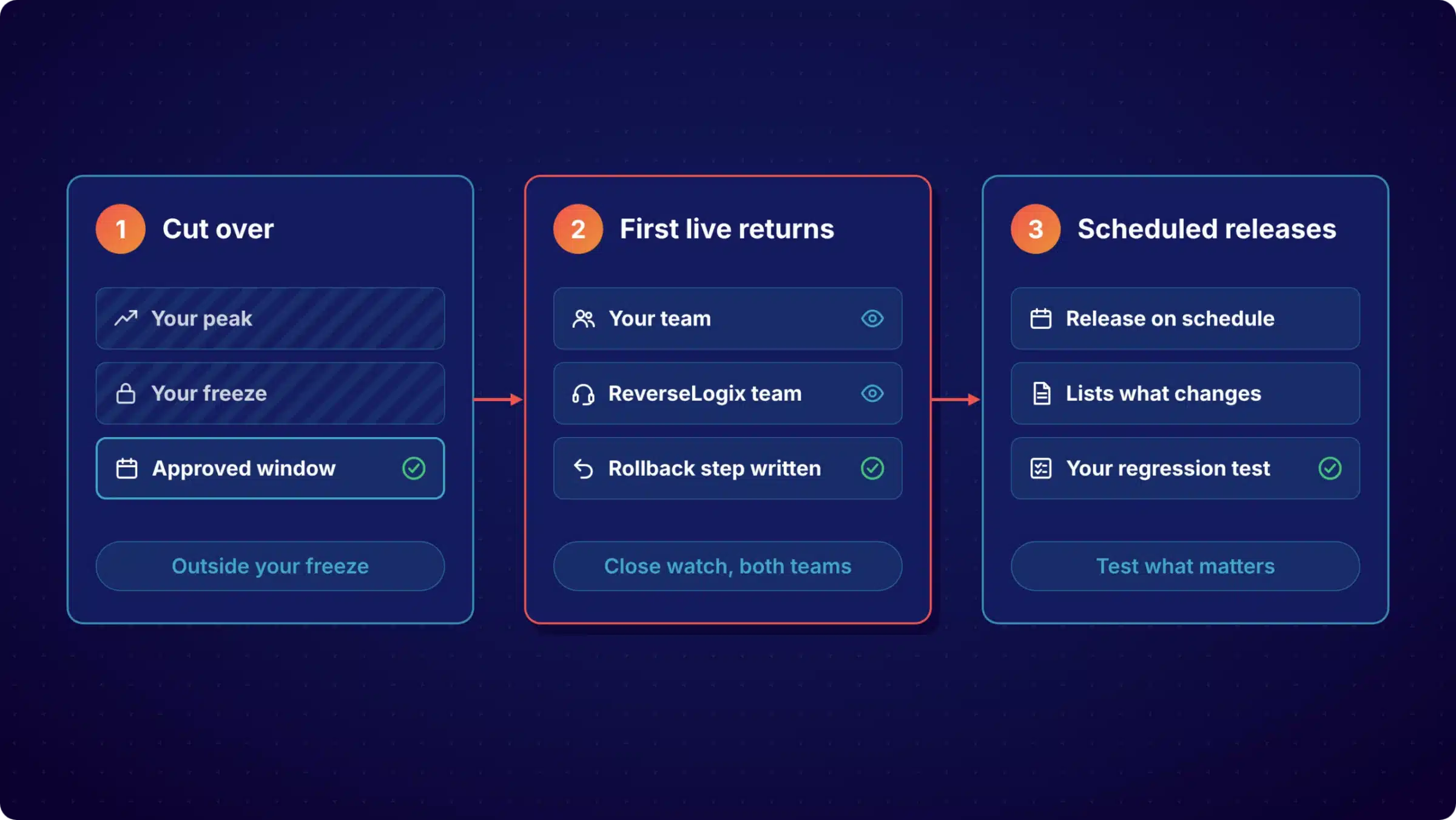
Go-live and first returns
We cut over in the window you approved, outside your freeze. The first live returns get a close watch from both teams, with a rollback step written down before the day. After that, changes go into scheduled releases, and each release lists what changes so your team can regression test what matters.
See: analytics
| Condition at inspection | Typical route | Recorded on the return |
|---|---|---|
| Scope agreed, fields to be mapped | Mapping document reviewed with your system owners | Order, SKU, customer, RMA and refund fields, with an owner for each |
| Sandbox connected to your test environment | SIT runs messages both ways against test data | Test messages, payloads, errors and fixes |
| SIT passed, UAT ready to start | Your team runs agreed test cases on real scenarios | Test cases, results, defects ranked as blocker or later release, sign-off |
| UAT signed off, go-live window approved | Cutover outside your freeze, with a rollback step | Go-live plan, first live returns, issues raised in the first days |
| Repair or technician flows in scope | Extra configuration and a second test cycle, so the timeline extends | Repair statuses, technician assignment, customer quote approval, parts |
Example implementation plan for returns initiation. Each project sets its own dates, owners and test cases.
What Does Your Team Do During Returns Management Implementation?
Your team supplies four things: a returns owner who decides the rules, an IT contact who can answer for each connected system, testers who know the daily work, and someone to approve go-live. The ReverseLogix team does the configuration, the mapping document, the sandbox and the test support. The ask on your side is time and decisions, not a build. Total effort depends on how many systems connect and how far your process sits from the standard template.
See: IT team page
Who does what
- Returns or operations lead: return rules, reasons, grading and routes
- IT contact for each system: access to the test environment, field questions, security review
- Customer service and finance testers: UAT cases, sign-off, refund and credit checks
- ReverseLogix implementation team: configuration, mapping, sandbox, test support, go-live plan
How Do You Know the Returns System Integration Is Working Before and After Go-Live?
You see the same evidence in testing that you see in production: every message, its status and its outcome. That matters because most integration trouble is quiet. A return posts twice and the ERP flags a duplicate. An order is not found and nobody sees why. A credit sits waiting for a manual entry. The implementation plan sets up the checks below so problems show up as records, not as a phone call from finance.
- Message log with status for each return event sent to your systems
- Failed messages with the reason, so a team can fix the cause
- Duplicate checks before a return or credit posts twice
- Defect list from UAT, ranked as blocker or later release
- Credits and refunds matched to the returns that triggered them
See: analytics, returns processing
Which of Your Systems Does Returns System Integration Touch?
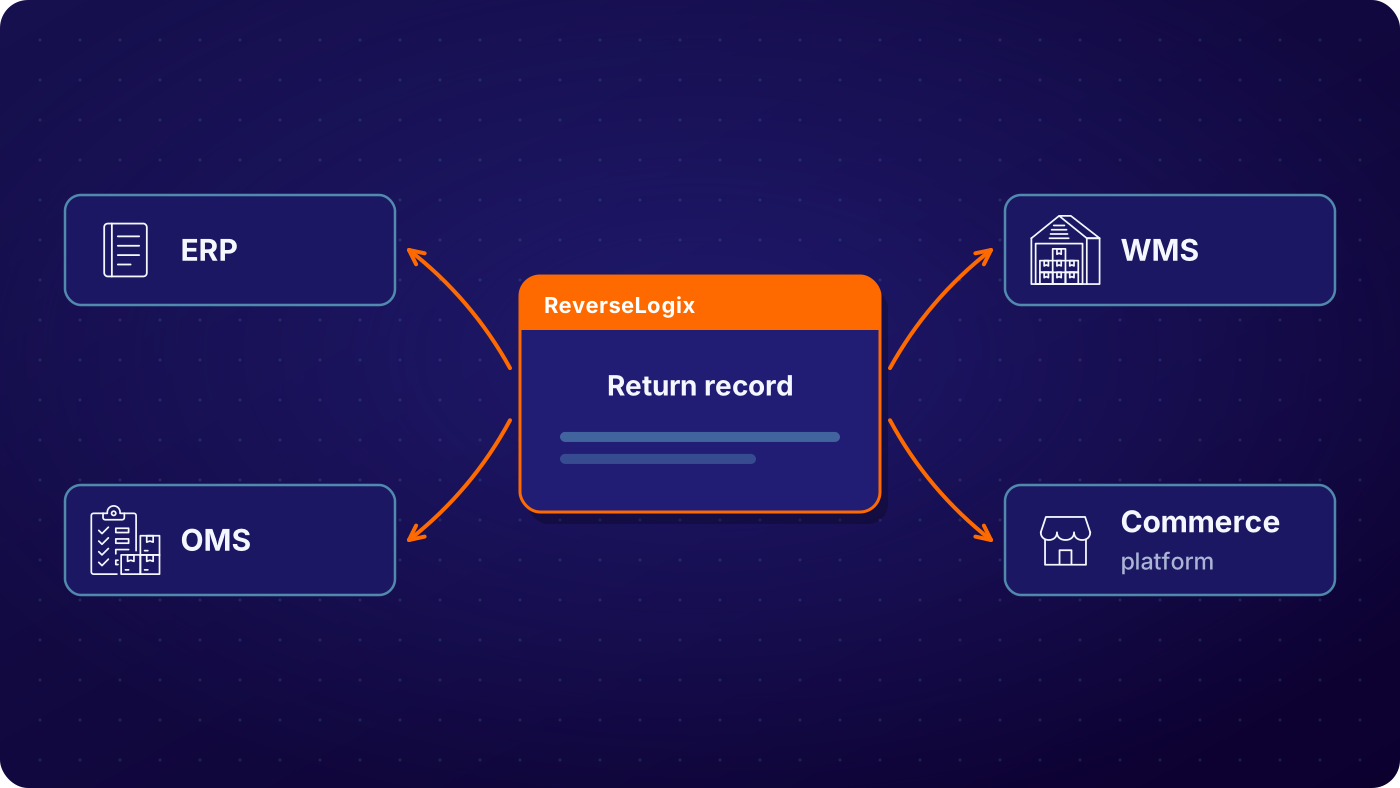
It touches only the systems you name in scope, and none of them is replaced. Your ERP, OMS, WMS and commerce platform stay the systems of record. ReverseLogix connects to SAP, Oracle, NetSuite, Microsoft Dynamics 365, Salesforce, Shopify, Magento, BigCommerce and WooCommerce, to warehouse platforms such as Blue Yonder, Manhattan, Korber and SAP EWM, and to helpdesks such as Zendesk, Freshdesk and ServiceNow. It is API-first, and over 400 carriers in more than 100 countries are connected. If a system is not on the list, we scope it in the first step, before dates are set.
See: integrations, SAP, NetSuite
What Access, Audit and Change Controls Apply During the Project?
Access is role-based, and every record carries a full audit history. During implementation that means your security team can review who sees what before the sandbox connects, and credentials for your test environment are shared through the route your security team approves. Certifications are shared during evaluation, so your reviewers have them before scope is signed.
Change control runs through the project. The mapping document is the reference, changes go on a list, and each release states what it changes. That gives your team what it needs to regression test the parts that moved and to hold a release if the calendar says no.
See: security
Your next questions, answered





Returns software implementation: questions and answers
The standard go-live for returns initiation is 4 to 6 weeks. Repair and technician flows extend that, because they add statuses, quotes, parts and a second test cycle. The number of connected systems and the state of your test environments also move the date. The plan sets a go-live window against your calendar in the first step.
Your IT team answers field questions for each connected system, provides access to a test environment, completes any security review and supports SIT. It does not build the returns system. The scope document lists each task and owner, so a small IT team can size its part before signing anything.
Yes. We connect a ReverseLogix sandbox to your test environment, run system integration testing on each message, then your team runs UAT on real scenarios. Defects are ranked as blockers or later release items, and your team signs off results before go-live is scheduled.
The sandbox uses the same fields and message types as production, which narrows that gap, but it cannot remove it. Both teams see message status and errors in testing and live, and the first live returns get a close watch. A rollback step is written down before the day.
Yes. The go-live window is agreed in the first step against your freeze and peak calendar. If the date slips, the plan shows what moves. Cutover happens in a window your team approves, not on a date fixed by a project template.
ReverseLogix integrates with SAP, Oracle, NetSuite, Microsoft Dynamics 365, Salesforce, Shopify, Magento, BigCommerce and WooCommerce. It also connects to WMS platforms such as Blue Yonder, Manhattan, Korber and SAP EWM, to helpdesks including Zendesk, Freshdesk and ServiceNow, and to over 400 carriers. It is API-first.
Changes go into scheduled releases. Each release lists what it changes, so your team can decide what to regression test and whether the release fits your calendar. Late scope changes before go-live go on a change list that both teams review, so the effect on the date is visible.
It does not need to. Your current ERP, commerce platform and warehouse system keep running, and ReverseLogix connects through their APIs in a test environment first. Cutover is planned for a window you approve, with a rollback step, so live returns move over on a date you control.
Further reading: Reverse Logistics Association.
See What Your Implementation Plan Would Look Like
A specialist walks through your systems, your calendar and your team, and sketches the scope, the test phases and a go-live window before any commitment.


