

Sporting Goods Returns Management Software for bikes, fitness equipment, wearables and outdoor gear
One record for every warranty claim, repair and return, from the first serial check to the last disposition.
A customer’s e-bike stops charging in week three of the season. Your team ships a replacement so they can ride this weekend, and now the defective unit is somewhere between a dealer’s back room and a carrier hub. Nobody knows if it is coming back. ReverseLogix is sporting goods returns management software for manufacturers and brands that sell bikes, fitness equipment, wearables and outdoor gear. It runs warranty checks, advance replacement, inspection, repair and disposition in one system, and posts to the ERP and commerce platform you already run.
Returns teams using ReverseLogix include:




Why Are Sporting Goods Returns So Hard to Manage?
Sporting goods returns are hard because the product is expensive, seasonal, battery powered and worth less every month it sits in a box. A bike frame, a treadmill and a smartwatch each need a different decision, and most teams make those decisions in email and spreadsheets.
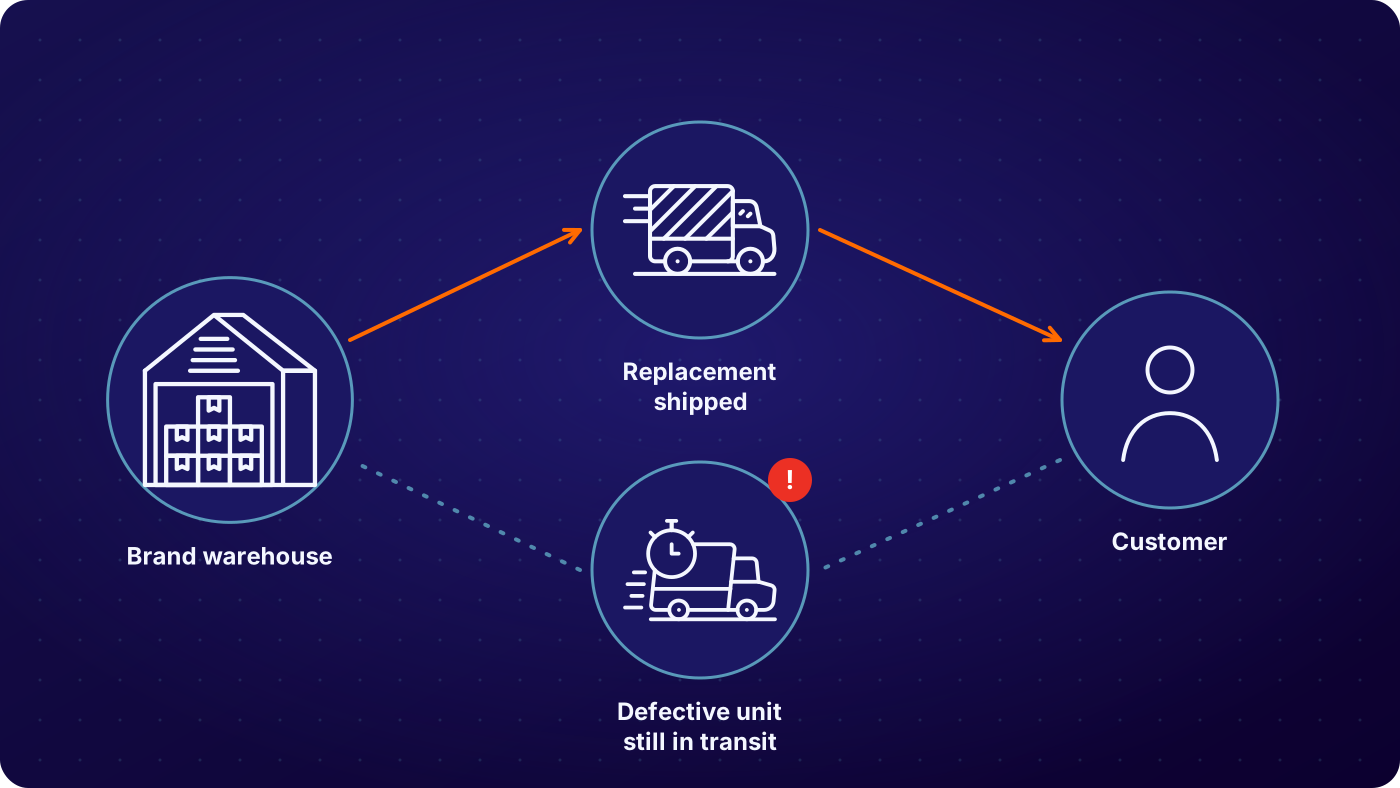

Replacements ship before the defective unit comes back
To keep a rider or an athlete happy, you cross-ship first. Then the broken unit takes six weeks to arrive, or never does. Without a link between the replacement and the return, you carry that exposure with no way to see it.

Repair or replace is a guess when gear loses value fast
Last year’s model drops in price the day the new one launches. Nobody wants to spend more on a repair than the unit is worth, but the repair cost and the current value sit in different places.

Warranty entitlement lives in three places
The serial number says one thing. The registration says another. The receipt from a dealer or a marketplace says a third. Claims get paid that should not be, or denied that should be honored.

Batteries and cross-border returns need paperwork
A returned e-bike, watch or headlamp holds a lithium battery. Shipping it across a border means transport documents, and in the EU it also touches producer and WEEE records. A box with no paperwork stops at the dock.
How Does Fitness Equipment Warranty Management Run in One System?
Authorize and check entitlement at intake
A customer, dealer or distributor starts a claim by portal, email or API. The system checks the serial number, the warranty registration and the proof of purchase before anything ships. Rules by product, value and customer tier decide whether the answer is a repair, a replacement, a part or a refund. Photo or video evidence attaches to the request.
See: returns initiation, warranty management
Ship the replacement with the return linked
When advance replacement is approved, the replacement shipment and the expected return sit on one record. If the defective unit does not arrive in the window you set, the record flags it. Finance sees the open exposure, not a surprise at quarter end.
See: advance exchange
Receive, inspect and cost the repair
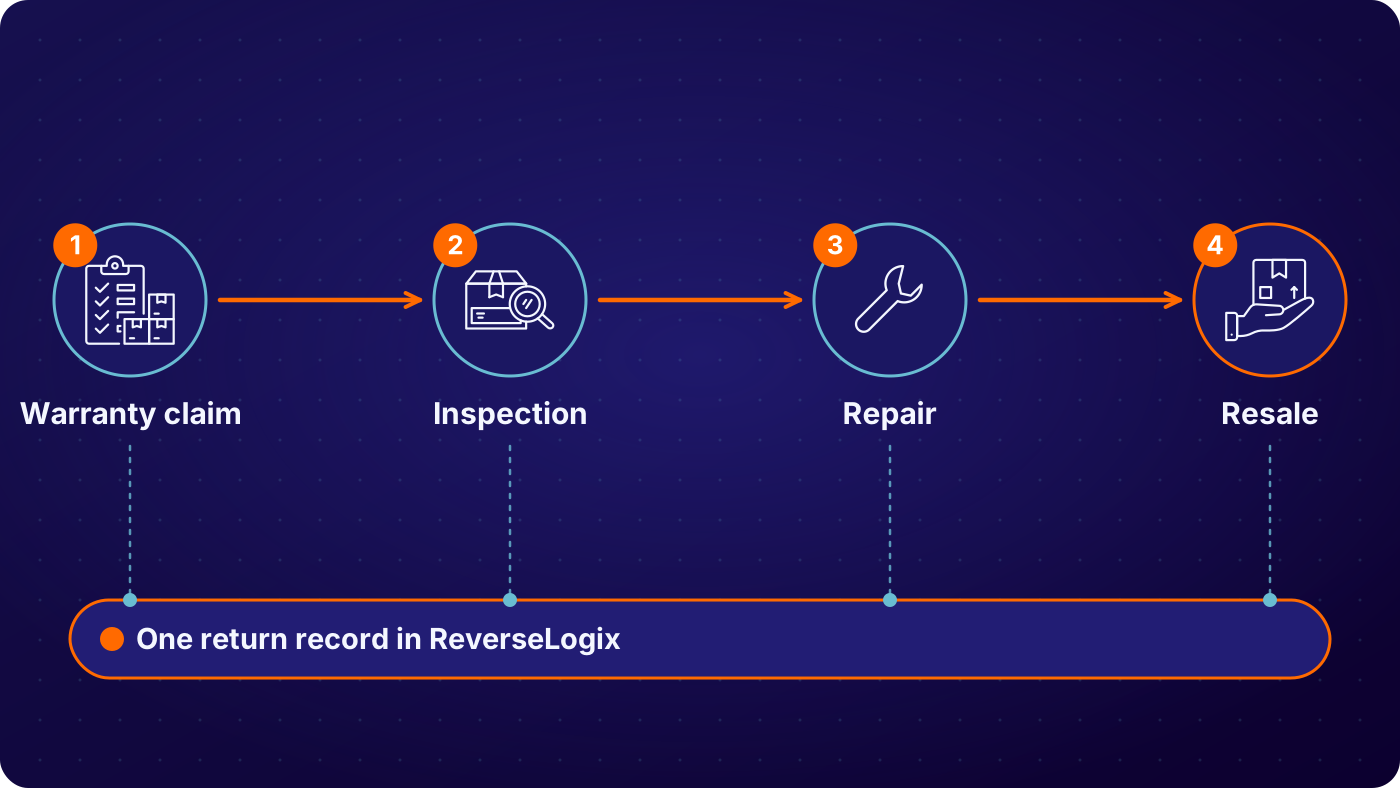
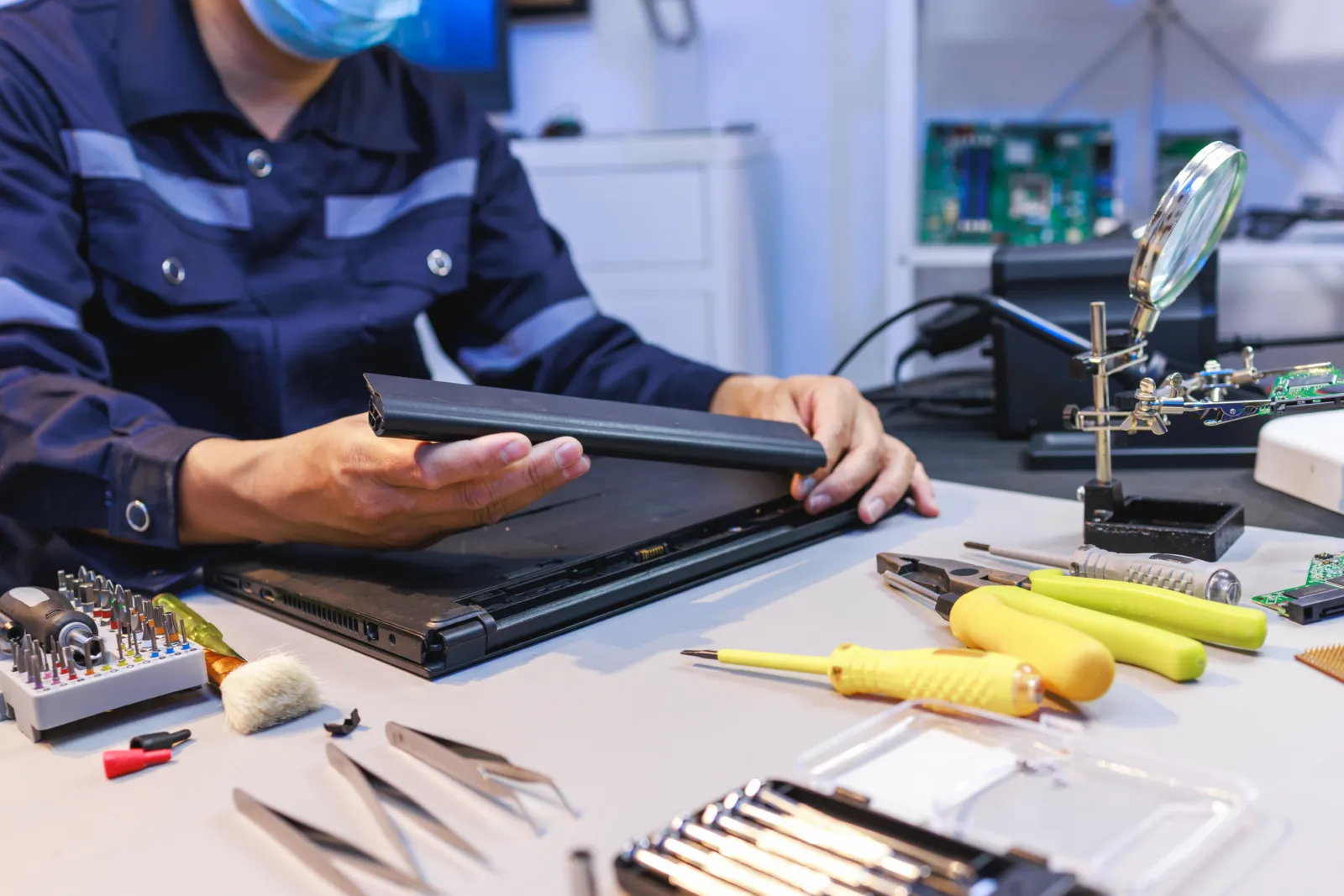
Each unit is received against its RMA and tested against criteria for that product, with defect codes and photos on the record. Repair carries parts and labor as they accumulate, so the team can compare the cost so far with what the unit is worth now.

Decide the destination and resell
A repaired or graded unit goes back to stock, to refurbished or open-box resale, to parts harvest, to the supplier or to recycling. The route and the grade stay with the serial number, so the listing matches what the inspector saw.
See: recommerce
| Condition at inspection | Typical route | Recorded on the return |
|---|---|---|
| Defective within warranty, advance replacement approved | Replacement ships, defective unit expected back, flag if late | Entitlement result, replacement shipment, return due date, serial, timestamp |
| Out of warranty, repair cost below the value rule | Quote to customer, repair, return to owner | Quote, parts and labor, approval, serial, timestamp |
| Repair cost above the value rule | Offer replacement or trade-in, unit to refurbish or parts harvest | Repair estimate, value at decision, route, serial, timestamp |
| Sizing or fit exchange, unused | Restock after inspection, exchange ships | Reason, grade, exchange order, serial or SKU, timestamp |
| Damaged or swollen lithium battery | Quarantine, then the compliance team’s handling step | Condition, photos, hold reason, instruction received, timestamp |
Example configuration. Programs set their own grades, thresholds and routes.
Can Bike Returns Management Cover Consumer, Dealer and Distributor Returns in One Record?
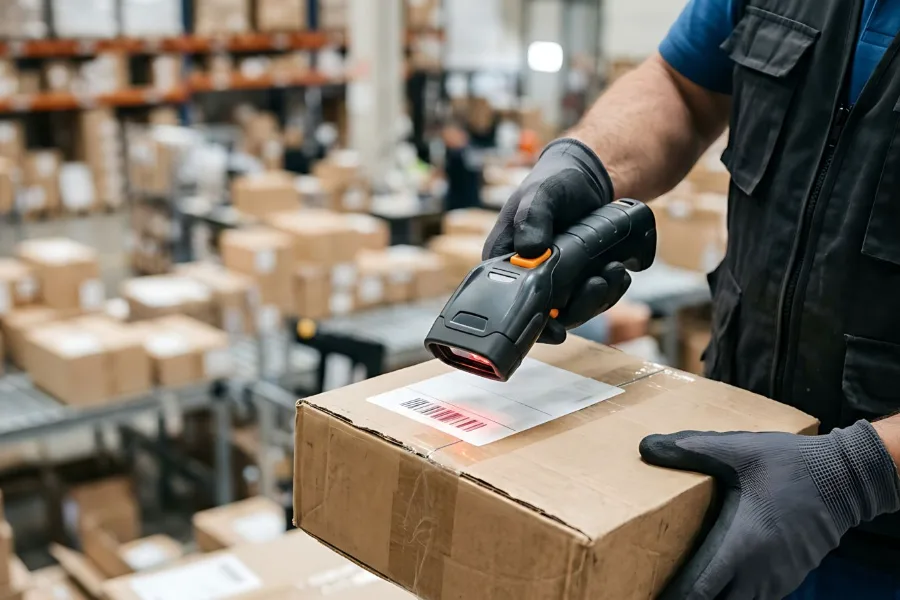
Yes. A rider files a claim from a portal. An independent bike shop sends a list of six warranty units. A distributor in another country sends a pallet of open-box fitness gear. All three land in one system, and each unit keeps one history from the first claim to the last disposition. Rules by product, value and tier apply at request. Bulk lines are checked against the order, the serial and the warranty before authorization, so nobody reconciles two lists.
See: B2B bulk returns
One record, every channel
- Consumer claims with photo or video evidence attached at request
- Dealer and distributor lists checked line by line before authorization
- Wholesale and direct-to-consumer returns on the same serial history
- Credits, replacements and repair orders posted to your ERP
How Do You Catch Warranty Abuse and Wrong-Item Returns?
You catch it by checking every claim against the serial, the registration and the claim history at intake, before a replacement ships. High-value gear invites a familiar set of cases: a unit sold gray market, a claim on a product past its coverage, a different item in the box. ReverseLogix surfaces these signals and keeps the evidence with the record. It does not prevent fraud or guarantee detection. Your team decides what to do with each case. Vision AI can also grade photos at initiation.
- Serial number outside the registered owner or the sales channel
- Claim filed after coverage ended, or against a second product with the same serial
- Repeat claimants across consumer, dealer and marketplace channels
- Different item, or an empty box, when the RMA is received
- Replacement shipped but the defective unit never received
Your ERP and Commerce Platform Stay the Systems of Record
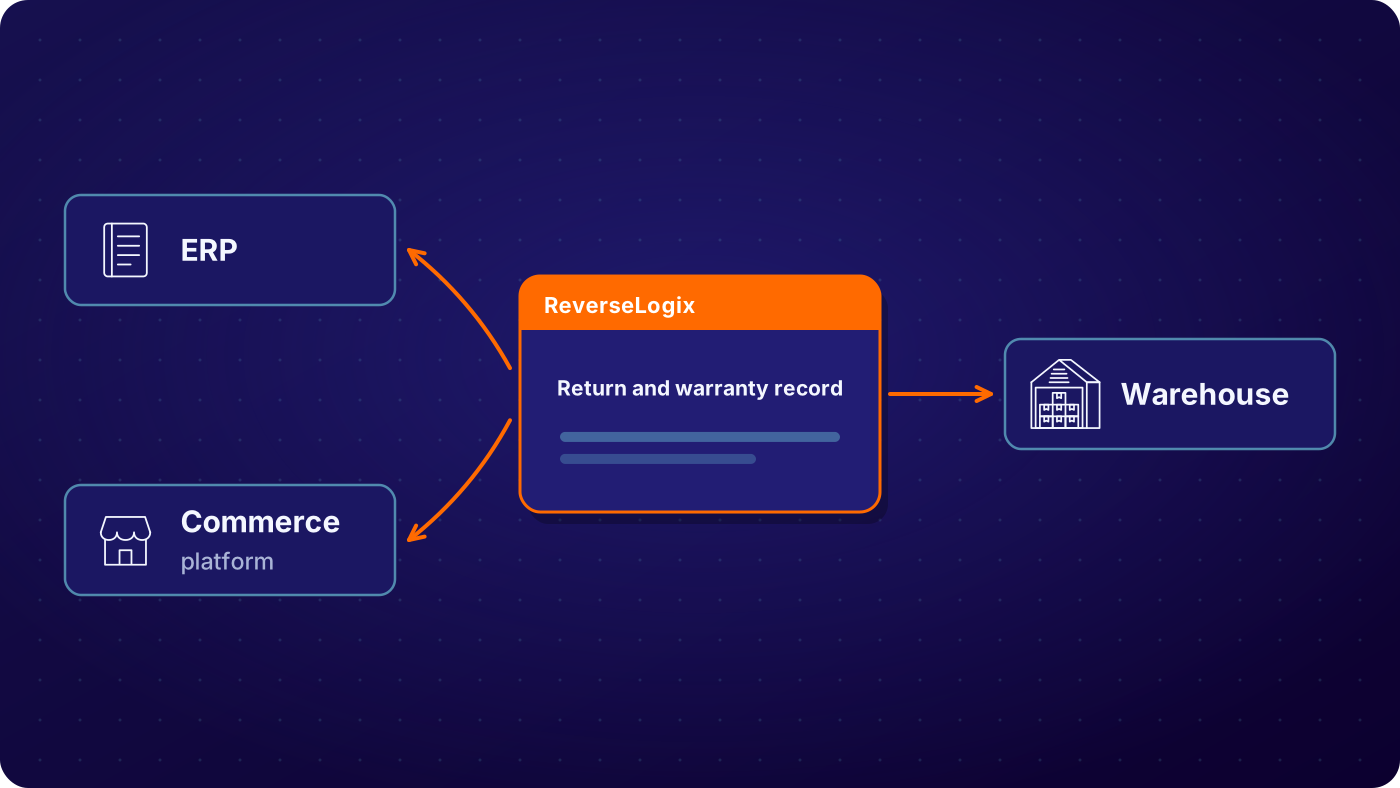
ReverseLogix authors the return, warranty and repair record in one place and posts to your systems of record. It integrates with SAP, Oracle, NetSuite and Microsoft Dynamics 365, with Shopify, Magento, BigCommerce and WooCommerce, and with warehouse systems such as Blue Yonder, Manhattan, Korber and SAP EWM. It does not replace any of them. The integration takes mapped fields, a sandbox, user acceptance testing and a go-live plan. Standard go-live for initiation is 4 to 6 weeks, and repair flows extend it.
See: integrations, implementation
Records for Lithium Battery Transport and WEEE Obligations
A returned e-bike, fitness tracker or headlamp carries a lithium battery, and shipping it across a border needs transport documents. In the United States, lithium cells and batteries fall under the Department of Transportation rules at 49 CFR 173.185, and air shipments also follow IATA rules. Internationally, lithium batteries ship as Class 9 dangerous goods, and damaged or defective ones carry stricter handling. ReverseLogix does not give hazardous materials shipping or regulatory advice. Your compliance team owns those rules, and ReverseLogix runs them as workflow steps.
In the European Union, electrical and electronic products sold by a producer fall under WEEE rules, and batteries under separate battery rules. Producers keep records of what comes back and how it was treated. ReverseLogix does not claim compliance for you. It carries the serial, return reason, condition, photo evidence, route and timestamps that your compliance and reporting teams draw on.
Your next questions, answered

Sporting goods returns management software: questions and answers
Sporting goods returns management software runs a returned or claimed product through intake, warranty check, inspection, repair and disposition in one system. ReverseLogix is built for manufacturers and brands selling bikes, fitness equipment, wearables and outdoor gear, direct and through dealers and distributors. It is used by returns, service, operations and finance teams.
The replacement shipment and the expected return are linked on one record. When a claim is approved, the replacement ships and the system tracks the defective unit against a due date you set. If it does not arrive in time, the record flags it, so your team can chase it or bill for it.
Repair processing accumulates parts and labor on the record, so the team compares repair cost with the unit’s value at the time of the decision. You set the rule, for example a repair cost limit by product or model year. Above the limit, the unit routes to replacement, refurbishment or parts harvest instead.
It checks the serial number, the warranty registration and the proof of purchase at the point of request, before anything ships. Rules by product and channel decide the result. Because serial, registration and claim history sit on one record, your team sees why a claim was approved or denied, and can show it later.
Battery and electronics rules run as configurable workflow steps. A damaged battery can be quarantined and routed to the handling step your compliance team defines, and the condition, photos and instructions are recorded. ReverseLogix does not give hazardous materials or regulatory advice. Your compliance team owns those rules, and the system applies them and keeps the record.
Yes. Rules run at request, so a spike in claims after a launch or a holiday does not become a spike in email. Exchanges for size or fit can ship as soon as the request is approved, and the returned unit is inspected and restocked against the same record. Volume handling depends on your warehouse capacity and configuration.
Yes. Consumer, dealer, distributor and marketplace returns share one unit history, so every party adds to the same record. Bulk upload checks each line against the order, the serial and the warranty before authorization. Valid lines move forward and rejected lines are separated, so nobody reconciles separate lists.
No. ReverseLogix keeps the returns, warranty and repair record and posts to your ERP and commerce platform, which stay the systems of record. It integrates with SAP, Oracle, NetSuite, Microsoft Dynamics 365, Shopify, Magento, BigCommerce and WooCommerce. The project takes mapped fields, a sandbox, user acceptance testing and a go-live plan.
Further reading: National Retail Federation research on retail returns.
See Where Your Warranty and Returns Process Leaks Value
A specialist walks through your claim intake, repair and disposition flow and shows where cost and exposure build up, before any demonstration.


