

Marketplace and D2C Returns Management Software for sellers with Amazon, Walmart and own-site volume
Every return from every storefront in one record, checked against the refund before the money moves.
Monday morning. The marketplace dashboard shows 1,400 refunds issued over the weekend. The warehouse received 900 boxes. Finance asks where the other 500 went, and nobody can say. ReverseLogix is marketplace and D2C returns management software for brands that sell on Amazon, Walmart and their own sites. Returns from every storefront land in one record, matched to the order, the unit and the refund. Some of those returns start with your customer. Some start with the marketplace, and no RMA ever reaches you. The system takes both, receives the unit against whatever record exists, and posts the result to your ERP and commerce platform, so your team reconciles refunds against receipts from one place.
Returns teams using ReverseLogix include:




Why Is Marketplace Returns Management So Hard to Combine With D2C?
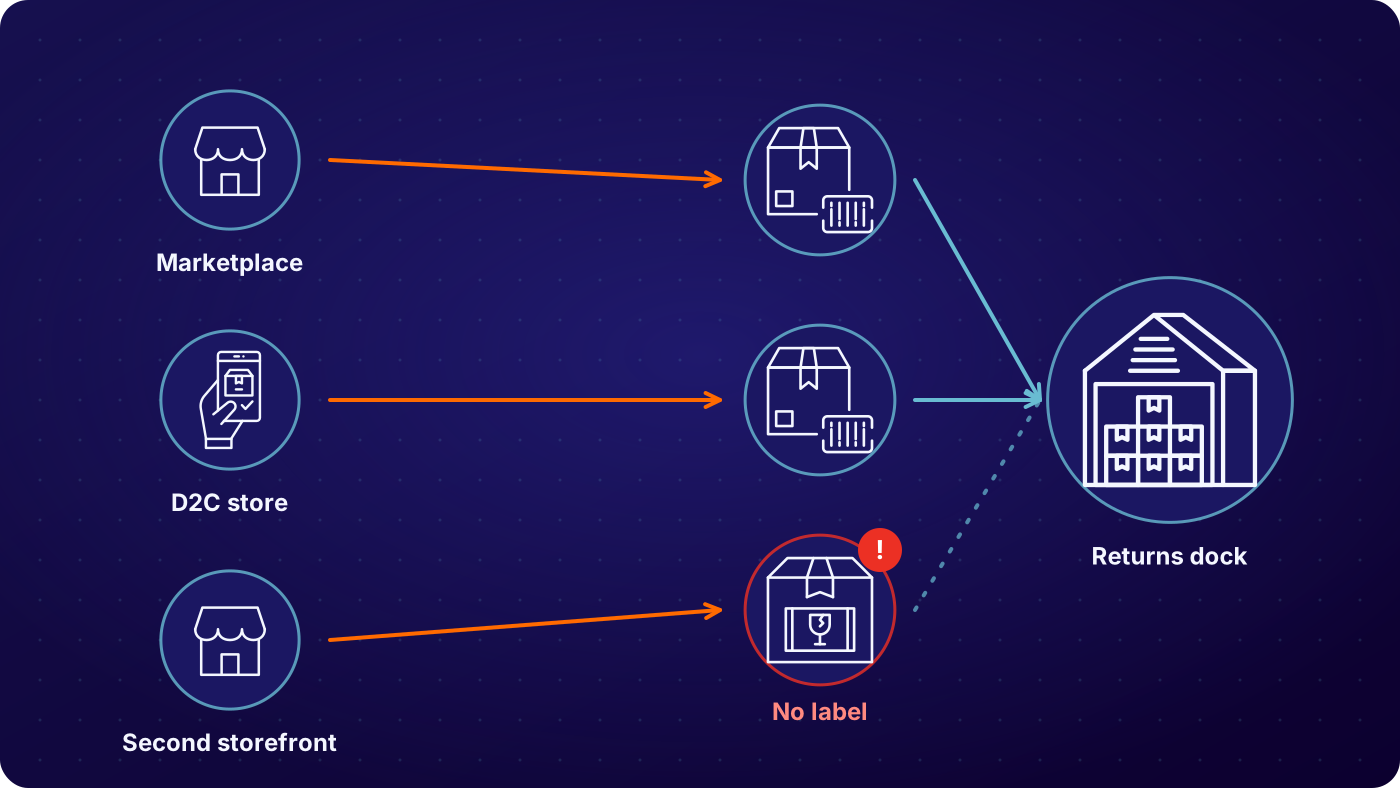
Every storefront has its own return rules, its own refund timing and its own idea of what a return is. Your own website is one more. The boxes all come back to the same dock.

Boxes arrive with no RMA
A marketplace can approve a return without telling you. The box shows up on the dock with a label and nothing else. Someone has to work out which order it belongs to, or receive it blind and hope.

The refund goes out before the goods come back
The marketplace refunds the buyer on its own schedule. Your warehouse receives the unit days later, or never. Finance sees a credit with no receipt behind it, and the gap is only found at month end.

Thin margins leave no room for handling
Each return touches the box several times: receive, look up, inspect, grade, put away. At marketplace volume, every extra touch is labor you cannot recover from the unit.

Abuse hides in the volume
Repeat returners, wrong items and empty boxes are spread across three storefronts. Each channel sees a slice. Nobody sees the pattern, and the credits go out anyway.
How Does a Marketplace or D2C Return Move Through One System?
Intake from every storefront
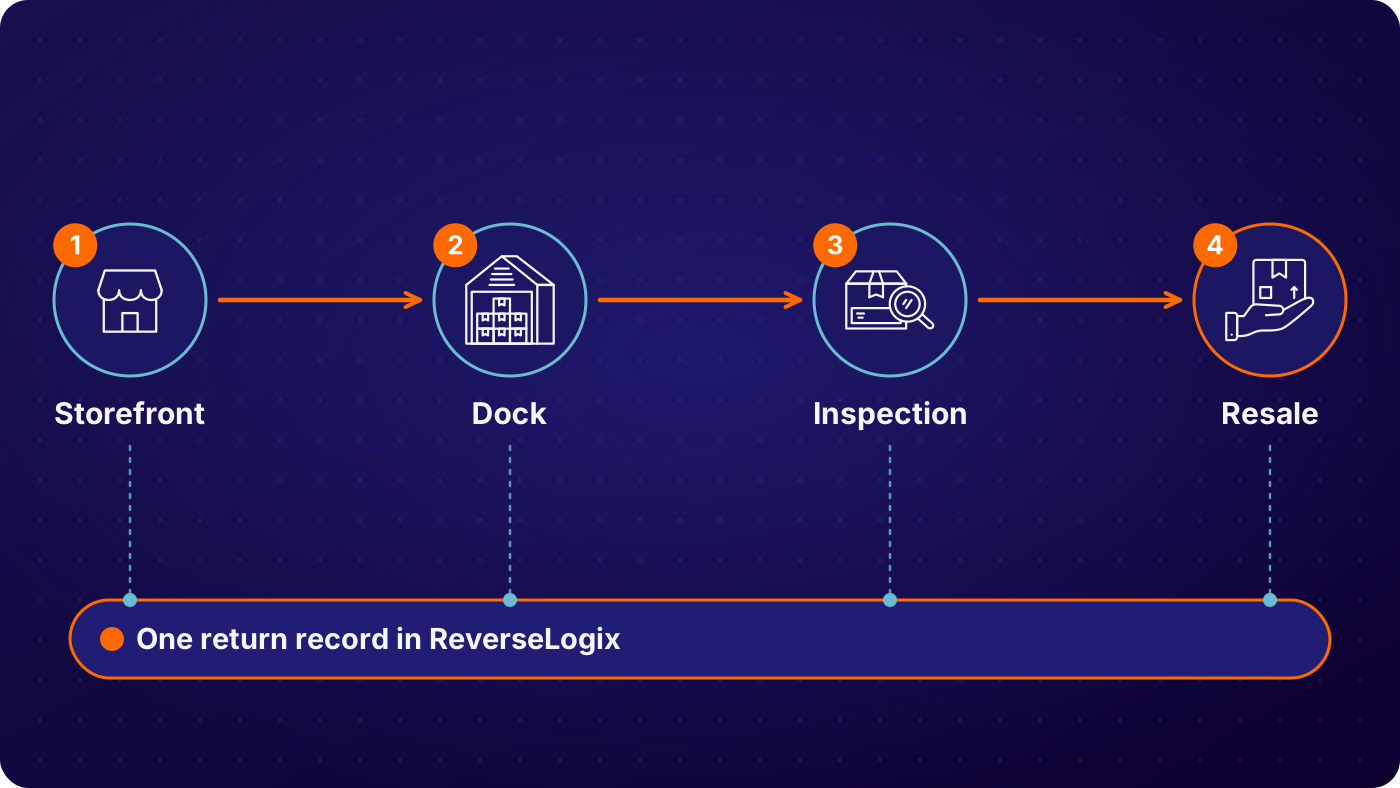
Own-site customers start a return in your branded portal, with rules by product and reason applied at request. Marketplace returns enter as records too, matched to the order where an order reference exists. Serial and reason are captured up front, so the unit has an identity before it arrives.
See: returns initiation
Receiving against whatever record exists
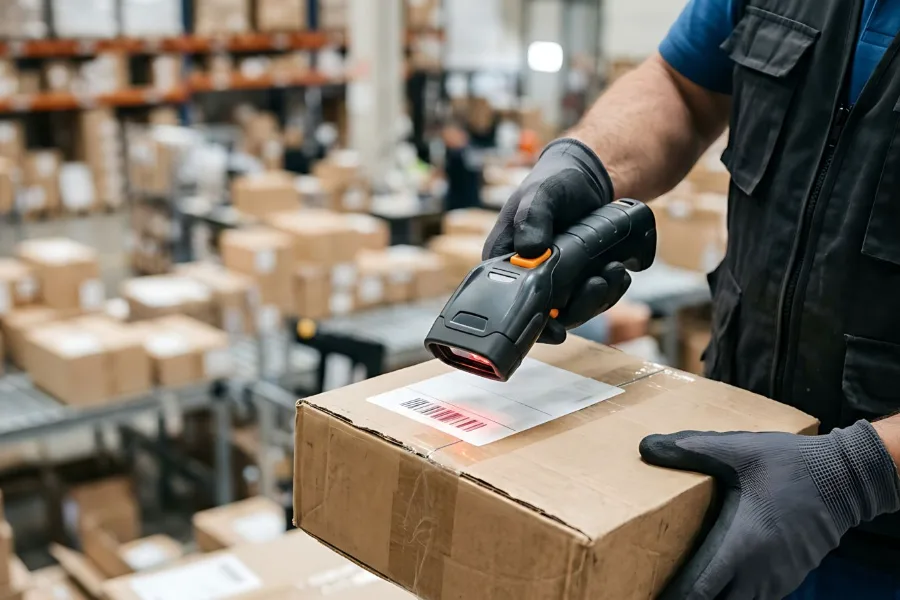
The dock scans the box and the system finds the return. If a marketplace sent it with no RMA, the receiver logs it as a blind receipt against the order and serial, not as a mystery pallet. Nothing waits for someone to search three inboxes.
See: returns processing
Inspection, grading and refund check
Each unit is inspected and graded to criteria set by SKU. The grade and photos go on the record. The refund trigger sits at custody transfer, so your team compares what was refunded with what was actually received.
See: RMA software


Disposition and open-box resale
A unit graded complete and lightly worn can go to an open-box channel instead of a liquidation pallet. Others go to restock, refurbishment, return to vendor, liquidation or recycling. The route and the grade stay with the unit.
See: recommerce
| Condition at inspection | Typical route | Recorded on the return |
|---|---|---|
| Own-site return, within window, unopened | Restock after scan | Grade, return reason, route, serial, timestamp |
| Marketplace-initiated return, no RMA | Blind receipt matched to order and serial, then inspection | Match method, order reference, grade, serial, timestamp |
| Refund issued, unit not received | Flagged for reconciliation and carrier follow-up | Refund reference, expected unit, days open, flag owner, timestamp |
| Opened, complete, cosmetic wear | Open-box resale channel | Grade, photos, route, serial, timestamp |
| Wrong item or serial mismatch | Hold, evidence attached, case sent to review | Expected serial, received serial, photos, hold reason, timestamp |
Example configuration. Programs set their own grades, thresholds and routes.
Can Marketplace Returns Management Put Amazon, Walmart and Own-Site Returns in One Record?
Yes. A buyer on your own site starts a return in your portal. A marketplace buyer starts one on the marketplace, and the box reaches you with or without a reference. Both end up in the same system, matched to the order and the serial where those exist. Your team stops keeping one tracker per storefront, and each unit keeps one history from first scan to final disposition.
See: B2B bulk returns
One record, every storefront
- Own-site returns started in your branded portal, with photo evidence at request
- Marketplace returns matched to the order and serial on arrival
- Blind receipts logged against a record, not left on a pallet
- Refunds compared with receipts in one view for finance
- Credits, restock and resale routes posted to your ERP
How Does Marketplace Returns Management Catch Return Fraud and Policy Abuse Across Storefronts?
You catch it by putting every channel’s returns in one record and comparing them. A shopper who returns from your site, then from a marketplace, then from your site again looks like three good customers to three systems. In one record, the pattern shows. ReverseLogix checks serial, frequency and reason at intake, and Vision AI can grade photos so a mismatch appears before the unit ships. It surfaces the signals and keeps the evidence. It does not prevent fraud or guarantee detection, and your team decides each case.
- Serial number on the unit that does not match the order
- Repeat returners across own-site and marketplace channels
- Empty box, wrong item or a different condition than claimed
- Return reasons that do not fit the item, such as defective on a unit that shows wear
- Refunds issued with no unit received
Your ERP and Commerce Platform Stay the Systems of Record
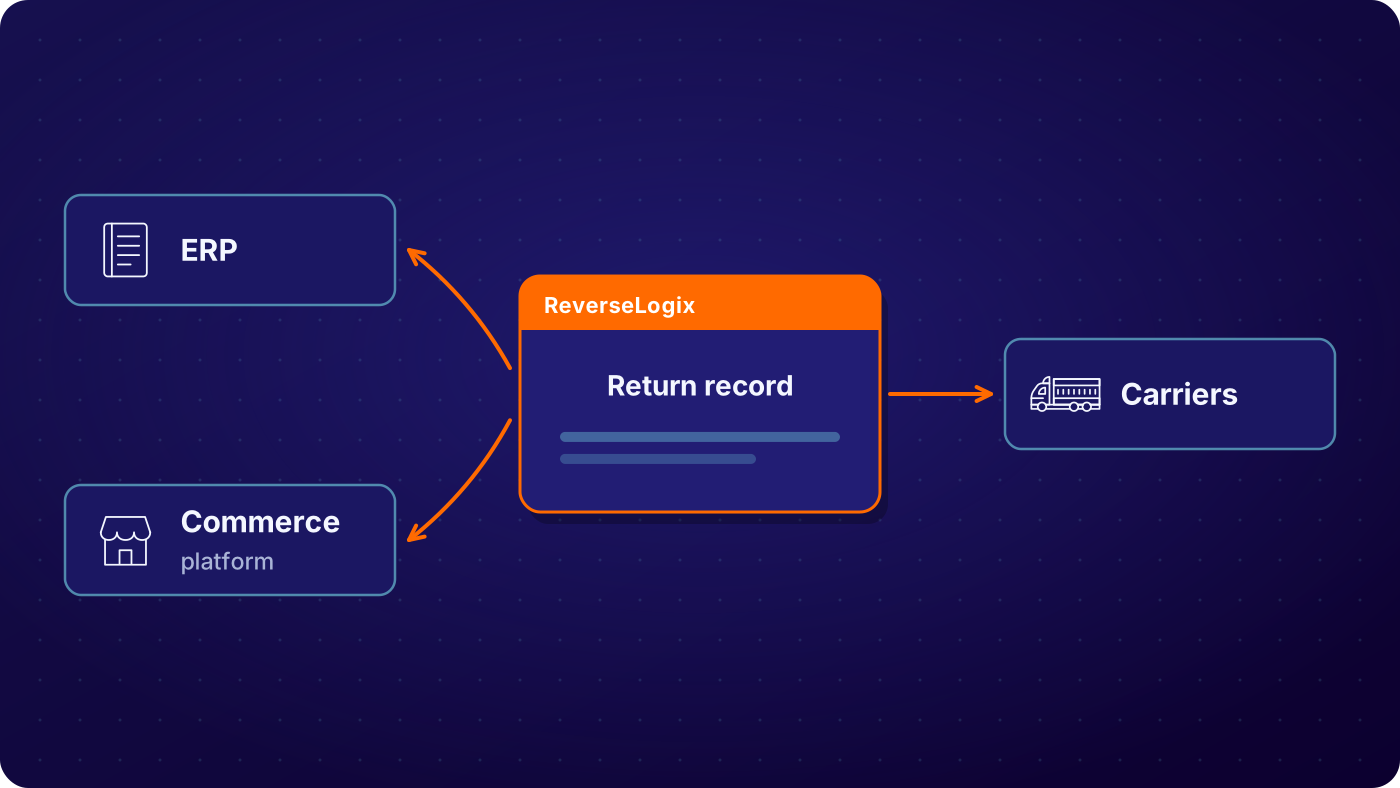
ReverseLogix authors the return and posts to the systems you already run. It integrates with SAP, Oracle, NetSuite and Microsoft Dynamics 365, with Shopify, Magento, BigCommerce and WooCommerce, with WMS platforms, and with over 400 carriers in more than 100 countries. It is API-first. Marketplace order data is brought in through the commerce platform or order feed you already use, and the field mapping, sandbox testing and go-live plan are scoped with you. Initiation typically goes live in 4 to 6 weeks.
See: integrations, implementation
Records for Consumer Return Rights and Marketplace Seller Policies
Two sets of rules apply to every return, and neither is yours to change. Consumer law sets minimum return and refund rights, and it varies by country. In the European Union, for example, distance buyers generally have a 14 day right of withdrawal. Marketplaces add their own seller policies on windows, refund timing and A-to-z style guarantee claims. ReverseLogix does not give legal advice. Your legal and compliance teams own those rules, and the system applies them as configured windows and reasons and records the result.
When a marketplace disputes a claim, or an auditor asks why a refund was issued, someone has to produce the file. ReverseLogix keeps role-based access and a full audit history on every record: the request, the reason, the receipt, the grade, the photos, the refund trigger and who changed what. Certifications are shared during evaluation.
Your next questions, answered




Marketplace and D2C returns management software: questions and answers
Marketplace and D2C returns management software puts returns from marketplaces and your own website into one record, from request through receiving, inspection, refund check and disposition. ReverseLogix serves brands that sell on Amazon, Walmart and their own sites. It is built for returns, operations, ecommerce and finance teams that reconcile refunds against what actually came back.
Receive it as a blind receipt and match it to an order and serial in the same system. The dock scans the box, the receiver records what is inside, and the system links it to the marketplace order where a reference exists. It is then inspected, graded and dispositioned like any other return, instead of sitting on a pallet.
Yes. Every return record holds the refund reference, the receipt, the grade and the disposition, so finance can compare refunds with receipts in one view. Refunds with no unit received are flagged for follow-up. The refund trigger sits at custody transfer, which keeps the credit tied to a scan.
Marketplace order and return data comes in through your commerce platform, order feed or API, and the exact connection is scoped during implementation. ReverseLogix is API-first and integrates with Shopify, Magento, BigCommerce, WooCommerce and your ERP. Confirm your marketplace data path with a specialist, along with field mapping, sandbox testing and go-live plan.
Yes. A unit graded complete and lightly worn can be routed to an open-box channel instead of liquidation. The grade, photos and serial stay with the unit, so the listing matches what the inspector saw. Other routes include restock, refurbishment, return to vendor, liquidation and recycling, all set by rule.
No. ReverseLogix does not prevent fraud or guarantee detection. It checks serial, frequency and reason at intake, compares returns across storefronts in one record, and keeps photo evidence. Vision AI can grade photos and flag mismatches. Your team reviews the signals and decides what to do with each case.
No. Your ERP and commerce platform stay the systems of record. ReverseLogix authors the return and posts results to them. It integrates with SAP, Oracle, NetSuite, Microsoft Dynamics 365, Shopify, Magento, BigCommerce and WooCommerce. Initiation typically goes live in 4 to 6 weeks, after field mapping, sandbox testing and UAT.
Further reading: National Retail Federation research on retail returns.
See Where Your Refunds and Receipts Stop Matching
A specialist walks through your storefronts, your dock and your refund flow, and shows where units and money fall out of step, before any demonstration.


