Reverse Logistics Integration with Forward Fulfillment: A Practical Guide
Online retailers usually run forward fulfillment and reverse logistics as separate functions. Running them as one operation works better.
Forward fulfillment moves goods from your supply chain to customers. Reverse logistics moves them from customers back to you. When return rates and e-commerce volumes were low, it made sense to run the two separately. That is no longer true.
E-commerce volumes are high and customer expectations have shifted. Integrating the two functions gives you a faster, more efficient returns process and helps meet sustainability goals.
This article covers the benefits of integrating forward and reverse logistics, the strategies that make it work and a step-by-step approach.
The Problems with Disconnected Logistics
Running forward fulfillment and reverse logistics as separate systems creates inefficiencies that affect cost, customer service and sustainability:
1. Redundant Processes and Higher Cost of Operations
When forward and reverse logistics rely on different systems, you get extra handling, duplicate data entry and poor transportation planning. The result is higher labor cost, slower returns processing and higher expenses overall.
2. Customer frustration
Customers care about on-time delivery and transparency. When deliveries or returns are slow and confusing, satisfaction falls. Long waits for refunds or replacements increase the risk of lost sales and negative reviews.
3. Environmental impact
Separate transportation networks for outgoing shipments and returns mean more miles, more fuel and more waste. Without integration, many returned items end up in landfill instead of being refurbished or resold.
The Benefits of Integrating Forward Fulfilment and Reverse Logistics
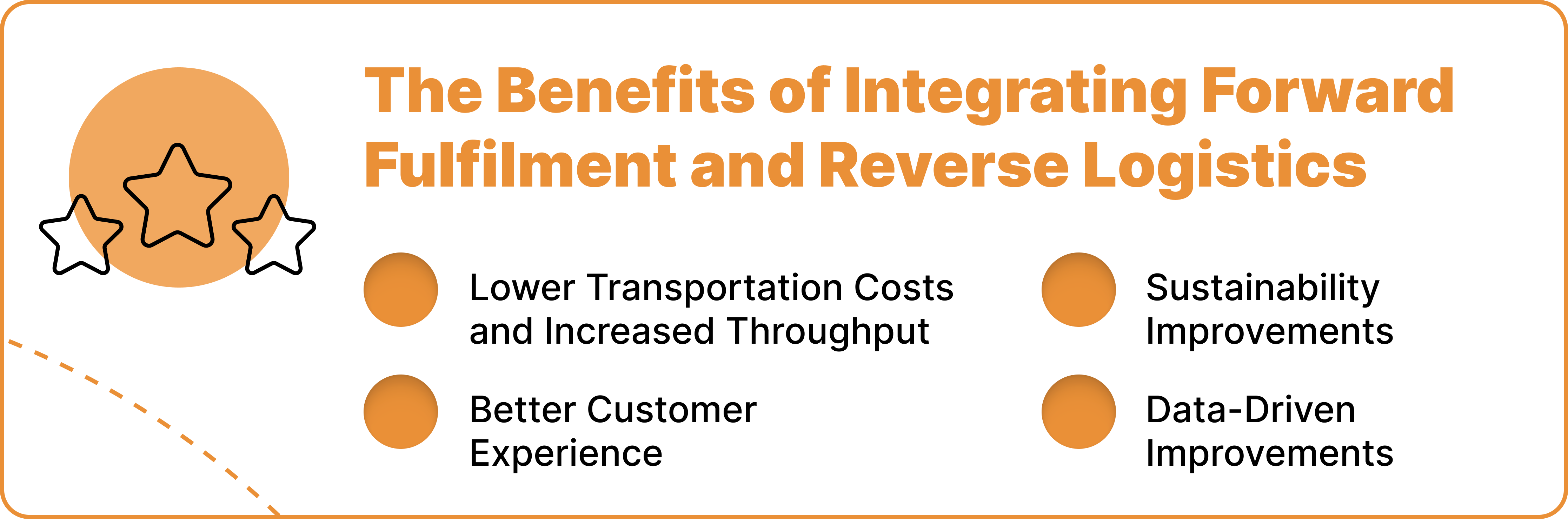
Integrating reverse logistics and forward shipping into a single operation saves cost and improves efficiency in four ways:
1. Lower Transportation Costs and Increased Throughput
A single system coordinating both flows means less handling, simpler inventory management and better use of transport. The vehicle that delivers to one customer can pick up a return from another on the same trip. Returns management is faster too, and products get back into circulation sooner.
2. Better Customer Experience
Running both flows under one system makes returns easy, quick and transparent for the customer. Customers want faster refunds and replacements, clear instructions and proactive updates, and they stay loyal to the retailers that provide them.
3. Sustainability Improvements
Sustainability matters to governments and customers. Handling forward fulfillment and reverse logistics in one operation means fewer miles traveled, which means fewer greenhouse gas emissions.
4. Data-Driven Improvements
Returns data analysis helps you improve product quality and manage inventory. If certain products are returned often, you can find the design or manufacturing issue and fix it. Asking customers why they are returning an item gives you early warning of a problem and what to do about it.
Strategies for Integrating Forward Fulfilment and Reverse Logistics
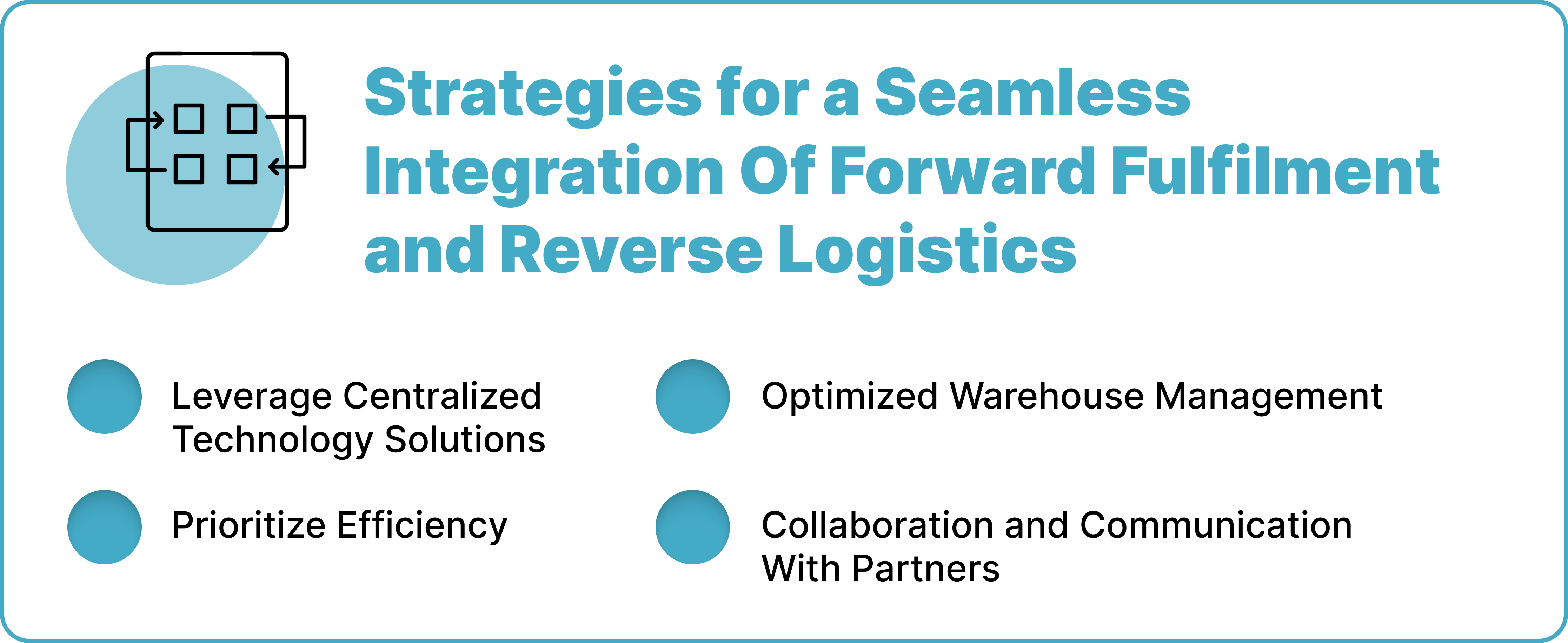
These practices make the integration work:
1. Use Centralized Technology
Use one technology layer that covers both forward shipping and returns, with real-time tracking and shared data for the warehouse and customer service teams. It has to be integrated with your other systems, such as the WMS and RMS, so every team sees the same picture of what is going out and what is coming back.
2. Prioritize Efficiency
Customers are more patient with forward shipping than with returns, but neither can suffer for the other. Process returns as quickly as possible. Automating steps such as label generation and refund approvals helps, and so does training staff to work across both flows.
3. Optimized Warehouse Management
The warehouse has to be set up for both flows. That can mean a dedicated space for returns processing inside the facility and tools for sorting and restocking.
4. Collaboration and Communication With Partners
Share the relevant information with carriers, third-party logistics providers and suppliers so they can plan their resources around your needs. Clear roles prevent delays and confusion.
Practical Guide to Integrating Forward Fulfilment and Reverse Logistics Operations
Moving to one logistics system for forward shipping and returns takes planning. Follow these steps:
1. Assess Current Operations
Before making any changes, evaluate how orders are fulfilled and returns are processed. Look for inefficiencies, delays, and communication gaps. Identify where data is missing or where separate systems make tracking difficult. Speak with warehouse staff, carriers, and customer service teams to understand their challenges.
2. Use a Centralized Technology System
Managing two separate processes with different systems leads to inefficiencies. A single platform that handles both outbound and inbound logistics improves tracking, visibility, and coordination. This could be an enterprise resource planning (ERP) system with logistics modules or a transportation management system (TMS) that integrates returns.
3. Streamline Return Workflows
The goal is to make returns flow as smoothly as outbound shipments. Set up clear steps for handling returned items, from customer drop-off to final disposition. Automate label generation, tracking updates, and refund processing. Make sure returns don’t sit idle in a warehouse but are quickly assessed for resale, refurbishment, or recycling.
4. Optimize Warehouse Layout
Dedicate space for returns near receiving docks to cut down on unnecessary movement. If returned items can be resold, have a process in place for quick restocking. If they need inspection or repairs, assign staff to handle this without disrupting order fulfillment.
5. Improve Transportation Efficiency
Consolidate returns with outbound shipments whenever possible. Work with carriers to backhaul returns on trucks that would otherwise return empty. Reduce unnecessary trips by using regional return centers closer to customers.
6. Train Employees and Standardize Processes
Consistent procedures prevent delays and errors. Train warehouse staff, customer service teams, and carriers on integrated workflows. Standardize how returned items are classified, restocked, or disposed of. Make sure employees know how to handle returns efficiently without affecting outbound shipping.
7. Partner with Carriers and Third-Party Logistics Providers
Stronger collaboration with logistics partners improves efficiency. Share data on return trends so they can plan routes more effectively. Establish clear expectations on how quickly returns should be processed and reintegrated into inventory.
8. Make Returns Easier for Customers
A smooth returns process builds trust. Provide clear instructions, prepaid labels, and multiple return options. Offer store drop-off locations, scheduled pickups, or packaging-free returns at partner locations. Communicate return status updates just like you would with outbound shipments.
9. Use Returns Data for Continuous Improvement
Tracking return reasons can help reduce future returns. Adjust quality control if a product is frequently sent back due to defects. If customers struggle with sizing, improve product descriptions. Use this data to forecast return volumes and adjust inventory accordingly.
10. Monitor and Adjust
Integration isn’t a one-time effort. Regularly review performance metrics, such as return processing times, restocking rates, and customer satisfaction. Identify bottlenecks and make improvements based on real-time data.
Simplify Your Returns Management With ReverseLogix
The ReverseLogix returns management platform handles returns from the first request to the final disposition and connects to the systems that run your forward fulfillment. Connect with us today for a demo.
Frequently Asked Questions
1. What’s the difference between forward fulfillment and reverse logistics?
Forward fulfillment is about getting products to customers, while reverse logistics moves returned products back to the business.
2. Why should e-commerce businesses combine forward fulfillment and reverse logistics?
Combining them removes duplicate steps and transport, which cuts cost, supports environmental goals and improves customer satisfaction.
3. What is reverse logistics?
Reverse logistics refers to the process of moving products from customers back to the business or supply chain. It covers returns, recycling, refurbishing, and reselling items, as well as handling defective or unsellable products. The goal is to manage these returns in a way that minimizes costs, recycles goods when possible, and maintains customer satisfaction.
Choosing a returns management system
Five factors that decide whether a returns platform works in practice.
Get a Demo
Discover how you can jump-start your returns management efforts with ReverseLogix.