

Order Tracking Software on the same platform as your returns
Pulse gives customers a branded tracking page and timely updates for every shipment, out and back.
Order tracking software shows a customer where their order is, from dispatch to delivery, and sends updates along the way. Most brands hand that moment to the carrier. The customer clicks a tracking link, lands on a carrier site, and the brand disappears until something goes wrong and the phone rings.
Pulse is the ReverseLogix order tracking software module. It tracks the outbound shipment on a page that carries your brand, sends notifications by email and text, and shares one record with the return if the order comes back. Your service team sees the delivery and the return in the same place.
Returns teams using ReverseLogix include:








Why Do “Where Is My Order” Contacts Keep Coming?
“Where is my order” contacts keep coming because the customer has to go looking for the answer. Order tracking software removes the question by telling them first.

The carrier owns the tracking page
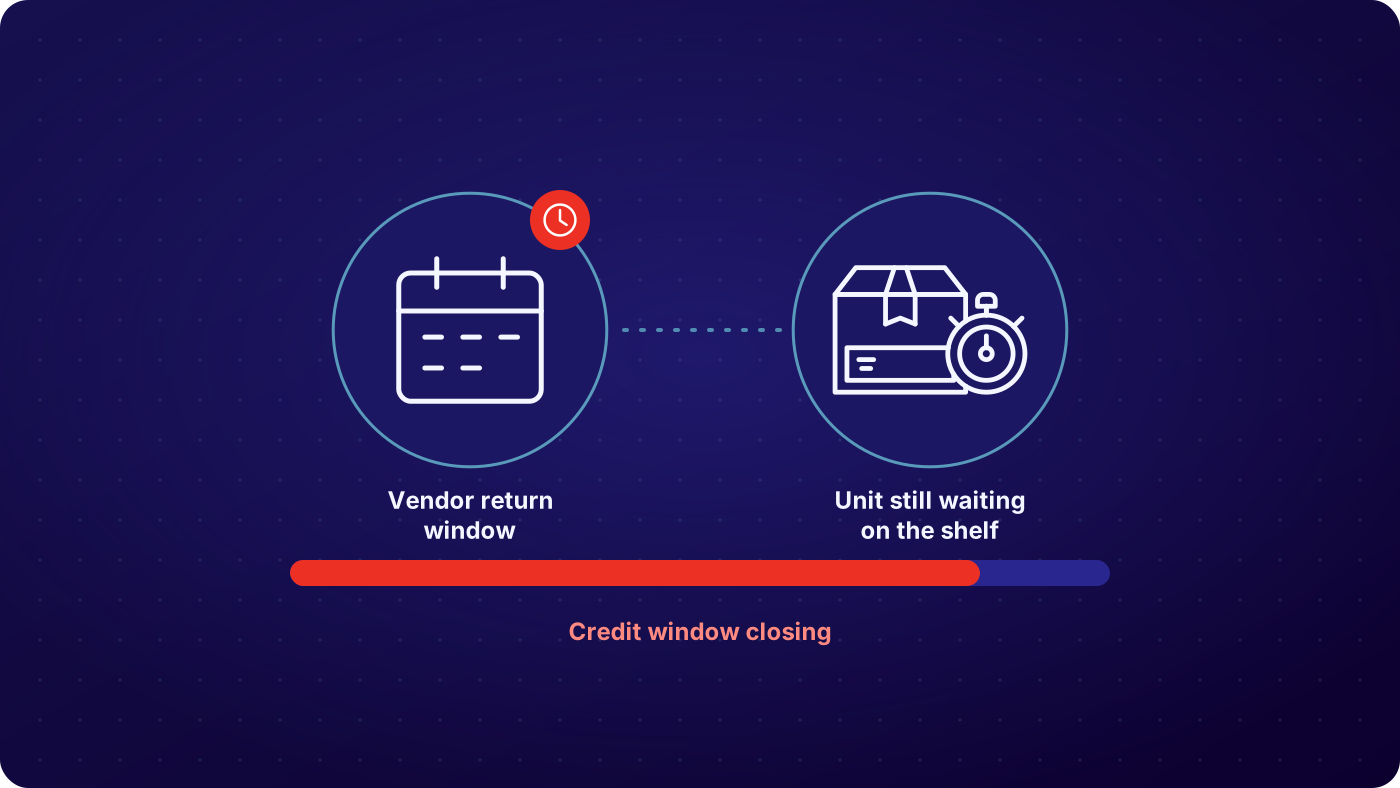
A tracking link sends your customer to a carrier site with the carrier’s brand, the carrier’s wording and nothing about your store. The most-visited page after checkout is not yours.

Customers ask because nobody told them
A delay happens and the customer finds out by refreshing a tracking number. The contact that follows costs agent time and tells the customer something a message could have said earlier.

Each carrier reports differently
Status names, scan events and delivery estimates vary by carrier and country. Agents learn to read each one, and customers get a different experience depending on who delivered.

Delivery and returns sit in separate tools
The shipment is tracked in one system and the return in another. When an order is refused, lost or sent back, the agent pieces the story together from both.
How Does Pulse Order Tracking Software Work?
Pick up the shipment from your order system
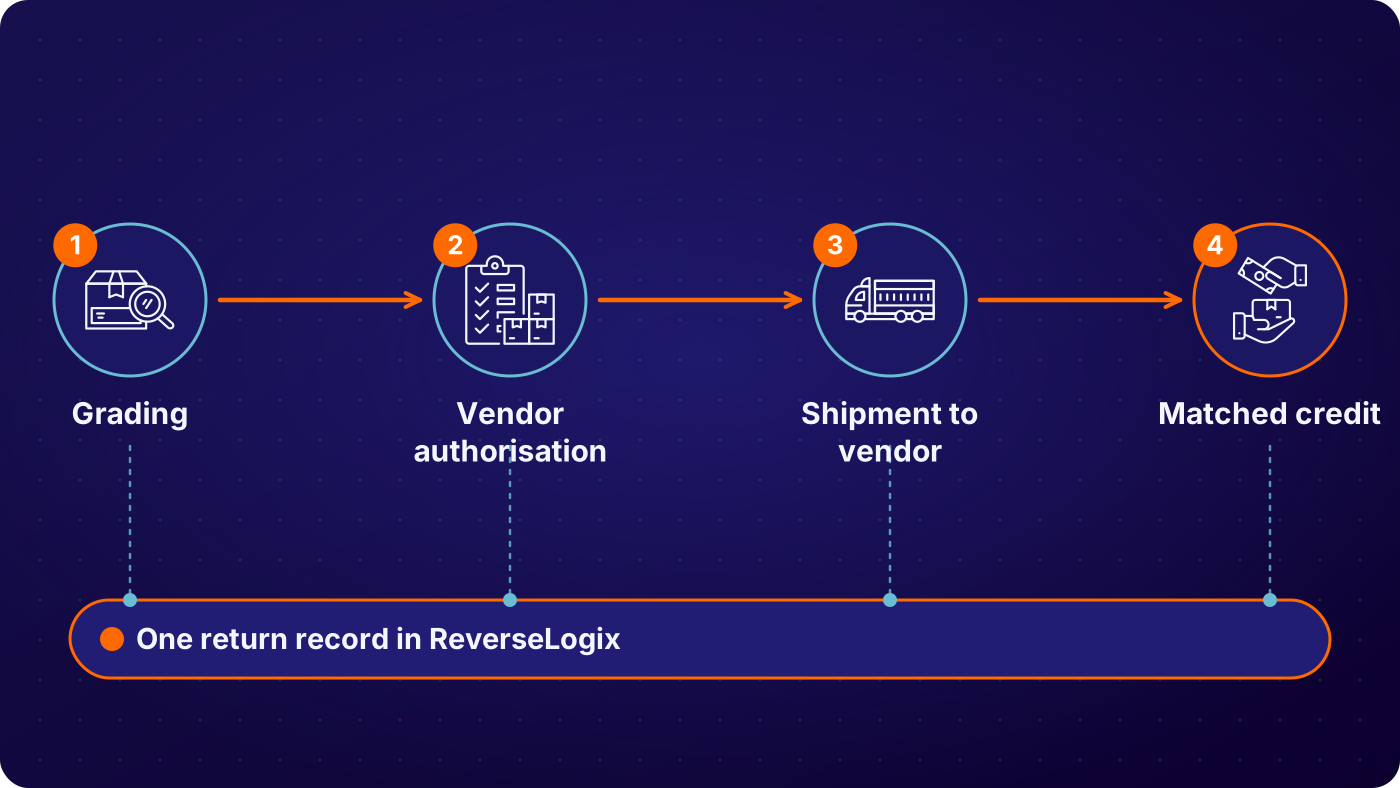
When an order ships, Pulse receives the order and tracking details from your order management or ecommerce system. No one keys a tracking number. The shipment is linked to the customer and the order from the first scan.
See: integrations
Follow it across carriers
Pulse reads tracking events from the carrier and presents them in one consistent set of statuses, whichever carrier is delivering. ReverseLogix integrates with over 400 carriers across more than 100 countries.
See: carrier integrations
Show a tracking page with your brand
The customer follows the order on a page that looks like your store, on any device. The page can carry your images, product suggestions and offers, so the visit works for the brand and not for the carrier.
See: returns initiation


Notify the customer and link the return
Order confirmation, dispatch, out for delivery, delay and delivered messages go out by email or text as the events happen. If the customer later starts a return, it attaches to the same order, so the full journey is on one record.
See: returns processing
| Shipment event | What the customer sees | What your team sees |
|---|---|---|
| Order dispatched | Dispatch message with a link to the branded tracking page | Order, carrier, tracking number, dispatch time |
| In transit | Current status and expected delivery on the tracking page | Scan history, carrier, days in transit |
| Delay or exception | A message explaining the delay before they have to ask | Exception type, carrier, age, orders affected |
| Delivered | Delivery confirmation, with the returns link if they need it | Delivery time, proof of delivery where the carrier provides it |
| Customer starts a return | Return status on the same order history | Outbound shipment and return linked on one record |
Example configuration. Each program sets its own messages, statuses and branding.
Who Uses Order Tracking Software, and What Does Each Team See?
Four teams use the same tracking record. Customer service sees where any order is without opening a carrier site. Ecommerce and marketing own the tracking page and what it promotes. Operations sees which carriers and lanes run late. Customers see one clear answer. When delivery and return share a record, nobody has to ask the customer to repeat the story. Order tracking software earns its place when each of these teams stops keeping its own version: service stops opening carrier sites, marketing stops sending customers away from the store, and operations stops building carrier scorecards by hand.
See: operations, finance
One record, every team
- Customer service: order status, scan history and any linked return
- Ecommerce and marketing: branded tracking page, messages and offers
- Operations: carrier performance and delivery exceptions
- Customers: live status and updates on any device
What Can You See and Measure on Shipments?
You can see every shipment in transit, which are late and how each carrier performs. Pulse reports what carriers scan and what customers do on the tracking page. It does not move a parcel faster. It tells the customer sooner and shows your team where delays come from. Most teams start by measuring how many contacts are simple status questions, then watch that share fall as notifications and the tracking page take over. Because the order tracking software sits on the same platform as returns, the same report can show which late or damaged deliveries turned into a return, which is a link most separate tracking tools cannot make.
- Shipments in transit, delivered and delayed, by carrier
- Delivery exceptions, with age and orders affected
- Carrier performance by lane and service
- Tracking page visits and message opens
- Orders that led to a return, with the reason
Your Order and Commerce Systems Stay the Systems of Record
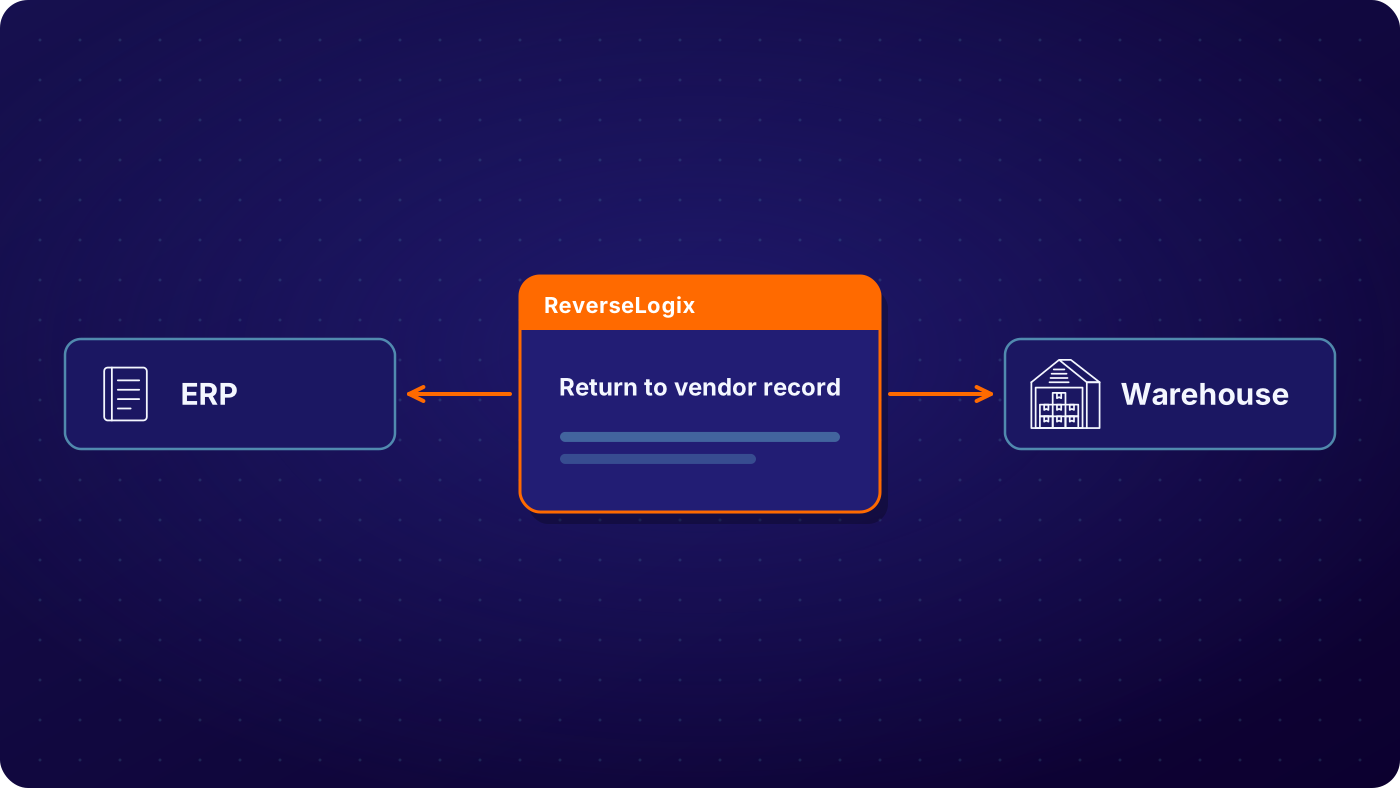
Pulse tracks and communicates. It does not replace the systems that take or ship the order. Your order management or ecommerce platform keeps the order. Your carriers keep the scans. Pulse connects to both and to the rest of ReverseLogix through an API-first design, with integrations for Shopify, Magento and WooCommerce and for SAP, Oracle, NetSuite and Microsoft Dynamics 365. It can run on its own or alongside the returns modules.
See: integrations, implementation
Data, Access and Controls
Each shipment keeps its history: the events received, the messages sent and when. If a customer says they were never told about a delay, the record shows what went out. Customer contact details are used for the order updates you configure, and the messages follow the templates and rules your team approves.
Role-based access decides who can change message templates, branding and notification rules. Every change is written to the audit history. ReverseLogix holds ISO 27001 and SOC 2 certifications, shared during evaluation.
See: platform security
Your next questions, answered



Frequently asked questions
Order tracking software follows a shipment from dispatch to delivery and shows the status to the customer and to the business. It collects tracking events from carriers, presents them on a tracking page and sends notifications as the status changes. It is often called post-purchase tracking, and its main job is to answer “where is my order” before the customer asks.
Pulse is the order tracking module of the ReverseLogix platform. It adds outbound shipment tracking, a branded tracking page and customer notifications to the returns management system, so delivery and returns are handled in one place.
It gives customers the answer without contacting you. A branded tracking page shows the current status, and email or text messages go out at dispatch, delay and delivery. Agents who do get a contact see the same status on their screen, so the call is short.
Yes. The tracking page uses your branding and can show images, product suggestions and offers. Customers stay with your brand while they wait for the order.
ReverseLogix integrates with over 400 carriers across more than 100 countries. Pulse presents their tracking events in one consistent format. Your specialist will confirm the carriers and services you use during scoping.
Pulse is a module of the ReverseLogix platform and is priced as one. It can be used for outbound tracking alone, and it shares the same record as returns initiation and processing when those are in use. See pricing.
No. Your order management or ecommerce platform remains the system of record for orders. Pulse receives shipment details from it, follows the parcel through the carrier and handles the customer communication.
Timelines depend on the number of carriers and systems to connect. Standard go-live for returns initiation is 4 to 6 weeks, and Pulse is scoped alongside it or on its own. A specialist will give you a plan after reviewing your setup.
Further reading: Reverse Logistics Association.
See Your Orders Tracked on Your Own Page
A specialist walks through an order in your setup, from dispatch to delivery and return, and shows what your customer would see at each step, before any demonstration.


