Why Should Reverse Logistics Be Part of Product Planning?

Reverse logistics and returns management are often an afterthought in product lifecycle management (PLM). Most manufacturers treat them as something to handle after the sale, when customers start returning products. The problem with that approach is that it:
- Creates waste
- Breaks supply chain links
- Increases the cost of the reverse supply chain
The better approach is to treat reverse logistics as part of product lifecycle management from the beginning. That changes how companies design, build, recover and reuse their products. It connects supply chain activities with returns, repairs, and recycling, reduces waste and pollution, protects profit margins and improves customer satisfaction.
This article explains why, and shows how to bring reverse logistics into your product development process without disrupting the supply chain.
Reverse Logistics Is More Than Cleanup
Many manufacturers see reverse logistics as a necessary cost. It is also a way to control the cost of keeping customers satisfied as their expectations rise.
Keeping reverse logistics outside your product’s lifecycle creates additional cost. Most manufacturers realize this too late and end up reacting to broken returns, delivery failures, excess inventory or expired stock. The cause is upstream, not downstream.
When reverse logistics is excluded from early design, product recovery becomes harder. Without complete product data management (which includes returns data), your repair team is left guessing, which slows down the process. Without PLM integration, your warehouse handles returns blindly. That leads to poor recovery, bad refurbishing, and higher supply chain costs.
Planning for this during product design saves time later and makes the whole operation run more smoothly.
What Reverse Logistics Adds to PLM
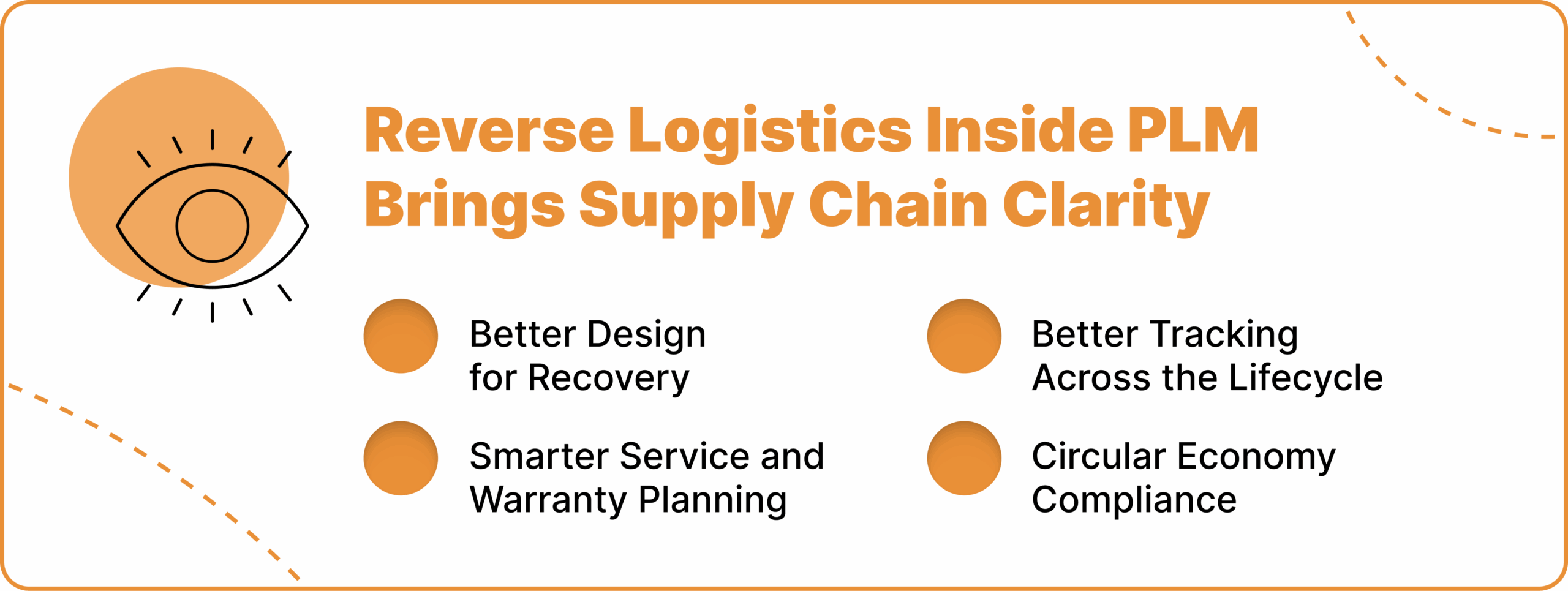
Integrating reverse logistics into PLM systems strengthens every phase of the product lifecycle. It lowers supply chain cost, improves traceability and supports circular economy goals. Here is how:
1. Better Design for Recovery
Products that break are easier to repair when engineers design for reuse. When designed with snap-fit panels, modular parts, or removable components, these products are easier to disassemble and recover. That starts with linking the PLM software to your returns management system, so your designers can plan for the product’s second life, not just the first sale.
2. Smarter Service and Warranty Planning
Returns are now a fixed part of the market. Even in-store returns are rising. Now imagine your repair department knows which parts break most often, how products are used, and what condition they are likely to come back in.
With that product returns data, returns management improves, because a repair-ready product costs less to support. But that information belongs in the product life cycle management, not just in tech support tickets.
3. Better Tracking Across the Lifecycle
Reverse logistics is not only about bringing goods back into the supply chain. It also means knowing where they have been. Lifecycle-aware tracking lets you see which items were refurbished, recycled, or discarded, and why.
4. Circular Economy Compliance
Governments now demand proper recycling and product take-back. PLM systems integrated with reverse logistics operations help companies meet these mandates through planning instead of last-minute reaction. When you design with recovery in mind, the whole supply chain moves faster.
Reverse Logistics Data Improves PLM Design
Every item that comes back teaches you something about the product and the process. When you connect returns data to your PLM tools, returns inform design. You can:
- Discover Breakage Patterns.
If 30% of all returns are due to one faulty weld, your design team can take action.
- Learn From Real-World Use.
Customers use products in unexpected ways. Returns data shows wear, tear and misuse, which is useful input at the detailed design stage.
- Reduce Waste Through Smarter Changes.
By mapping returned components to engineering changes, you reduce raw materials use and extend the useful life.
Integration Creates a Closed-Loop Supply Chain
A closed-loop supply chain is good for the environment. It also saves money, meets customer expectations for sustainable practice, prevents delivery refusal, and reduces waste during the handling process.
Integrating reverse logistics with PLM lets you plan early for a supply chain that works in both directions:
Forward and Reverse Flow Uses The Same Tools
Your warehouse management system can receive, route, and restock return-ready items when the product is traceable and pre-tagged for the reverse flow.
Suppliers and Teams Work From the Same Data
When your suppliers, return centers, and engineering team see the same product flow in your software system, they can share parts, cut delays, and protect quality.
Handle Regulations More Efficiently
Return-to-retail laws, recycling mandates, and disposal rules are easier to meet when your business processes include end-of-life recovery planning.
How to Bring Reverse Logistics into Your PLM Strategy
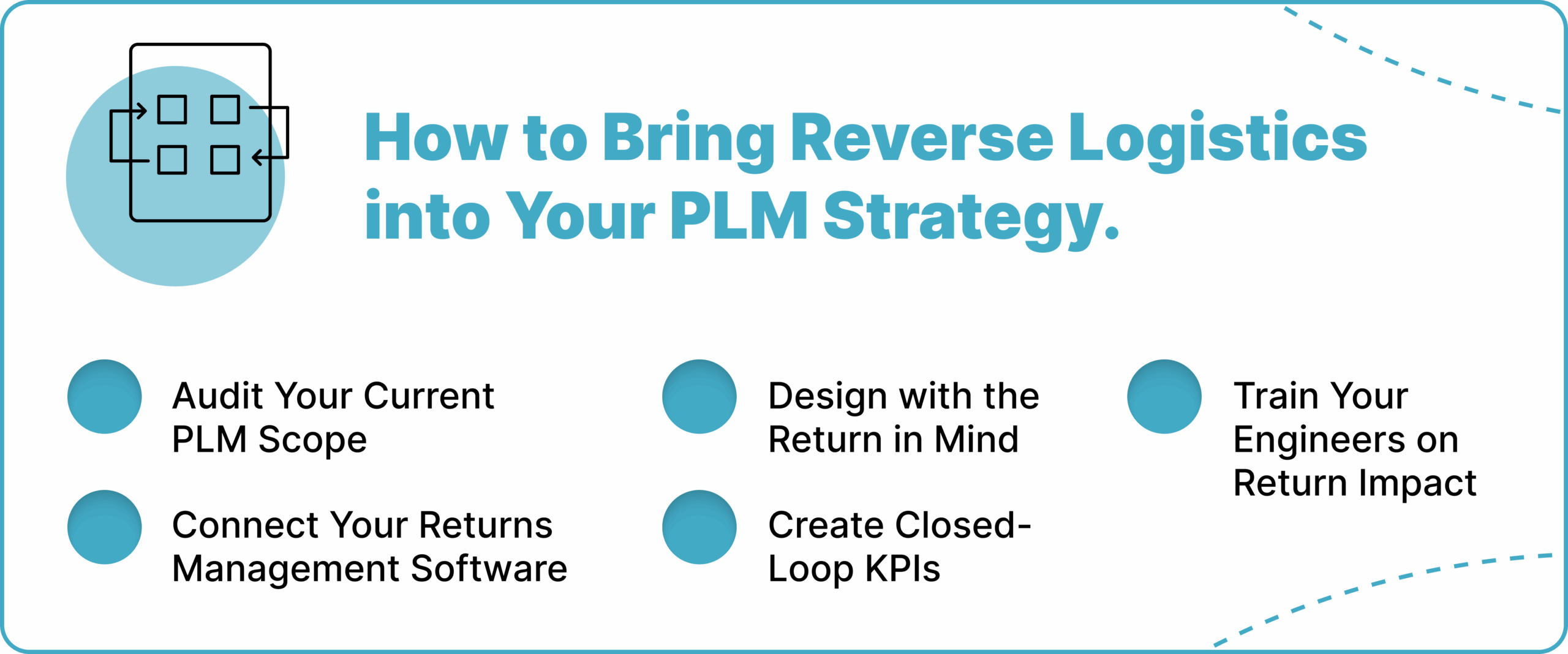
Integrating reverse logistics with PLM makes recovery efficient and measurable. Here are five practical steps.
1. Audit Your Current PLM Scope
Check if your PLM system includes return data, service history, or recovery plans. If not, map out the missing links.
2. Connect Your Returns Management Software
Choose an RMS that links directly to PLM. Make sure it can handle serialized tracking, product condition logging, and rule-based workflows.
3. Design with the Return in Mind
During the design process, include return-path planning. Ask:
- Can this part be reused?
- Is it easy to repair?
- Will field techs know how to handle it?
4. Create Closed-Loop KPIs
Track more than refund speed. Measure recovery rate, component reuse, and repair success. These metrics protect long-term value.
5. Train Your Engineers on Return Impact
Demonstrate to design teams how product choices impact reverse logistics costs, warehouse operations, and inventory management. Make it a core part of the product development process and training. Reverse logistics works when it’s seen as a design goal, not a cost center.
Closing the Loop Improves Profit and Loyalty
Manufacturers focused on customer demand must think about the full product journey, not just delivery. Returns are part of that journey, and so are repair, resale and recycling.
Reverse logistics is more than picking up broken items. It includes product design that makes returns useful, logistics management that keeps parts moving, and business strategy that cuts waste before it happens.
A return managed well can lead to another sale, each recovered item lowers your spend, and reused components support customer loyalty.
Designing Products That Are Expected to Come Back
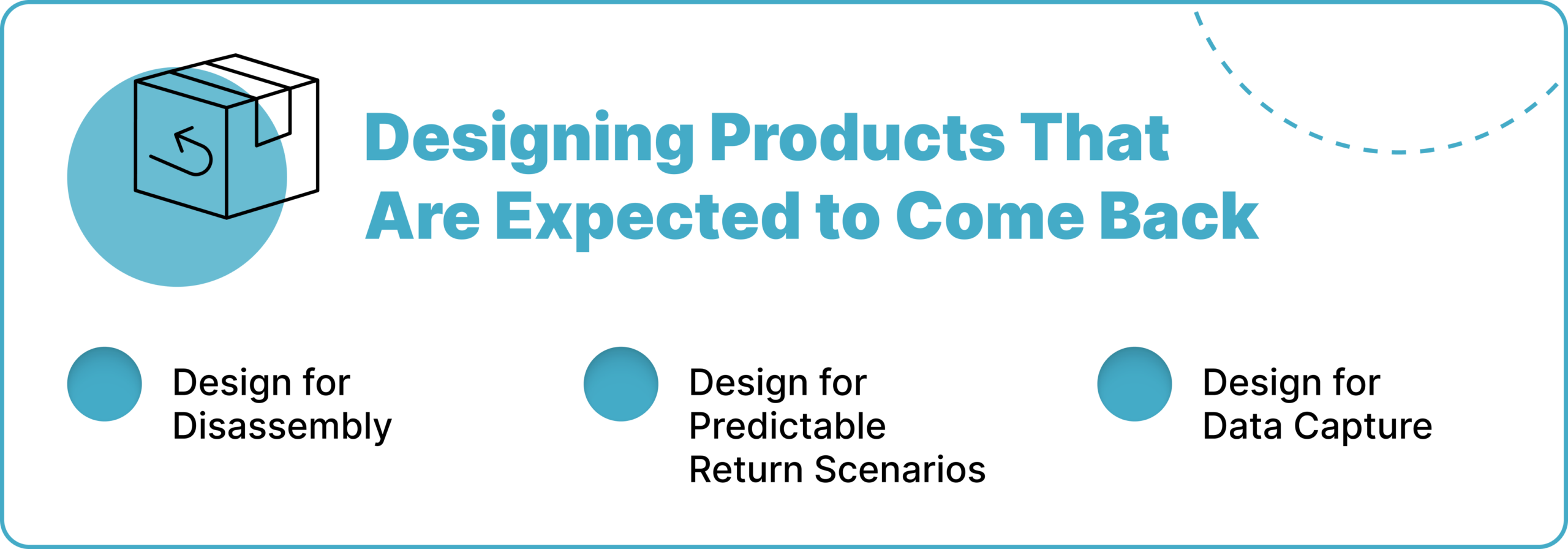
The simplest way to reduce post-sale problems is to assume every product will come back. That assumption changes the design. Here is how:
1. Design for Disassembly
Designing for disassembly reduces inspection time at recovery centers. Modular components allow quick separation, standardized fasteners cut labor requirements, and clear access points reduce damage during repair. For example, electronics manufacturers that standardize fasteners usually see the refurbishment cycle time drop by a few days.
2. Design for Predictable Return Scenarios
Most returns fall into known categories: buyer’s remorse, warranty claims, transit damage and end-of-life recovery. Design teams should map these scenarios in advance and define return eligibility and recovery paths before launch.
3. Design for Data Capture
Serialization and tracking should begin when the product is first created in your systems. Return reasons tied to product design can then feed the PLM system with facts instead of opinion.
What Are Digital Twins?
A digital twin is a computer model that simulates a physical object or system. It could be a warehouse, a delivery truck, a returns process, or an entire supply chain operation. The model gets real data from machines, software, or sensors, then uses that data to show what is currently happening and what might happen next.
Digital twins in reverse logistics enable teams to test changes before implementing them in real-life scenarios. They provide real-time visibility into the returns process, allowing for real-time monitoring and control. This involves testing new routes, policies, or layouts for product returns within a digital model, enabling data-driven decisions. Then, if it works well, they apply it to the real operation. This is more reliable than guesswork or spreadsheets, and it saves time and money.
How Digital Twins in Reverse Logistics Improve the Returns Management Process
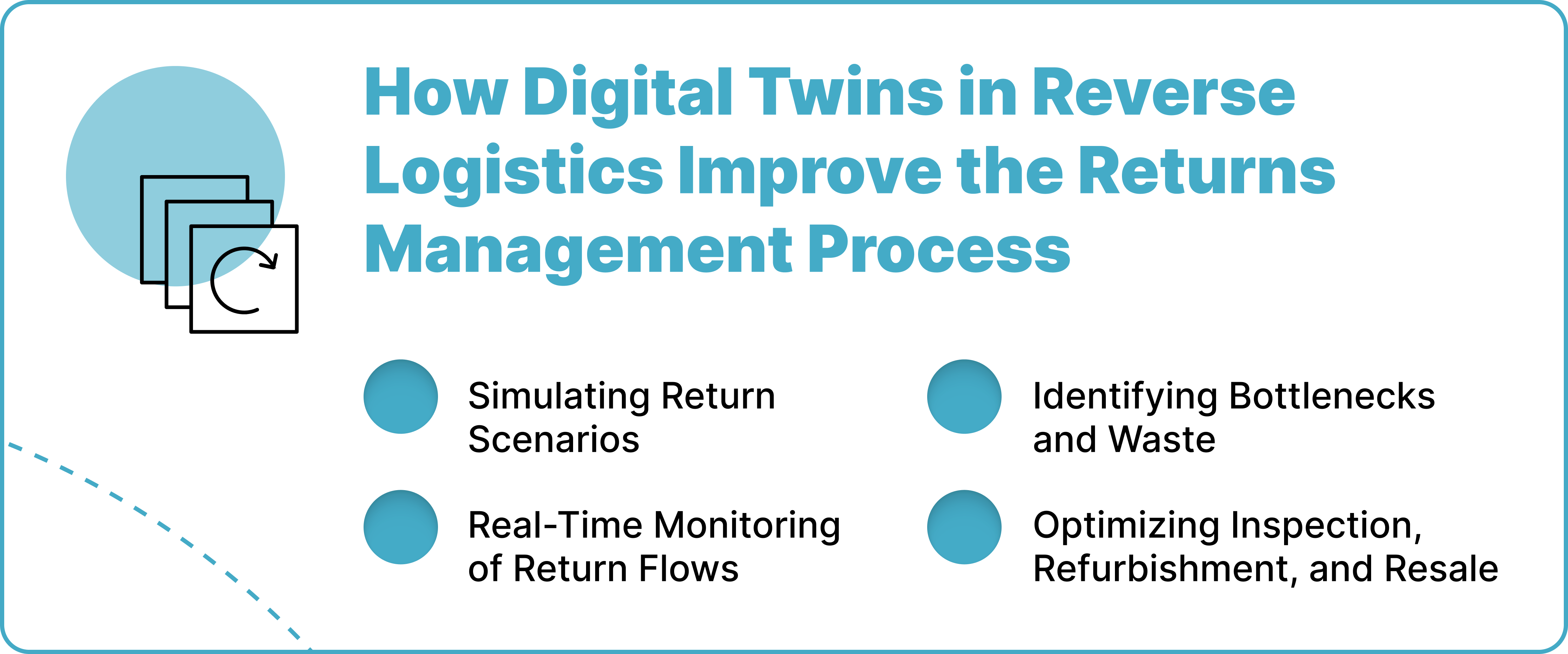
Reverse logistics is complex. Products arrive in varying conditions, from customers with different reasons for returning them.
Digital twins can streamline returns processing and improve the customer experience in four ways:
1. Simulating Return Scenarios
Retailers can utilize digital twins to simulate various scenarios in the returns process. This might include:
- Trying out new return center locations
- Testing a new courier service for pickups
- Changing the number of staff checking returned products
By running these ideas within a virtual model, managers can see what works best before making any real changes. For example, an online electronics retailer can use digital twins to test a new warehouse layout. It can measure handling time and adjust the layout in the model, without moving a shelf until the simulation shows the result it wants.
2. Real-Time Monitoring of Return Flows
Digital twins can connect to real-time data, like scans from a return drop-off or updates from a courier. This creates a live map of the location of returned items, including their status at each distribution center.
Managers can use this view to:
- Spot bottlenecks in return routes
- Redirect items to underused return centers
- Send faster updates to customer support
- Manage unexpected disruptions in the returns process
This helps reduce delays and avoid congestion. A clothing retailer using digital twins reduced average return cycle time from ten days to six.
3. Identifying Bottlenecks and Waste
Returns often bounce between locations or sit waiting too long. A digital twin shows where that happens. The visual model highlights areas where products accumulate or move slowly.
With this view, retailers can:
- Change inspection workflows
- Add or remove shipping partners
- Reduce handling steps for certain product types
This improves speed and saves on fuel, storage, and labor.
4. Optimizing Inspection, Refurbishment, and Resale
Many returned merchandise items can be repaired or cleaned and sold again. Others must be recycled or donated. But deciding what to do takes time, and mistakes cost money. Using virtual modeling for returns, businesses can test different rules based on product type, cost, or condition:
- Should this item be cleaned and resold at a discount?
- Is it cheaper to send it to another region?
- Can it be repaired in-house or by a partner?
- Can it be resold quickly at full price to maximize profit margins?
One electronics maker used a digital twin to adjust how returned phones were sorted. It increased the number of phones eligible for resale by 25%.
Build From the Start With ReverseLogix
Reverse logistics should be built in from the start. If your systems are ready, your teams are trained, and your data is connected, you can recover more, reuse better, and reduce costs across the full product lifecycle.
ReverseLogix is the only end-to-end return management system that lets you initiate returns, configure return processing, and even handle repairs. Bringing it into your product lifecycle management early makes your supply chain more flexible. Get a demo today.
Frequently Asked Questions (FAQ)
1. What role does artificial intelligence play in reverse logistics and PLM?
Artificial intelligence helps detect return trends, predict part failures, and optimize recovery routing. When paired with PLM systems, it improves design decisions and automates the return process based on real-world usage patterns.
2. How can machine learning improve reverse logistics operations?
Machine learning identifies recurring product issues and matches them with recommended design changes. It can also support dynamic order distribution based on return rates, helping reduce waste and boost warehouse accuracy.
3. What is the impact of poor sales on reverse logistics planning?
Poor sales increase return volume and pressure reverse flows. Without early planning, this leads to excessive inventory and missed recovery opportunities. A solid reverse logistics plan tied to PLM helps prevent overproduction and manages end-of-life decisions better.
4. How does reusable packaging support reverse logistics strategies?
Reusable packaging improves recovery rates and reduces shipping waste. When considered in the PLM phase, it allows for easier repair department handling and supports sustainable practices across the chain.
5. How do engineering changes relate to the return process?
Engineering changes are often based on patterns found during returns. Linking the return process to CAD data and engineering workflows ensures updates are timely and based on accurate product performance data.
Get a Demo
Discover how you can jump-start your returns management efforts with ReverseLogix.