

Warranty management software: claims intake, validation and entitlement for manufacturers, in one record
A claim arrives for a unit that left warranty last month. ReverseLogix checks the serial number, purchase date and coverage before anything is paid, and opens the RMA on the same record.





State of warranty management: what the numbers say
$30.37B
Warranty claims paid by US manufacturers in 2025.
Warranty Week
€26.2bn
Warranty claims paid by eight European automakers in 2024, up 15% on 2023.
Warranty Week, European Automaker Warranty Expenses (May 2025)
25%
Higher customer satisfaction reported by Jabra on ReverseLogix.
Jabra
10%
Less customer service time on returns and claims, as ReverseLogix customers report.
ReverseLogix customer data
What makes warranty management different
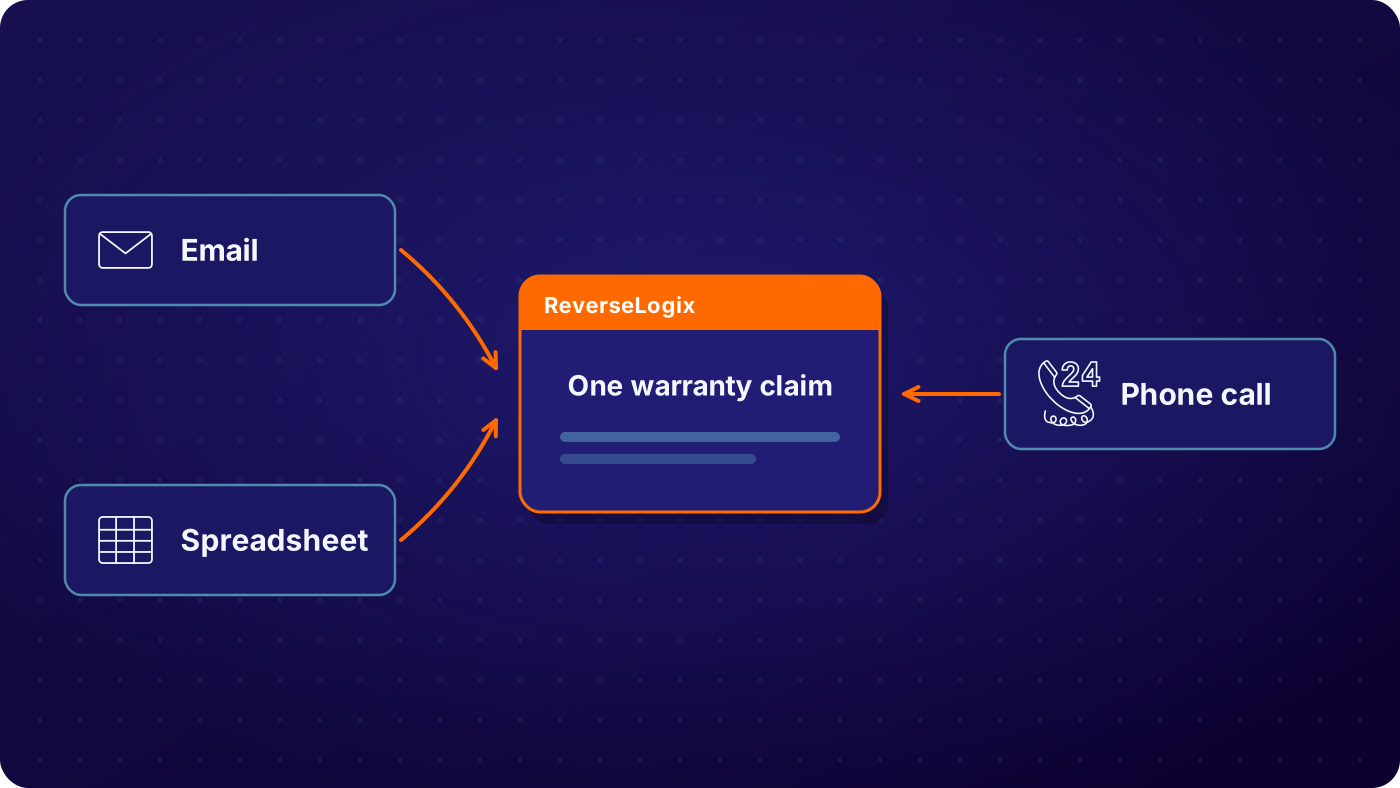
- A claim is a promise with conditions. Every claim carries a serial number, a purchase date, a coverage term and exclusions. Paying it correctly means checking all four before money moves, the same way for every channel.
- The product travels on its own schedule. A dealer may file the claim today and ship the unit next week, or keep the unit and ask for parts. Warranty management has to hold the claim, the RMA and the physical return together.
- Someone upstream may owe you. When a component fails, part of the claim cost may be recoverable from the supplier, and the failed part may need to go back as a warranty parts return. Recovery depends on evidence captured at claim time, and it rarely happens when claims live in email.
Why warranty management needs its own strategy
Warranty often sits inside returns, handled by customer service with an ERP credit memo at the end. For manufacturers with dealer networks, service centres and multi-year coverage, that arrangement pays claims that were never owed and loses track of units that should come back. A warranty management strategy sets the entitlement rules, the evidence each claim needs, who approves what, and how a paid claim connects to the repair, the replacement and any supplier recovery. It also gives finance a claims record it can plan warranty reserves against.

How to evaluate a warranty management system
Entitlement checked at intake. Ask to see a claim stopped for an expired serial number before anyone works on it. Coverage terms, registration data and exclusions should be checked automatically, with exceptions routed to a reviewer.
Claim and return on one record. The claim, the RMA, the inspection result and the repair or replacement should share one record, so the decision to pay can be traced to what was found on the bench.
Every channel under one rule set. Consumer, dealer, distributor and service-centre claims arrive by different routes. Check that each channel files its own way while the same entitlement and approval rules apply to all of them.
Supplier recovery and finance data. Ask how a failed component is flagged for supplier recovery, and how claim costs reach finance for reserve planning. The ERP should receive the credit, and finance should see the claim behind it.
Where warranty claims leak cost and margin
Claims paid outside coverage. Cost: warranty leakage on expired, unregistered or excluded units. Fix: automatic entitlement checks against serial number, purchase date and coverage before approval.
Duplicate and fraudulent claims. Cost: the same unit or receipt claimed twice, or a photo that does not match the product. Fix: duplicate checks on serial number and claim history, with Vision AI photo checks at claim intake.
Units that never come back. Cost: a replacement ships while the failed unit stays with the dealer, so there is no inspection, no repair value and no supplier evidence. Fix: return-required rules on the claim, with the credit held until receipt where your policy sets that rule.
Supplier recovery left uncollected. Cost: component failures absorbed that a supplier agreement would cover. Fix: failure codes captured at inspection and flagged for supplier claims with the evidence attached.
Bring last quarter’s paid claims, and we will show you which ones an entitlement rule would have stopped.
What running warranty management on one system changes
- One entitlement check for every channel. A consumer on the web portal, a dealer in Lyon and a service centre in Ohio all file against the same coverage rules. Approval stops depending on who happened to read the email.
- Warranty repairs and replacements follow the claim. An approved claim opens the RMA and routes the unit to repair, replacement or advance exchange, with the costs on one record. Warranty status is settled at intake, so in-warranty and out-of-warranty repairs are billed to the right party.
- Warranty volume becomes visible. “When we turned ReverseLogix on, it was instant visibility into the warranty volume that we had.” Stephanie K., Senior Director of Customer Service, North America, Samsonite
- Four systems became one. “The backend has been heavily upgraded with the ReverseLogix solution, and it has given us quite a few benefits in managing RMAs, reporting, overview and fraud mitigation.” Martin H., VP of Support and Services, Jabra

What this looks like in practice
A power tool maker’s dealer claim. A dealer files a claim for a drill that stopped under load. The serial number shows month 14 of a 36-month warranty, the claim is approved, and the drill ships back on the RMA for repair or a beyond economical repair decision.
An appliance maker’s late claim. A dishwasher fails a month after coverage ended. Entitlement shows it at intake, the claim closes as out of warranty, and the service network handles it as a paid repair.
A consumer electronics claim that does not add up. A claim for a cracked screen arrives with a photo that does not match the model on the receipt. Vision AI flags the mismatch, and the claim goes to review before a replacement ships.
A supplier lot that keeps failing. Inspection finds a run of failed compressors from one supplier lot. Failure codes and photos sit on each claim, and the supplier recovery claim is filed with the evidence already in place.
How ReverseLogix runs warranty claims as one governed workflow
Intake and entitlement. Claims arrive through the portal, dealer channels or customer service. Serial number, registration, purchase date, coverage and exclusions are checked at intake, and incomplete claims go back for the missing evidence.
Approve and route. Warranty claims processing runs on rules: approval rules by product, channel and claim value decide what is approved automatically and what goes to a reviewer. Approved claims open the RMA and route to repair, replacement, advance exchange or credit.
Close and recover. Inspection confirms the failure, the credit or repair cost posts to the ERP once, and failure codes feed supplier recovery and warranty reporting.

When ReverseLogix is the right fit for warranty management, and when it is not
A good fit if
- You manufacture products with multi-year warranties sold through dealers, distributors, retailers or service networks.
- Claims are approved by email or spreadsheet, and entitlement is checked by hand.
- Approved claims lead to repairs, replacements or advance exchanges that need tracking.
- Supplier agreements should cover some component failures, and recovery is patchy today.
- Your annual revenue sits between $50M and $5B or more.
Probably not a fit if
- You administer service contracts as an insurer, and claims never involve a physical return or repair.
- You are a direct-to-consumer brand under $50M with occasional warranty replacements.
- Your claim volume is low enough to handle in a shared inbox without leakage.

See how many of last quarter’s claims would have passed an entitlement check.
Data security, access control and compliance
- ISO 27001. A security questionnaire from a European distributor lands on a Friday. ReverseLogix is ISO/IEC 27001 certified, so the review starts from an audited information security management system.
- SOC 2. ReverseLogix holds a SOC 2 Type II attestation, so auditors and security teams review controls tested over time.
- Access control. Role-based permissions, single sign-on and a log of approval and rule changes control who can see and change returns data, so access is reviewed from one place.

Integrations
Warranty decisions draw on data in the systems you already run, and post back to them once.
- ERP: SAP S/4HANA, SAP Repair Module, Oracle, NetSuite, Microsoft Dynamics 365 F&O, Infor SyteLine and Epicor
- CRM, service and field service: Salesforce, HubSpot, Zendesk and Freshdesk, with data exchanged with field service platforms
- Commerce and registration sources: Shopify Plus, Salesforce Commerce Cloud, SAP Commerce Cloud and custom B2B portals
- Carriers: FedEx, UPS, DHL, USPS and regional carriers

Warranty management software questions, answered
Warranty management software decides whether a warranty claim is owed, approves it by rule and runs what follows: the return, the repair or replacement, the credit and any supplier recovery. In ReverseLogix, warranty management is part of the returns management platform, so the claim and the physical return share one record.
Warranty claims software handles intake and approval. A warranty management system also covers entitlement data, the return and repair that follow a claim, supplier recovery and reporting. Most warranty management technology stops at the claim; ReverseLogix carries it through to the unit on the bench.
Warranty leakage is the cost of paying claims that were not owed: expired coverage, unregistered units, excluded faults or duplicates. Checking serial number, purchase date, coverage and claim history at intake stops most of them before payment, and the exceptions go to a reviewer.
Yes. Warranty status is settled at intake, so in-warranty repairs post against the claim. Out-of-warranty repairs go to a quote, and work starts once the customer approves it. Both run through the same repair management workflow.
Yes. ReverseLogix posts credits and repair costs to SAP, Oracle, NetSuite, Dynamics 365, Epicor or SyteLine, so the ERP stays the financial system of record. It exchanges data with CRM and field service platforms and does not replace them.
Vision AI compares claim photos with the product and the claim, and flags mismatches and fraud patterns before a replacement ships. The fraud-denial threshold defaults to 50 percent and is configurable. It works inside the claim workflow and feeds the same approval rules.
Yes. Parts returned under warranty are tracked against the claim that authorized them, and failure codes and photos captured at inspection support supplier recovery claims. B2B warranty claims from dealers and distributors run under the same entitlement rules as consumer claims.
Standard implementation takes 4 to 6 weeks, based on ReverseLogix deployment data. Scope depends on channels, product lines and ERP connections, which the Returns Assessment maps first.
Further reading: Reverse Logistics Association.
See warranty claims run end to end
Bring three real claims, one clean, one late and one doubtful, and we will run them through.
4 to 6 weeks
Standard implementation, based on ReverseLogix deployment data.
Book a Returns Assessment with our team.


