

SAP Returns Management Integration for ECC, S/4HANA and EWM
Return orders, goods receipts, credit memos and inventory postings, created from the return itself instead of typed into SAP by hand.
A customer service rep closes a return, then opens SAP to key the return order. Tomorrow the warehouse receives the box, and someone else keys the goods receipt. A week later finance raises the credit memo against a sales order nobody can find. ReverseLogix is the returns layer that sits in front of SAP ECC and S/4HANA, and beside SAP EWM in the warehouse. It reads customer, material and sales order data from SAP, runs the return, and posts the results back.
SAP stays the system of record. ReverseLogix does the work SAP was never built to do well: intake, inspection, grading, repair and disposition. This page shows which events post to SAP and when, who touches the connection, and what the project takes on your side.
Returns teams using ReverseLogix include:


What Breaks When Returns Live Outside SAP?
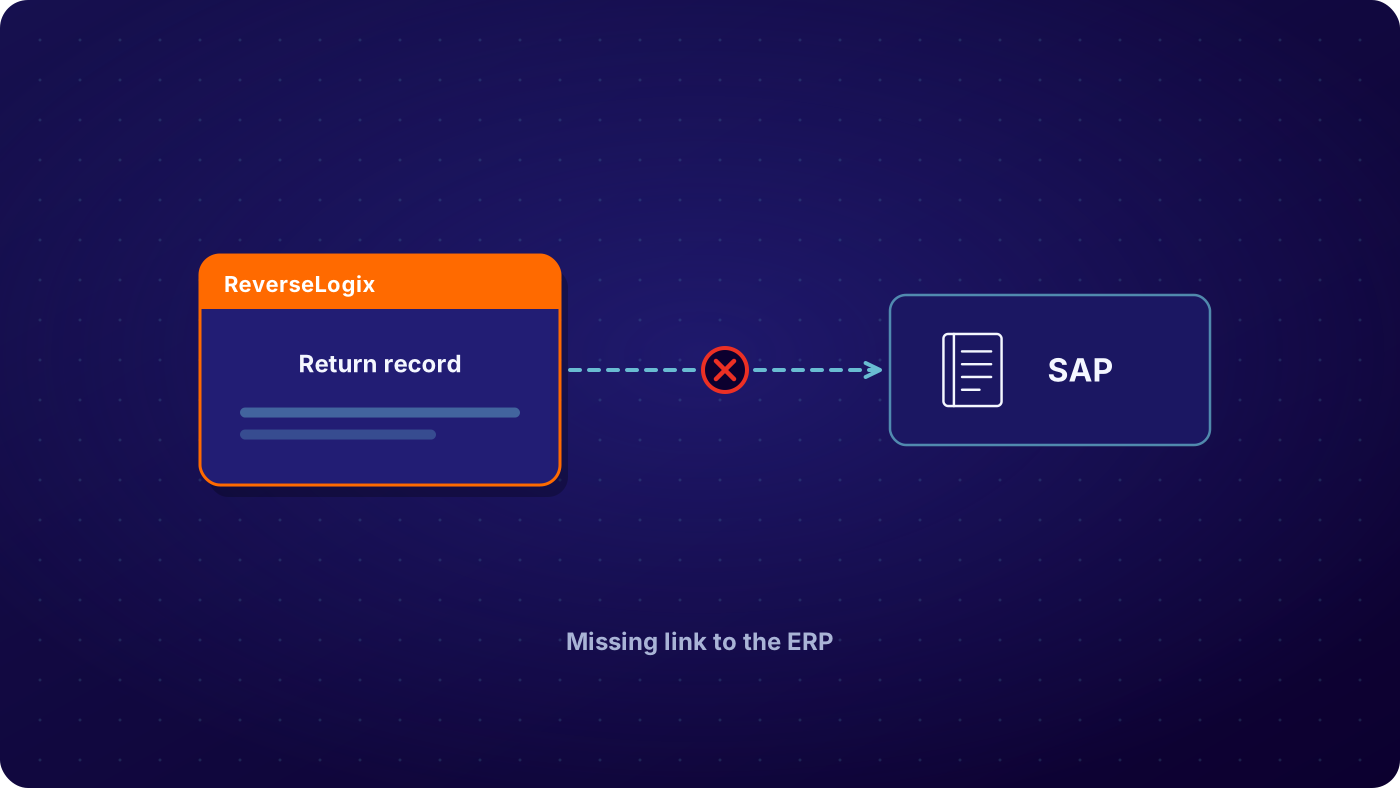
Returns start in a portal, a shared inbox or a spreadsheet, and end in SAP. The gap in the middle is filled by people, and people key things twice.

Hand keying, one return at a time
Someone creates the return order in SAP, someone else posts the goods receipt, and finance raises the credit memo. Each step is manual work to type it into the ERP, and each step can go wrong.

Duplicates that SAP rejects or accepts
A return posts twice. SAP either creates a duplicate entry or refuses the second one because it sees too many returns on the order. A graded unit then never shows up where finance looks.

Failures nobody sees
An order is not found, a material is blocked, a plant is wrong. The message fails quietly, and the first sign is a customer asking where the refund is.

Test systems that do not match production
The sandbox holds old master data, the interface is slower in production than in UAT, and a late release means regression testing the whole interface again.
What Syncs in the SAP Returns Management Integration, and When?

Read the order, customer and material from SAP
When a customer or agent starts a return, ReverseLogix reads the sales order, customer master and material master from SAP. The return is checked against what was actually sold, shipped and billed. Nobody retypes an order number or picks a product from memory.
See: returns initiation
Create the return order in SAP
Once the return is approved, ReverseLogix posts a return order to SAP with the mapped fields: order reference, material, quantity, reason and plant. SAP gets a clean document at the moment of decision, not a batch at the end of the week.
See: RMA software
Post the goods receipt and inventory movement
The unit arrives and is received against its RMA. Receipt quantity, condition and grade are recorded in ReverseLogix, then the goods receipt and stock posting go to SAP. With SAP EWM, the warehouse receives against the same return so both systems agree on what is on the dock.
See: returns processing

Raise the credit memo at custody transfer
The refund trigger is standard at custody transfer, when the carrier scans the parcel or the unit is received. ReverseLogix posts the credit memo request to SAP with the return and disposition attached, so finance sees why the credit exists and can trace it back.
See: warranty management
| Condition at inspection | Typical route | Recorded on the return |
|---|---|---|
| Return started against a sales order | Read from SAP: order, customer and material data | Sales order number, sold-to, material number, order quantity, shipped date |
| Return approved | Return order created in SAP | Return order number, reference sales order, material, quantity, return reason, plant |
| Unit received and graded | Goods receipt and inventory posting to SAP | Received quantity, storage location, stock status by grade, receipt timestamp |
| Custody transfer or receipt confirmed | Credit memo request posted to SAP | Credit memo reference, return order number, amount, reason code |
| Unit repaired, restocked or scrapped | Disposition posted, stock moved or written off | Disposition, destination plant or location, quantity, movement reference |
Example field mapping. Each project confirms its own document types, fields and triggers during design.
Who Touches the SAP Returns Management Integration?
Four teams rely on the connection, and each sees a different part of it. Customer service works from the return record instead of SAP screens. The warehouse receives against the RMA. Finance gets credit memos with the reason attached. IT owns the interface, the credentials and the release plan. All four look at the same return, and none of them re-enters it.
See: IT team page
One return, four views
- Customer service: return status and order data without opening SAP
- Warehouse: receiving and grading against the RMA, with EWM alongside
- Finance: credit memos linked to the return order and the reason
- IT: mapped fields, message log, retries and release schedule
How Do You See What Posted to SAP, and What Failed?
Every message between ReverseLogix and SAP is logged against the return, so you can see what was sent, what SAP answered and whether it landed. A failed post does not vanish. It shows as an error on the return with the reason SAP gave, and it can be corrected and sent again. Your IT team gets a place to look before finance or a customer has to ask.
- Each SAP post shown on the return record with its status and time
- Errors carry SAP’s reason, such as order not found or material blocked
- Retries run on failed messages without creating a second document
- Duplicate return attempts on the same order flagged before they post
- Returns received but not yet credited, and credits with no matching receipt
See: analytics
Does ReverseLogix Replace SAP?

No. SAP ECC or S/4HANA stays the system of record for orders, customers, materials, inventory and credit. ReverseLogix authors the return and posts to SAP. It works with SAP EWM as one of the warehouse platforms it integrates with, next to Blue Yonder, Manhattan and Korber. Moving from ECC to S/4HANA changes the mapping and the testing, not the role each system plays.
See: all integrations
Credentials, Sandbox, UAT and Release Management
An SAP integration is a project, and it needs your IT team. Expect to provide a service user with scoped access, a sandbox or test client with realistic master data, and named owners for SAP basis, finance and the warehouse. ReverseLogix works with your security team on access review, and certifications are shared during evaluation. Every user and every post has full audit history on the record.
The work runs in a set order. Field mapping comes first, then a sandbox build, then end to end UAT, then a go-live plan that respects your code freeze and peak season. Standard go-live for initiation is 4 to 6 weeks, and repair, technician and warehouse flows extend it. Later SAP releases mean a regression test of the interface, so the plan names who tests and when.
See: implementation, security
Your next questions, answered





SAP returns management integration: questions and answers
Yes. ReverseLogix integrates with both SAP ECC and S/4HANA. It reads customer, material and order data and posts return orders, goods receipts, inventory movements and credit memo requests. The mapping differs between the two, so your project confirms document types and fields during design and tests them in a sandbox before go-live.
Yes. When a return is approved, ReverseLogix posts a return order to SAP with the mapped fields, including the reference sales order, material, quantity, reason and plant. Nobody keys it by hand. Which document type and fields are used is agreed with your SAP team during design.
ReverseLogix posts a credit memo request to SAP when the refund trigger fires, which is standard at custody transfer. The request carries the return order reference and the reason, so finance can trace each credit to a return. Your team decides whether SAP creates the credit memo directly or holds it for approval.
Yes. SAP EWM is one of the warehouse platforms ReverseLogix integrates with. The warehouse receives against the RMA, and receipt and inventory postings flow to SAP. Scope depends on how your EWM is set up, so warehouse flows are confirmed in design and extend the standard timeline.
ReverseLogix checks a return before it posts and logs every message against the return record. A failed message can be corrected and sent again from that record. Exact duplicate handling is confirmed with your SAP team during design, because SAP settings differ, such as limits on returns per order.
Your IT team provides a service user with scoped access, a sandbox with realistic data, and people who can confirm the mapping and run UAT. ReverseLogix does the configuration and supports testing. It is a project with named owners, not a switch, and the plan is set around your code freeze.
Standard go-live for returns initiation is 4 to 6 weeks. SAP integration timing depends on how quickly the sandbox, credentials and mapping decisions arrive, and repair, technician and warehouse flows extend it. You get a dated plan during evaluation, built around your freezes and peak season.
Yes. ReverseLogix holds the returns process and posts to whichever SAP system you run. When you move to S/4HANA, the mapping and testing change, and the returns workflow stays the same. Plan a regression test of the interface, and agree how open returns in the old system are handled at cutover.
Further reading: SAP.
Map Your Returns to SAP Before You Commit
A specialist walks through your SAP setup, the documents each return needs and the test plan, before any demonstration.


