

Returns Management Software for IT and Systems Teams that fits the stack you already run
Returns that post to your ERP, WMS and OMS without hand keying, with a test plan you can actually sign.
Ops wants returns live before peak. Finance wants the credit memo posted on its own. Security wants the SSO review closed first. And UAT is slow, or does not match production, and the code freeze starts in three weeks. Meanwhile someone is typing return orders into SAP by hand until the integration works. ReverseLogix is returns, repair and warranty software that posts to the systems you already own. Your ERP, WMS, OMS and commerce platform stay the systems of record. The integration still takes work: mapped fields, a sandbox, SIT and UAT, and a go-live date that respects your freeze. We plan it with you up front, and we say what your team has to do.

Returns teams using ReverseLogix include:




Why Is Every Returns Hookup Its Own Integration Project?
One ERP for orders. A WMS that does not know about returns. A commerce platform with its own idea of a refund. Each connection has its own fields, its own test cycle and its own owner. Your IT team is small, and every one of those projects lands on it.
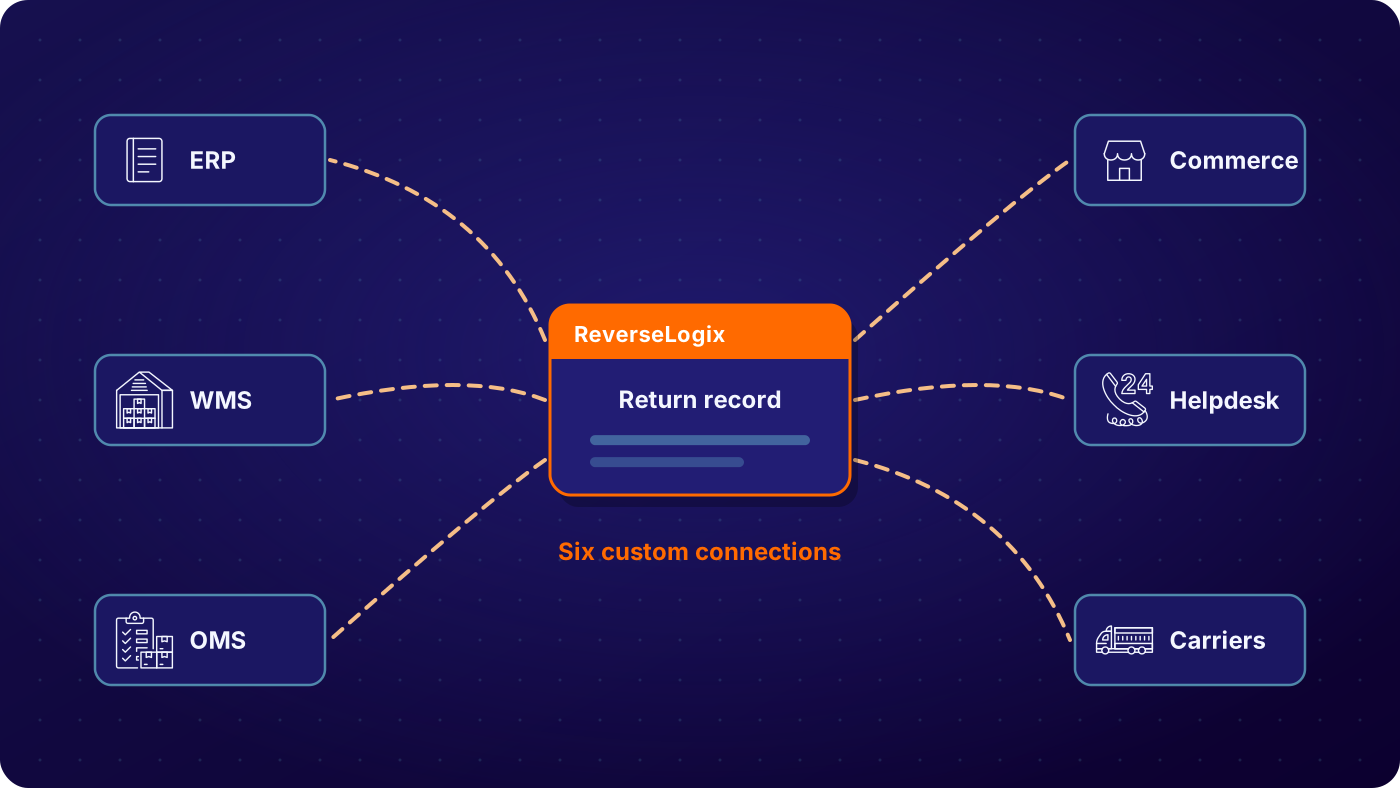

“A separate integration level” for every system
SAP takes the return order, the WMS takes the receipt, the OMS holds the original sale and the commerce platform takes the refund. That is four mappings, four sets of credentials and four test plans, and the returns team is waiting on all of them.

“UAT does not match production”
The test tenant is slow, or an API is missing there, or the data was cloned last month. Then production behaves differently and go-live slips. You need a sandbox that runs the same calls, and a way to see what changed between releases.

Duplicates and failures nobody sees
A return posts twice and SAP rejects the second one as a duplicate. An order comes back as “no order found” and nobody knows why. The error is somewhere in the payload, and finding it costs an afternoon.

Security review and freezes decide the date
SSO, credentials and the security team’s sign-off come before testing can start. Then the WMS freeze or the code freeze closes the window. If you miss it, the next slot is weeks away.
What Does It Take to Get Returns Management Software for IT Integrated and Live?

Scope and map the fields
You decide which systems own which records: orders, inventory, credit memos, customers. We agree the field mapping for each connection, including what a return order in SAP or NetSuite needs before it will post. Your team sees the API specification early, so you can size the effort before you commit resources.
See: integrations, RMA software
Build and test in a sandbox
Connections are built against a sandbox first. SIT proves each connection on its own. UAT proves the whole return end to end, from the portal or RMA request through receiving to the credit memo, with test orders your team supplies. Security and access items, including SSO and credentials, run in this phase.
Cut over to production
Go-live is planned around your peak, your WMS freeze and your release calendar. Manual workarounds stay in place until each connection is confirmed in production. Then the hand keying stops, one connection at a time.
See: returns processing


Run it and manage releases
After go-live your team can see each message that went to each system and whether it posted. Changes to fields or endpoints are scoped as a release, with the interface retested before it reaches production. Role-based access controls who can change what.
See: analytics, integrations
| Condition at inspection | Typical route | Recorded on the return |
|---|---|---|
| Return received and graded | Return order and receipt post to the ERP and WMS | Message sent, response received, timestamp, record ID in each system |
| Refund approved after inspection | Credit memo or refund posts to the ERP without hand keying | Approver, amount, posting result, ERP document number |
| ERP rejects a post as a duplicate | Failure held for review instead of silently dropped | Payload, error text from the ERP, who reviewed it, outcome |
| Endpoint slow or unavailable | Message queued and retried under your retry rules | Attempts, failure reason, time to success, or escalation to your team |
| New user, or role change, at a customer or partner | Access set by role, through SSO where configured | User, role, who granted it, date, later changes |
Example configuration. Each program sets its own mappings, retry rules and notifications.
Who Else Touches Returns Management Software for IT, and What Does Each Side See?
IT rarely owns the return, but IT gets the call when something does not post. The four teams below work from the same record. Operations receives against the RMA. Customer service answers the customer from the same status. Finance takes the credit from the same approval. Your team sees the message trail behind all of it.
Where IT hands off and what each side sees
- Operations: receipts and grades post to the WMS and ERP, and dock staff see one RMA status instead of a black hole
- Customer service: agents see the same return status the customer sees, so fewer tickets land on IT to explain a stuck return
- Finance: the credit memo posts to the ERP from an approved inspection, with the amount and approver on the record
- IT: message log, error text and posting result for every return, so a failure is found in minutes, not after a customer calls
- Security: role-based access and a history of who changed what on every record
What Can Returns Management Software for IT Show When Something Fails to Post?
The complaint is usually “we just find no order found, so we don’t know.” The record should tell you which message failed, in which system, and why. These are the five views IT teams ask for first. Exact fields depend on the connection and are set during scoping.
- Integration messages sent, accepted and rejected, by system
- Duplicate or conflicting posts to the ERP, held for review
- Returns waiting on an ERP or WMS response, and for how long
- Credit memos and refunds authorized in ReverseLogix but not yet posted
- Who changed a mapping, rule or user role, and when
See: analytics, the platform
Your ERP, WMS and OMS Stay the Systems of Record

ReverseLogix authors the return and posts to what you already run. It integrates with SAP, NetSuite, Dynamics 365 and Oracle, with WMS and OMS platforms, and with Shopify and Salesforce, through API. It also connects to over 400 carriers in more than 100 countries. It does not replace your ERP. If a legacy or homegrown system has no modern API, we scope the connection with you, and we tell you early if a file exchange is the honest answer for now. Extra integration work is scoped and priced before it starts.
See: integrations, the platform
Audit Trail and Access Control Your Security Team Can Review
Every return has a full audit history: who did what, when, and with what evidence. That includes status changes, approvals, edits to a record and the messages sent to your ERP and WMS. When an auditor asks how a credit memo was created, the answer is on the record, not in an email thread.
Access is role-based. You decide who can view, approve or change rules, and the history shows when that changed. Security questionnaires, certifications, SSO setup and credential handling are part of the project plan, not a surprise at UAT. Ask for the security pack during evaluation and your reviewers get it before the first test order is placed.
See: the platform
Your next questions, answered







Returns management software for IT: questions and answers
Through API. ReverseLogix creates the return order, receipt and credit memo in your ERP using the fields your ERP requires, and reads orders and products from it. The work is mapping those fields, testing in a sandbox and agreeing a go-live date. SAP ECC, S/4, NetSuite, Dynamics 365 and Oracle are all in scope, and your ERP stays the system of record.
It depends on how many systems connect and how modern their APIs are. It is never zero. Expect field mapping, credentials and security review, SIT, UAT and a cutover plan. We share the API specification early so your team can size the effort before committing people, and extra development is scoped and priced before it starts.
Yes. Connections are built and tested in a sandbox, and UAT runs a return end to end, from request to credit memo, using test orders your team supplies. Matching production depends on your test systems having the same APIs and data, so we check that early and list any gap as a project risk.
The failure is held and recorded instead of dropped. If SAP or NetSuite rejects a post as a duplicate, your team can see the payload, the error text and the return it belongs to. The retry and duplicate rules are set during scoping, so you decide what posts again and what waits for review.
Yes. Access is role-based, and every record keeps a history of who changed it. SSO is scoped in the project plan where your identity provider supports it, so the security team can review it before testing starts. Certifications and the security questionnaire are shared during evaluation, so your reviewers are not waiting on them at UAT.
Often, yes. If the system has an API, we map to it. If it only takes files, a scheduled file exchange can be the first step, with an API connection later. We will tell you early which one fits, because a manual CSV upload can leave products out of sync between your ERP and the returns system.
A portal handles the customer’s request. ReverseLogix also runs RMA management, receiving and inspection, disposition, repair and warranty, and B2B bulk returns, then posts the result to your ERP, WMS and OMS. Compared with ecommerce-only returns portals, more of the work happens after the parcel arrives, which is where integrations matter most.
Yes, if it is planned from the start. Go-live is scheduled around your WMS freeze, release calendar and peak, and manual workarounds stay in place until each connection is confirmed in production. Missing a freeze can push the date by weeks, so we agree the testing window and the fallback dates before the project begins.
Further reading: Reverse Logistics Association.
See What the Integration Takes Before You Commit
A specialist walks through your ERP, WMS and OMS landscape and lists the fields, tests and dates involved. You leave with a plan your IT team can size.


