

NetSuite Returns Management Integration return authorizations, item receipts and credit memos without re-keying
Returns run in ReverseLogix. NetSuite gets the records it needs, and stays the system of record.
A pallet of returns sits at the dock. Finance is waiting for credit memos. Someone in customer service is typing return authorizations into NetSuite from a spreadsheet, one line at a time, and the customer has asked twice where the refund is. That is what happens when returns live outside the ERP. ReverseLogix connects to NetSuite through its API, using SuiteTalk or REST, and posts return authorizations, item receipts, credit memos and refunds as the return moves. Customer and item records come the other way. It is a real integration project with mapped fields, a sandbox and UAT, and this page says what it takes.

Returns teams using ReverseLogix include:


What Breaks When Returns Live Outside NetSuite?
Returns break at the seam between the warehouse and the ledger. When the two are joined by a spreadsheet or a CSV upload, every seam becomes manual work, and the errors show up weeks later in finance.
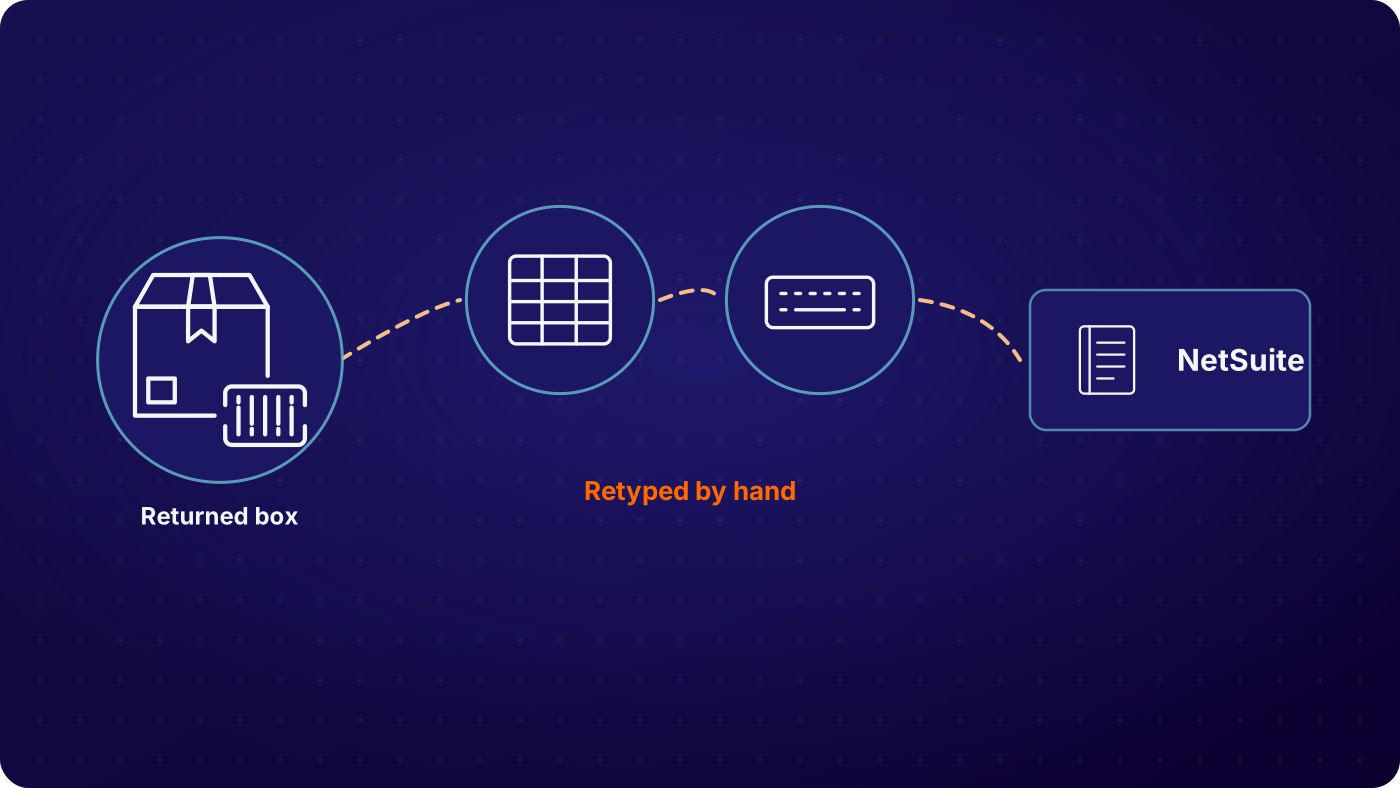

Return authorizations get typed in by hand
Someone reads a return request and keys a return authorization into NetSuite. It takes time, and one wrong quantity or item means the receipt will not match.

Credit memos wait on a person
The unit is back on the shelf, but the credit memo is not created until finance gets to it. The customer waits, and the books lag the warehouse.

Product data drifts out of sync
A manual upload of item records works on day one. Then prices, SKUs and descriptions change in NetSuite, and the returns side is quietly wrong.

Failures are invisible
A return posts twice and NetSuite treats it as a duplicate. Or it fails, and nobody knows because there is no message and no error. Someone finds it at month end.
What Syncs in the NetSuite Returns Management Integration, and When?

Reference data comes in from NetSuite
Customer, item and sales order data is read from NetSuite through the API, so a return request can be checked against the original order, the item and the return window. Item and customer records update when they change in NetSuite, so nobody maintains a second copy by hand.
See: returns initiation
Approved returns post as return authorizations
When a return is approved, ReverseLogix creates the return authorization in NetSuite against the original sales order, with the item, quantity and reason code. The RMA number and the NetSuite reference sit together on the record.
See: RMA software
Receiving posts the item receipt
When the unit is received, inspected and graded, ReverseLogix posts the item receipt against the return authorization. Received quantity, location and grade go with it, so inventory in NetSuite matches what is on the dock.
See: returns processing


Custody transfer triggers the credit
The refund trigger fires at custody transfer, which is standard. ReverseLogix posts the credit memo and the customer refund to NetSuite, or the replacement sales order for an exchange. Finance sees the entry without asking for it.
See: warranty management
| Condition at inspection | Typical route | Recorded on the return |
|---|---|---|
| Return approved at request | Return authorization created against the original sales order | Return authorization, sales order reference, customer, item, quantity, reason code, RMA number |
| Unit received and graded | Item receipt posted against the return authorization | Item receipt, received quantity, location, grade, timestamp |
| Custody transfer to the carrier | Credit memo and customer refund created | Credit memo, refund amount, tax, currency, payment method, return authorization link |
| Exchange or replacement approved | Replacement sales order created and linked to the return | Sales order, item, ship-to address, return authorization link |
| Item or customer changed in NetSuite | Record updated in ReverseLogix through the API | Item ID, SKU, description, price, customer ID, address, timestamp |
Example mapping. Every program sets its own objects, fields, triggers and approval rules during scoping.
Which Teams Touch the NetSuite RMA Integration?
Five groups touch it, and each needs something different. The NetSuite admin owns roles, tokens and the sandbox. The IT or integration lead owns the mapping and the release. Finance owns credit memos and refund rules. Warehouse operations owns receiving and grading. Customer service owns the return authorization and the customer’s answer. Each sees the same record, with the same NetSuite references, so nobody asks another team what happened.
See: IT teams, finance teams
One connection, five teams
- NetSuite admin: roles, token access and sandbox refreshes
- IT and integration lead: field mapping, releases and cutover
- Finance: credit memo rules, refund approvals and reconciliation
- Warehouse operations: receipts, grades and dispositions
- Customer service: return authorizations and refund status
How Do You See Errors, Retries and Duplicates?
Every message between ReverseLogix and NetSuite is logged, and every failure is visible. A return that fails to post is flagged with the error NetSuite returned, and the team can see the payload, the response and the return it belongs to. Retries are controlled so a return that posted once is not posted twice. The same record carries full audit history, so finance can trace any credit memo back to the return, the receipt and the person who approved it.
- Messages sent and received, with time and status
- Failed posts with the error NetSuite returned
- Retries, and whether the record was created once
- Returns authorized in NetSuite but never received
- Credit memos and refunds that do not match the return record
See: analytics
NetSuite Stays the System of Record

ReverseLogix does not replace NetSuite. Orders, customers, items, inventory and the general ledger stay there. ReverseLogix runs the return, from request to disposition, and posts the financial and inventory records back. If your process does not match the standard mapping, the ReverseLogix team scopes and configures it with your team. The same API-first approach connects Shopify, Salesforce, WMS platforms and carriers to the same return.
Credentials, Sandbox, UAT and Release Management
A NetSuite integration takes a defined project, and it starts in the sandbox. Your NetSuite admin sets up an integration role and token-based access with only the permissions the mapping needs. Your team and ours agree the field mapping, build against the sandbox, and test end to end in UAT with real return scenarios: full, partial, exchange, failed post. Then we agree a go-live plan.
Standard go-live for initiation is 4 to 6 weeks, and repair and technician flows extend it. Plan around your own freezes and peak season, because UAT should match production before either side loads code. Later changes to mapped fields go through the same sandbox and release steps. Certifications are shared during evaluation.
See: implementation, security
Your next questions, answered

Product
Returns Processing and RMA Software
See how it works →

Team
Returns and Warranty Software for IT Teams
See the IT view →

Calculator
How much are returns costing you? Run the ROI calculator
Run the numbers →

Compare
How does ReverseLogix compare with other returns platforms?
See how we compare →
NetSuite returns management integration: questions and answers
Yes. ReverseLogix connects to NetSuite through its API, using SuiteTalk or REST. It posts return authorizations, item receipts, credit memos and refunds, and it reads customer, item and sales order data. NetSuite stays the system of record. Field mapping is scoped with your team, then tested in the sandbox and UAT before go-live.
It creates return authorizations, item receipts, credit memos, customer refunds and, for exchanges, replacement sales orders. It reads customer, item and sales order records. The exact objects and fields are agreed during scoping, because every NetSuite account is configured differently, with its own custom fields, subsidiaries and approval rules.
Posts are triggered by events in the return, such as approval, receipt and custody transfer, so records reach NetSuite as the return moves rather than in a nightly file. Reference data updates from NetSuite through the API as well. Timing depends on your account limits and the design agreed in scoping.
Standard go-live for initiation is 4 to 6 weeks. The NetSuite work sits inside that: access, mapping, sandbox build and UAT. Repair and technician flows extend the timeline. A change freeze or peak season can move the date, so we plan the go-live around your calendar.
You need a sandbox, an integration role with token-based access, a named owner for field mapping, and people available for UAT. It is a real project, with a small time commitment from your team, not a plug-in. We give you the field list and test scenarios up front so IT can size the effort early.
The failure is logged with the error NetSuite returned, and the return is flagged so your team can see it. Retries are controlled to avoid creating the same record twice, and a duplicate check runs before a post. You can trace each credit memo or receipt back to the return record.
Yes. The refund trigger fires at custody transfer, which is standard, and ReverseLogix posts the credit memo and customer refund to NetSuite. You can set approval steps for high-value or flagged returns, so finance controls what posts without keying each one by hand.
No. NetSuite keeps orders, customers, inventory and the ledger. ReverseLogix runs the return itself, from request through inspection, repair and disposition, and posts the records back. Your finance and inventory processes stay where they are, and your NetSuite team keeps the roles, subsidiaries and approval rules it already runs.
Further reading: Oracle NetSuite.
Scope Your NetSuite Integration With a Specialist
Bring your NetSuite admin and your returns lead. We walk through the objects, fields and test plan before any commitment.


