

Return Fraud Prevention that checks the claim before the refund, and the box before the credit
Catch wardrobing, empty boxes, swapped items and serial mismatches with evidence on the record.
Return fraud prevention is the set of checks that stop a refund, credit or replacement being paid on a return that is not what it claims to be. A box comes back that weighs half what it should. The serial number on the unit is not the one that shipped. The same address has filed four claims this quarter, and the refund went out before anyone opened the carton.
ReverseLogix builds return fraud prevention into the return itself. Photos are checked at initiation, the serial and order are matched, signals such as claim frequency and reason are flagged, and the refund waits for the trigger you set. People make the decision, and every check sits on the return record.

Returns teams using ReverseLogix include:




Why Does Return Fraud Get Through?
Return fraud gets through because the refund and the inspection are run by different teams at different times. The claim is approved on the word of the customer, and the evidence turns up after the money has gone.
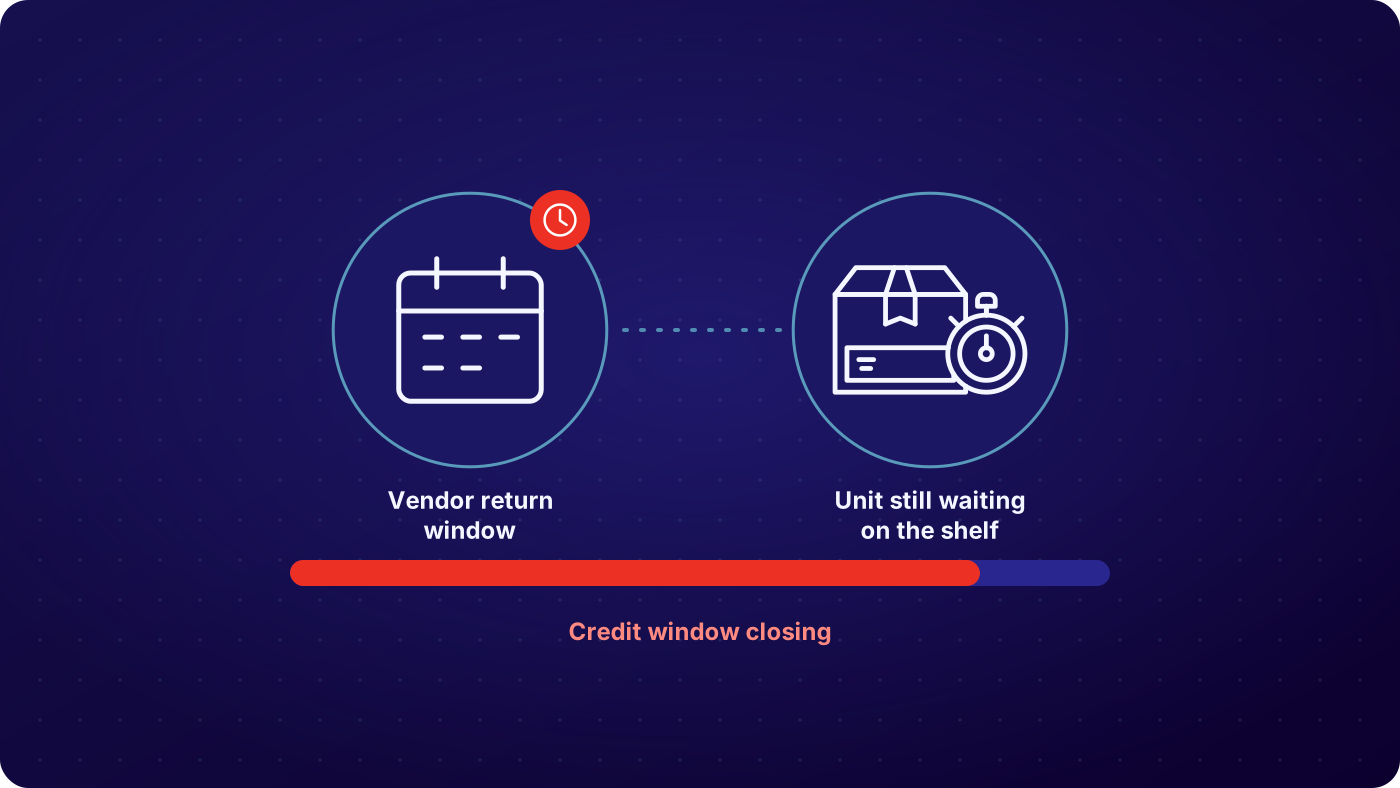

The refund goes out before the box is opened
Fast refunds keep customers happy, so many programs pay on the carrier scan. If the carton holds the wrong item, or nothing at all, the credit has already posted.

Nobody matches the serial number
The unit that comes back should be the unit that shipped. When serials are not checked against the order, an older, broken or counterfeit product is swapped in and accepted.

Repeat claims hide across channels
The same customer, address or dealer claims again and again through the store, the website and the call center. Each claim looks reasonable alone. Together they are a pattern nobody sees.

Inspectors have no record of what was claimed
The dock sees a box, not the claim. Without the reason, the photos and the order beside the unit, an inspector cannot tell worn from faulty, or a real defect from damage after the sale.
How Does Return Fraud Prevention Work in One System?
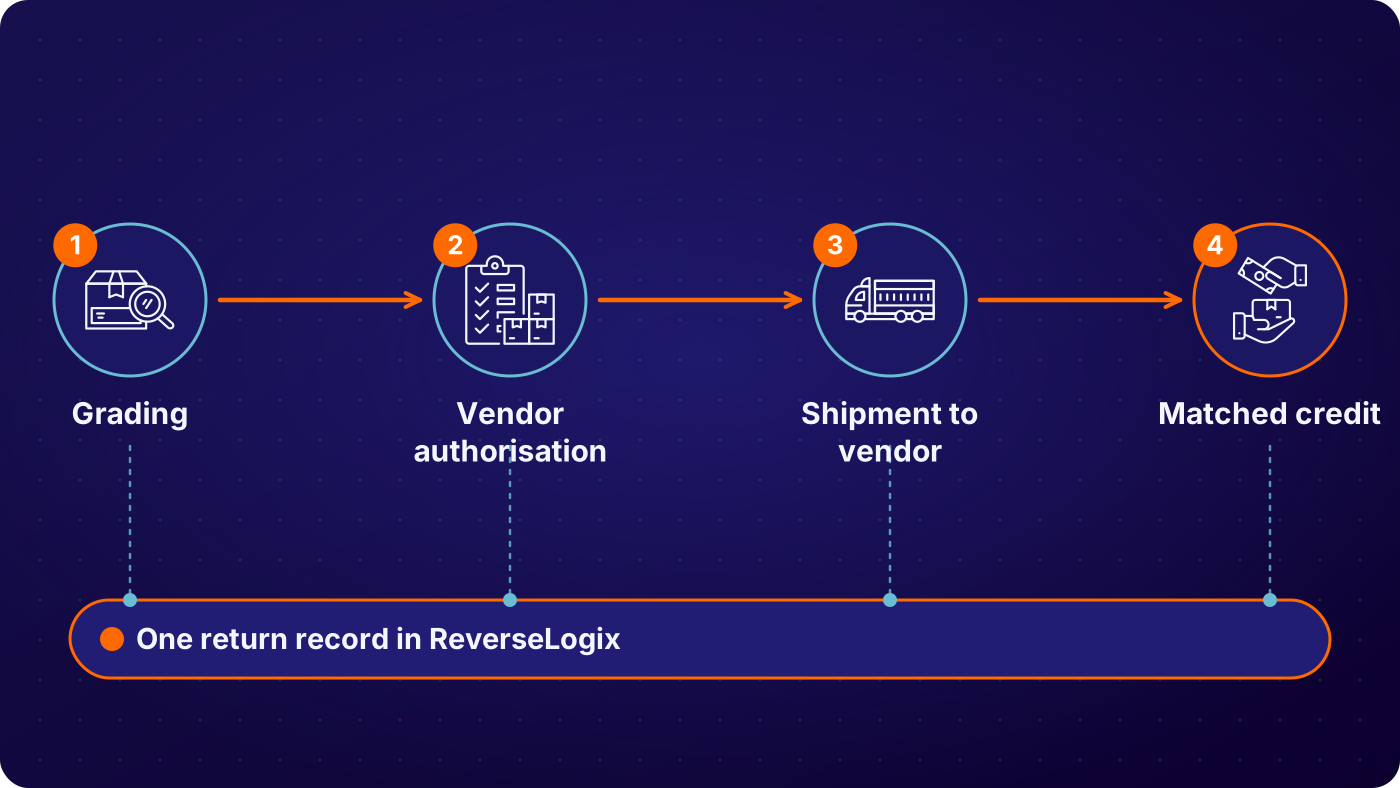
Check the claim at initiation
The customer or dealer uploads photos or a short video when the return starts. Vision AI compares them with the product record and the stated reason, and eligibility is checked against the order, the window and the warranty before a label is issued. Claims that fail a check go to a person with the evidence attached.
See: returns initiation, Vision AI
Flag the signals on the record
Rules you set look at serial number, claim frequency, reason codes, return value and account history. A match raises a flag on the return and routes it for review. The system sorts and flags. It does not decide who is lying, and your team makes the call.
Verify the unit at receipt
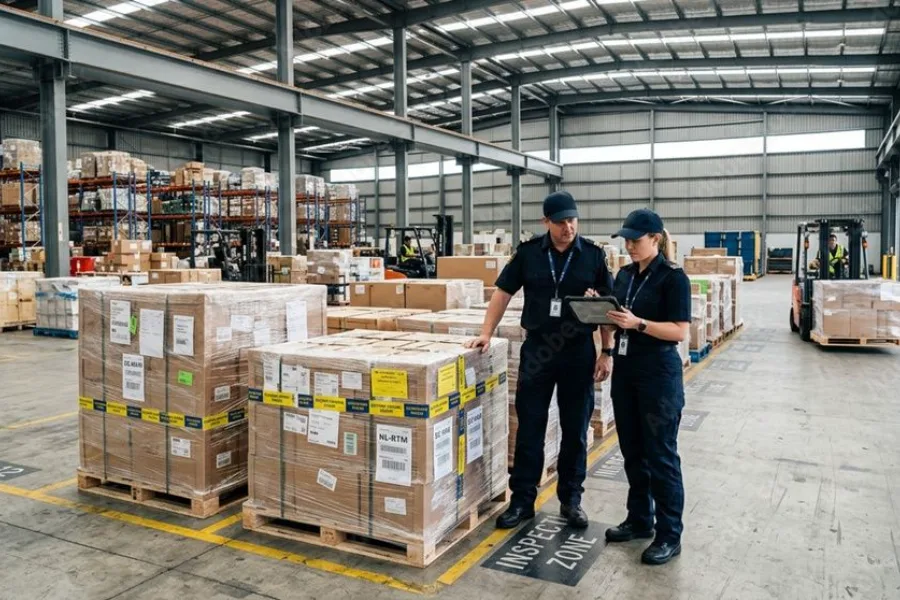
At the dock, the scan shows what was claimed, the photos and the expected serial. The inspector records weight, condition and the serial that arrived. A mismatch, a wrong item or an empty box is captured with photos against the return.
See: returns processing


Release the refund on the trigger you set
Refunds and credits follow rules by product, value and risk. Low-risk returns can be paid at carrier scan. Flagged or high-value returns wait for receipt and inspection. Each release or hold is recorded with the rule that set it, so finance can explain every credit.
See: analytics
| Signal on the return | Typical route | Recorded on the return |
|---|---|---|
| Photo does not match the product or the stated reason | Held for review before a label is issued | Photos, check result, reviewer, decision, timestamp |
| Serial received is not the serial shipped | Credit held, routed to a supervisor | Expected serial, received serial, photos, inspector, timestamp |
| Carton weight far below the shipped weight | Opened and photographed before any credit | Shipped weight, received weight, photos, outcome, timestamp |
| Account over your claim frequency threshold | Flagged, refund waits for inspection | Claim count, period, rule matched, flag raised, timestamp |
| Worn or used item claimed as faulty | Graded, claim declined or partial credit per policy | Grade, wear evidence, policy applied, approver, timestamp |
Example configuration. Programs set their own signals, thresholds and routes.
Who Uses Return Fraud Prevention, and What Does Each Team See?
Four teams deal with return fraud, and each needs a different view of the same return. Customer service sees flags before approving a claim. The warehouse sees what was claimed beside what arrived. Finance sees which refunds are held and why. Loss prevention sees patterns by account, product and reason. Nobody pieces the story together from separate systems, and each return keeps one history.
See: customer service, finance
One record, every team
- Customer service: flags and eligibility before approval
- Warehouse: claimed item, photos and expected serial at the dock
- Finance: refunds held, released or declined, with the rule
- Loss prevention: repeat claims by account, address and product
What Can You See and Measure on Return Fraud?
You can see how many returns were flagged, why, and what happened to each one. That is the evidence most teams cannot produce when finance asks what fraud costs. ReverseLogix keeps it on the return record, so the count comes from inspections and decisions, not estimates. It reports what the record holds. It does not label a customer a fraudster, and it does not replace your policy.
- Returns flagged at initiation, by signal and outcome
- Serial and item mismatches found at receipt
- Refunds held for inspection, and how long they waited
- Repeat claims by account, address or dealer
- Credits declined or reduced, with the evidence attached
Your ERP and Commerce Platform Stay the Systems of Record
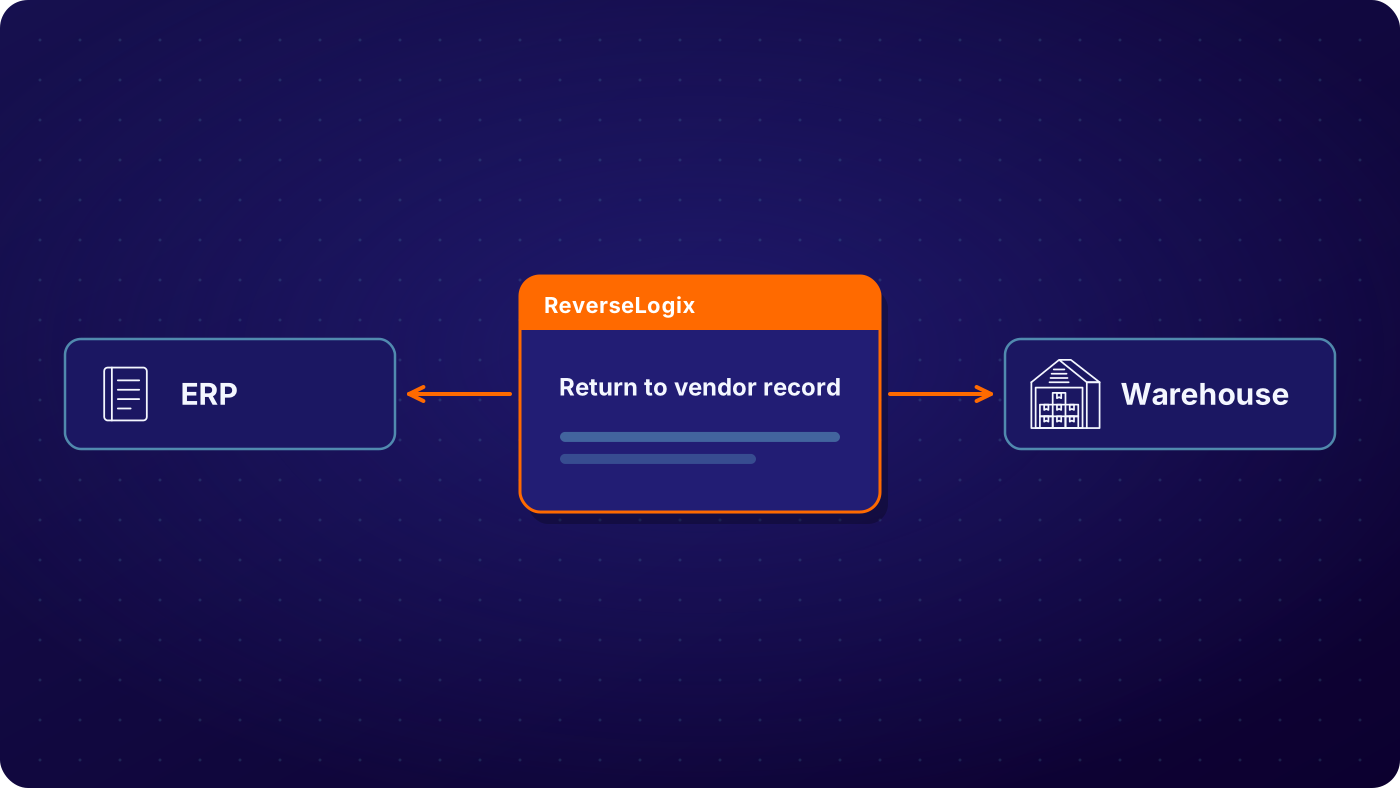
ReverseLogix runs the checks and posts the result to your systems of record. Your ERP keeps orders, customers and credit memos. Your commerce platform keeps the storefront and payments. ReverseLogix integrates with SAP, Oracle, NetSuite and Microsoft Dynamics 365, and with Shopify and Salesforce, through an API-first design. The project takes mapped fields, a sandbox, user acceptance testing and a go-live plan, which the ReverseLogix team scopes with you.
See: integrations, implementation
Audit Trail, Access and Controls for Fraud Decisions
Every flagged return carries a full history: which signal fired, what the photos and inspection showed, who reviewed it and what they decided. That history is what a customer dispute, a chargeback or an auditor asks for, and it is on the record without anyone rebuilding it.
Role-based access decides who can change a fraud rule, override a flag or release a held refund. Every change is written to the audit history. ReverseLogix certifications are shared during evaluation. Your team owns the return policy and the decision on each claim, and the system records the steps you set.
See: platform security
Your next questions, answered




Return fraud prevention: questions and answers
Return fraud prevention is the set of checks that stop refunds, credits and replacements being paid on returns that are not genuine. It covers checks before the return is approved, checks when the unit arrives, and rules on when the refund is released. Good prevention keeps evidence on every decision, so honest customers are not slowed down and disputes can be answered.
Common examples are wardrobing, where an item is used and then returned as new; returning a different, older or counterfeit item; sending back an empty box; claiming an item never arrived; returning stolen goods; and repeated warranty claims on the same unit. In B2B, it also includes dealers claiming credit for stock outside contract terms.
It compares what was claimed with what is known and what arrives. Photos are checked against the product, serial numbers are matched to the order, weights and conditions are recorded at receipt, and rules flag repeat claims or unusual patterns. ReverseLogix flags and routes. A person reviews the evidence and decides.
Yes. The refund trigger is a rule. Many programs pay low-risk returns at carrier scan and hold flagged or high-value returns until receipt and inspection. You set the rule by product, value, customer and signal, and each hold or release is recorded.
No. Vision AI checks photos and grades condition, and the result goes on the return record. Your rules and your team decide the outcome. Any flag or grade can be overruled by a person with the right access, and the override is logged.
It should not. Checks run in the background at initiation, and most returns pass without a hold. Only returns that match a signal are routed for review. Because the evidence is collected up front, genuine claims are often approved faster.
No. Your ERP and commerce platform remain the systems of record, and payment fraud tools keep doing their job at checkout. ReverseLogix covers the return itself and posts results to your systems. It integrates with SAP, Oracle, NetSuite and Microsoft Dynamics 365.
Standard go-live for returns initiation is 4 to 6 weeks. Photo checks, fraud signals and refund rules are configured with your team in that project. Repair and technician flows extend the timeline. A specialist will give you a plan after reviewing your process.
Further reading: National Retail Federation research on retail returns.
See Where Return Fraud Gets Through Your Process
A specialist walks through your returns, from claim to refund, and shows where checks are missing, before any demonstration.


