Which Returns Trends Should I Plan For This Year?

E-commerce grew on convenience and flexibility. The part of fulfillment that gets less attention is returns.
Online retail depends on how well returns are managed: the process has to minimize waste and still give customers what they want. More online shopping means more returns, for reasons that range from the wrong item to the wrong fit.
Higher return volumes create both problems and opportunities for online retailers. This article covers the main returns management trends and what businesses can do about each one.
The Current State of Returns Management
The traditional approach to returns relied on manual processes, carried high costs and gave little visibility into where goods were. Retailers still using outdated systems struggle to meet what customers now expect: a simple, convenient return.
Retailers are under pressure to process returns faster while balancing cost and customer satisfaction.
Key Trends Shaping Returns Management in 2025 and Beyond
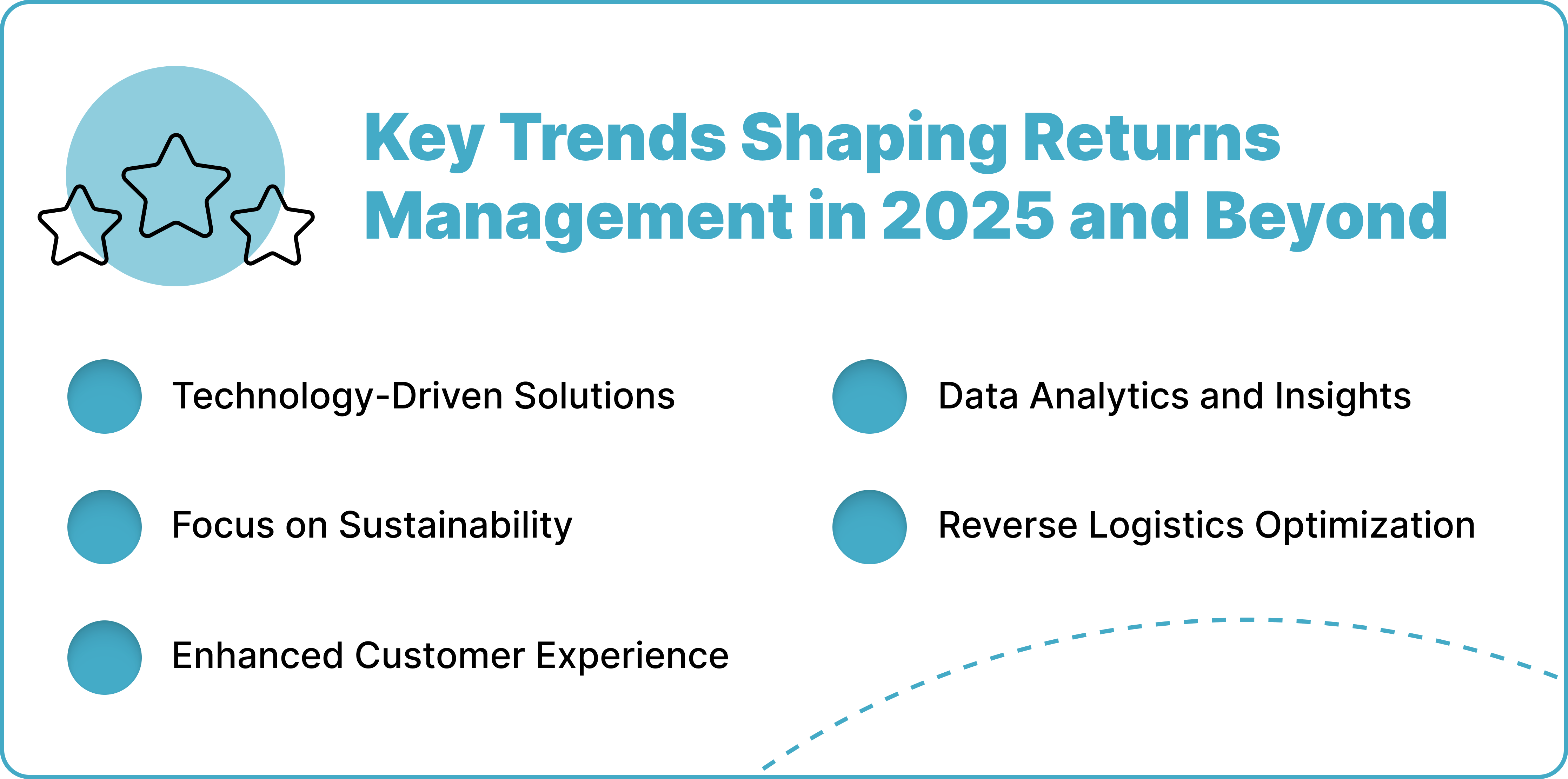
Retailers have to improve the returns process, keep customers satisfied with it and control cost at the same time. Those three pressures drive the trends below:
1. Technology-Driven Solutions
Technology now plays a part in almost every area of supply chain management, and returns are no exception.
Artificial Intelligence (AI) and Machine Learning
AI makes predictive analytics practical for returns. Retailers can anticipate return rates for specific products from past trends, customer feedback and purchasing behavior.
AI-powered returns management systems optimize return routing, ensuring products are sent to the most suitable location, whether that’s a refurbishment center, a resale outlet, or a recycling facility. These tools also help identify patterns that may indicate fraudulent returns, saving businesses time and resources.
Automation and Robotics
Automation matters most in warehouse and logistics work. Robotic systems sort, categorize and process items with fewer errors and at higher speed. That lowers cost and shortens the time customers wait for refunds or exchanges.
Returns Management Software (RMS)
Specialized software such as ReverseLogix RMS simplifies returns. These platforms integrate with inventory, transport and warehouse management systems and with customer relationship management (CRM) tools, so the returns process is managed in one place.
The software typically includes return policy enforcement, automated label generation and real-time tracking updates for customers.
2. Focus on Sustainability
Returns depend on transportation, which produces an outsized share of greenhouse gas emissions. Customers and regulators are paying attention, and more retailers are changing their operations in response:
Applying Circular Economy Principles
Retailers are putting more weight on reuse and resale. Where possible, returned items are refurbished or repaired and sold again, which extends the product lifecycle and reduces waste.
Sustainable Packaging and Transportation
The materials used in packaging returns and the methods of transport are being re-evaluated. Biodegradable or recyclable packaging materials are now favored, and there is a push for transportation methods that minimize carbon emissions. Consolidated return shipping also helps reduce the environmental impact.
Donation and Recycling Programs
Instead of sending returned items to landfill, companies are setting up donation and recycling programs for products that cannot be resold.
3. Enhanced Customer Experience
Returns shape whether a customer buys again, which affects retention and churn. Retailers are responding in three ways:
Simplified Return Processes
Retailers prioritize streamlining returns policies and offering clear instructions. Self-service portals, drop-off locations, and prepaid return labels make the process easier and faster for customers, which encourages repeat business.
Proactive Communication and Tracking
Providing real-time updates about return status, via email, app notifications, or SMS, enhances transparency. Customers appreciate knowing when their return is received, processed, and completed, creating a smoother experience.
Personalized Return Options
Personalization is becoming a differentiator. By analyzing customer purchase history and preferences, retailers can offer tailored return solutions. For example, high-value customers might receive extended return windows or complimentary at-home pick-up services.
4. Data Analytics and Insights
Returns data analytics gives retailers the information to plan and to see what is happening in the returns process. Retailers use it to:
Analyze Returns Data
The information gathered from return transactions can be a valuable resource. Retailers are using this data to identify patterns in product defects, incorrect sizing, or other issues that lead to returns. This feedback loop enables businesses to improve product design and description accuracy.
Using Data to Reduce Returns
Insights derived from return patterns inform enhancements like better sizing charts, detailed product imagery, and more accurate descriptions. These adjustments help customers make informed purchase decisions, lowering the likelihood of dissatisfaction and subsequent returns.
5. Reverse Logistics Optimization
Reverse logistics is the core of any returns operation, and improving it affects everything else. Retailers take different approaches:
Optimizing Return Routing
Logistics teams use software to decide the most efficient way to handle returned goods. Depending on condition and resale potential, a product goes to a central warehouse, a vendor or a liquidation partner. Better routing lowers cost and speeds up processing.
Centralized vs. Decentralized Returns Processing
Companies are weighing the benefits of centralized systems, where all returns are processed in a single location, against decentralized models, which distribute returns handling across multiple sites. Centralized systems offer scale efficiency, while decentralized systems may reduce shipping times and costs.
Collaboration with Third-Party Logistics Providers (3PLs)
Many businesses outsource returns management to 3PL providers that specialize in it. These partners bring expertise, infrastructure and networks.
Enhance Your Returns Management With ReverseLogix
ReverseLogix is a returns management system (RMS) that covers return requests, logistics, inventory and processing. It connects every step of the return lifecycle, and every customer, channel and system involved, in one SaaS platform. Connect with us today to see what it would change in your returns operation.
Frequently Asked Questions
1. How does returns management contribute to customer loyalty and satisfaction?
A well-managed returns process gives customers a simple, predictable experience. It also tells customers about what types of returns are permitted and clarifies the refunding process and options. For an online store, this may also include the option of store credit and other rewards.
2. What are some common challenges in reverse logistics and returns management operations?
The common challenges include handling a high volume of returns, a complicated return requests process, fraudulent returns, proper inventory management of the returned goods and integrating them back into the system, slow processing due to the volume of returns, and effectively addressing customer inquiries.
Returns management software such as ReverseLogix is built to handle these. See our podcast on reverse logistics trends.
3. How can businesses measure the success of their return management process?
To measure the success of reverse logistics operations and return management process, businesses must effectively track key performance indicators such as:
– customer returns rates
– return processing time
– recovery value
– customer retention and satisfaction
– sustainability and profitability impact
4. What are reverse logistics and returns management processes?
Reverse logistics refers to moving goods from their final destination back through the supply chain for returns, recycling, refurbishment, or disposal. Returns management is a subset of reverse logistics that handles customer returns. It involves the policies, processes, and systems that allow businesses to process, inspect, restock, or dispose of returned items.
Get a Demo
Discover how you can jump-start your returns management efforts with ReverseLogix.