Returns Management vs Reverse Logistics: Understanding The Difference

Reverse logistics and returns management are often used interchangeably, but they are different parts of the same process. About 30 to 35% of products bought online are returned, compared with 9% in brick-and-mortar shops. Knowing the difference between the two helps a business design its returns operation.
For the software side of this topic, see returns management system.
Reverse logistics is the movement of goods from consumers back to the supply chain. Returns management is the set of steps that makes that return simple for the consumer.
This article explains the difference, why both matter and how to improve each.
What is Reverse Logistics?
Reverse logistics reverses the usual flow. Goods normally move from the supply chain to consumers. In reverse logistics, the supply chain collects goods from consumers.
The main reasons are repair, refurbishment, recycling, unwanted products and the sale of pre-owned products back to the business.
Reverse logistics is the management of that flow from the consumer back to the supply chain.
What Role Does Reverse Logistics Play in Modern Supply Chain Management?
Reverse logistics has been central to retail since online retail and marketplaces emerged. It let online retailers win customers by promising that an order could be returned if it did not meet expectations.
Over time it has expanded beyond simple returns to cover repairs and the resale of pre-owned items. Reverse logistics is now used in several ways:
Product Returns
Reverse logistics handles and coordinates product returns from end customers, retailers and other parties in the supply and distribution chain.
Recovery and Value Maximization
It recovers value from returned goods through refurbishment and recycling. Where goods cannot be used, it finds sustainable ways to dispose of them.
Sustainability and Corporate Responsibility
Sustainability is now a requirement for supply chains. Reverse logistics allows proper disposal of goods, extends product life and reduces emissions.
Continuous Improvement
Reverse logistics is a source of customer feedback and performance data. Businesses analyze returns data to learn why, how and when customers send goods back through their return processes for repair, resale or disposal.
Those insights feed continuous improvement.
What is Returns Management?
Reverse logistics moves the goods. Without returns management, it would be a poor experience for the consumer.
Returns management is consumer-centric. It covers how unwanted products sent back to the business are handled, with the aim of making the return easy for the customer.
What Role Does Returns Management Operation Play?
Returns management uses technology to process returns efficiently and to limit their costs: shipping, restocking fees, lost sales, administration and damage to reputation.
Its main roles:
Customer Satisfaction
Returns management lets online retailers make a simple promise: buy, and if you do not like it, you can return it. Done well, it means a dedicated customer service team, timely refunds and transparency throughout, which builds loyalty.
Cost Reduction
Returns management reduces the financial impact of reverse logistics by cutting transportation and handling costs, with the help of technology such as ReverseLogix.
It also increases what is recovered from returned goods through refurbishment, recycling and resale.
Inventory Management
Returns management supports inventory management through restocking and redistribution, which reduces both excess inventory and stockouts. It gives real-time updates on each SKU and where it is in the return journey.
Regulatory Compliance
Many industries have rules on product returns, disposal and sustainability. Returns management helps businesses comply, withstand scrutiny and avoid fines or penalties.
What is The Key Difference Between The Two?
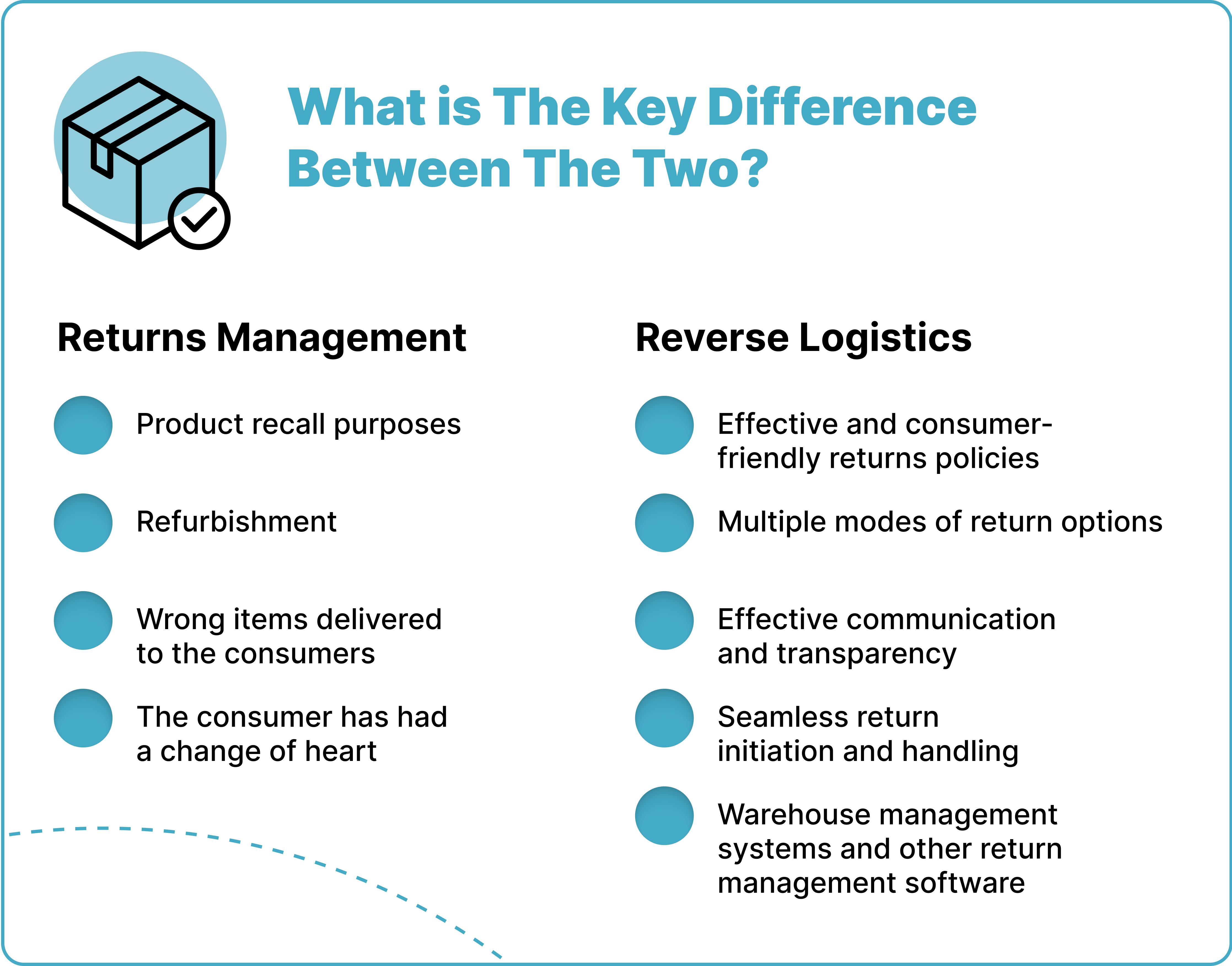
Reverse logistics is the event: the activities that collect goods from consumers. The reason could be:
- Product recall purposes
- Refurbishment
- Wrong items delivered to the consumers
- The consumer has had a change of heart
Reverse logistics existed before e-commerce, but the rise of e-commerce made it much larger and forced businesses to take it seriously.
Returns management cannot exist without reverse logistics, and reverse logistics would be a mess without returns management. Returns management is customer-centric: it manages expectations and the customer’s experience of the return. It relies on:
- Effective and consumer-friendly returns policies
- Multiple modes of return options
- Effective communication and transparency
- Simple return initiation and handling
- Warehouse management systems and other return management software
Put another way: reverse logistics could exist without returns management, but it would be far smaller and far messier than it is today.
ReverseLogix for Reverse Logistics and Returns Management
Understanding the difference between the two helps you improve the whole return process. Like the rest of the supply chain, it also needs the right technology.
ReverseLogix is built for complex returns. It covers automation of the return process, fraud prevention, analytics and tracking, sustainability and recommerce.
Get a demo or view our pricing plans today.
Frequently Asked Questions
1. What is the key objective of reverse logistics?
Reverse logistics gives consumers a way to return unwanted goods to the supply chain. That improves customer satisfaction and lets the business reuse, resell or dispose of the goods.
2. How does returns management contribute to customer satisfaction?
Returns management helps ensure that the entire return process is properly handled. It gives customers a simple, predictable experience when returning goods.
It also helps inform the customers of what type of returns are permitted and clarifies the refunding process and options. This may also include the option of store credit and other rewards for an online store.
3. What are some common challenges in reverse logistics and returns management operations?
The common challenges include handling a high volume of returns, complicated return requests process, fraudulent returns, proper inventory management of the returned goods and integrating them back into the system, slow processing due to the volume of returns, and addressing customer inquiries effectively.
Returns management software such as ReverseLogix is built to handle these.
4. How can businesses measure the success of their return management process and reverse logistics efforts?
To measure the success of reverse logistics and return management process, businesses must effectively track key performance indicators such as:
– return rates
– return processing time
– recovery value
– customer satisfaction
– sustainability and profitability impact
This way, they understand the success and failure of the reverse logistics and return management process.
Get a Demo
Discover how you can jump-start your returns management efforts with ReverseLogix.