How Much Can Better Returns Management Cut Ecommerce Costs?

E-commerce businesses are expensive to run, and competition forces constant reinvestment. One of the most effective ways to control operating costs is to make returns management and reverse logistics more efficient.
Returns management matters to every seller, whether an online store, e-commerce platform, or brick-and-mortar store. For e-commerce it is a necessity. Customers want to know they can return a product before they spend money, so they check the returns option first. A clear return policy reassures them. But returns management can be expensive.
Product returns mean lost revenue unless the retailer can save the sale through store credits and product exchanges. Then there is the cost of the returns infrastructure. The returns portal, the reverse logistics process and the returns processing facility all cost money and affect the profitability of the entire business.
A more efficient returns management process reduces these costs.
The Cost of Returns Management
Returns management involves infrastructure and processes, including reverse logistics, that allow the business to collect and assess customer returns. They carry two types of costs:
1. Direct Costs
These are return costs that are easy to trace. They include:
- Reverse Logistics: Transportation and handling costs for returned items quickly add up. Every extra mile and touchpoint incurs expenses, from shipping to warehousing.
- Labor: Processing returns, whether inspecting items or restocking inventory, requires a dedicated workforce, which increases operating costs.
- Inventory Management: Managing excess stock or damaged items often results in additional warehousing fees or write-offs.
- Return Policy: A clear return policy can reduce direct costs by minimizing the number of returns and streamlining the return process, thereby lowering transportation, labor, and inventory management expenses.
2. Indirect Costs
These costs are harder to track.
- Lost Revenue: Returned items that cannot be resold lead to direct revenue losses.
- Customer Dissatisfaction: Complicated or delayed return processes can alienate customers, damaging loyalty and reputation.
- Operational Complexity: Inefficient returns increase administrative overhead and resource strain, reducing overall productivity.
- Inefficient Reverse Logistics: Poorly managed reverse logistics processes can increase indirect costs through higher transportation expenses, additional handling, and storage requirements.
Why Returns Management Matters
Returns management refers to the process of handling customer returns, from the initial return request to the final resolution. It is essential for e-commerce businesses to have an effective returns management process in place to ensure customer satisfaction, reduce costs, and improve business efficiency.
Effective returns management can help businesses to:
- Improve Customer Satisfaction and Loyalty: A hassle-free returns process can enhance the customer experience, leading to increased satisfaction and repeat business. Customers are more likely to shop again if they know they can return products easily.
- Reduce Returns Costs and Improve Profitability: Streamlining the returns process can minimize the costs associated with reverse logistics, labor, and inventory management. This efficiency can lead to better profit margins.
- Enhance Brand Reputation and Trust: A transparent and fair returns policy can build trust with customers, enhancing the overall brand reputation. Positive customer experiences with returns can lead to favorable reviews and word-of-mouth referrals.
- Improve Inventory Management and Reduce Waste: Efficiently processing returns allows businesses to quickly reintegrate products into inventory or decide on alternative actions, such as repairs or recycling. This reduces waste and optimizes stock levels.
- Streamline the Returns Process and Reduce Administrative Tasks: Technology can automate parts of the returns process, reducing the administrative burden on staff and allowing them to focus on more strategic tasks.
Strategies For Efficient Returns Management
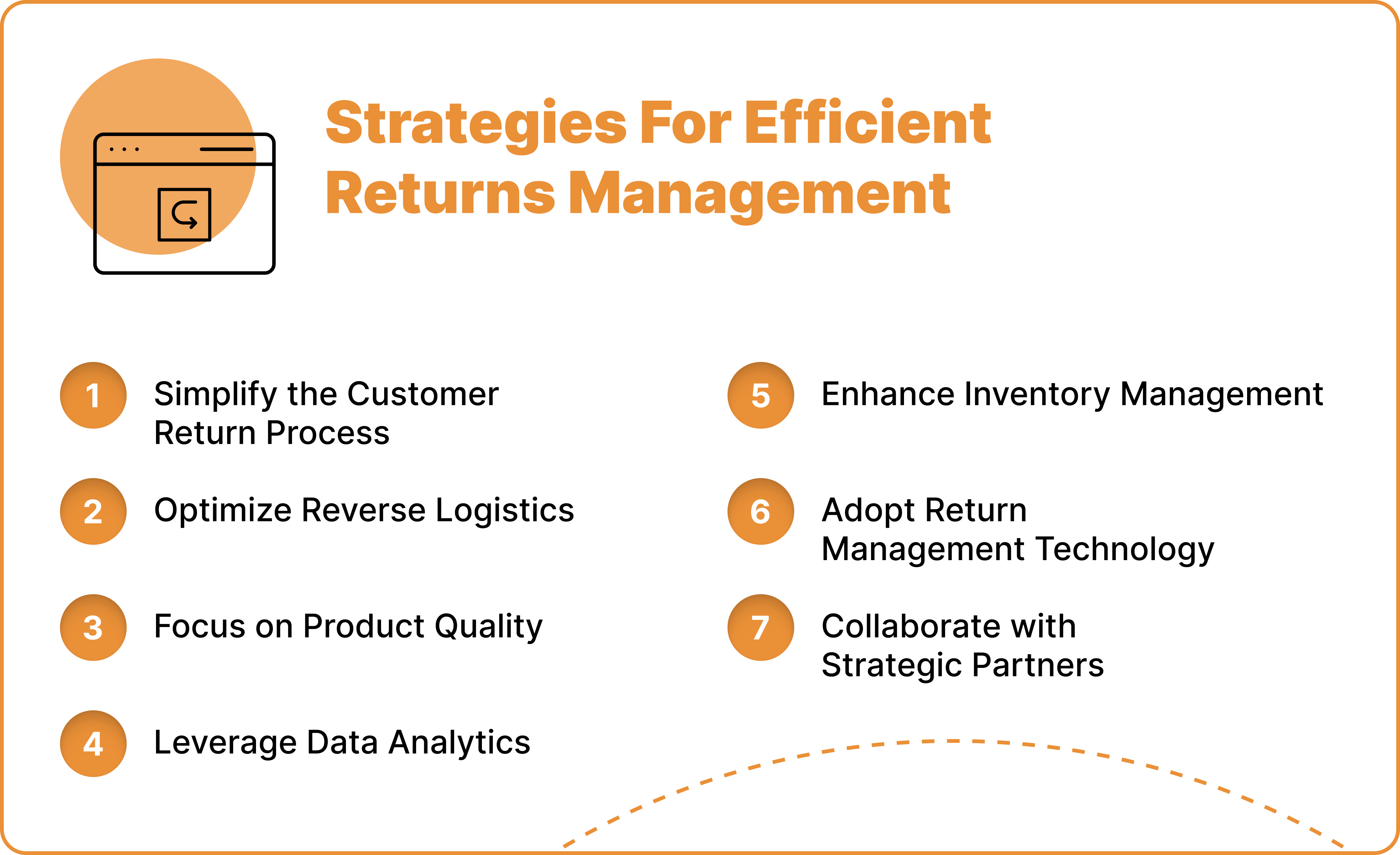
Efficient returns management reduces costs, but it is hard to get right. Here are seven strategies:
1. Simplify the Customer Return Process
A straightforward and user-friendly return process improves the customer experience and reduces errors. Provide:
- Clear return policies that set expectations upfront.
- Easy-to-access return labels or QR codes.
- Drop-off options at multiple locations or through partnerships with courier services.
2. Optimize Reverse Logistics
Reverse logistics, the movement of goods back from customers to warehouses or repair centers, can significantly affect costs. Efficient routing and consolidation are key to cutting expenses.
- Use returns management software to determine the closest return destination for each item.
- Employ route optimization tools to reduce transportation costs and time.
- Partner with logistics providers that specialize in handling returns.
A solutions provider like ReverseLogix can help you integrate reverse logistics with your e-commerce platform.
3. Focus on Product Quality
Preventing returns is often the best strategy. Ensuring product quality reduces returns caused by defects or unmet expectations.
- Conduct rigorous quality checks during production.
- Provide accurate product descriptions and visuals on ecommerce websites to align with customer expectations.
- Implement feedback loops to address recurring issues identified through returns data.
4. Use Data Analytics
Businesses can analyze patterns in return reasons, product categories, and customer behaviors to make informed decisions.
- Identify trends that can help improve product designs or packaging.
- Use predictive analytics to forecast return volumes and prepare inventory and staff accordingly.
- Segment customers based on their return history to tailor policies or provide proactive support.
5. Improve Inventory Management
Returned goods need to go back into stock or other channels quickly to minimize losses.
- Use automated systems to classify returned items into resale, repair, or recycling categories.
- Resell items quickly to avoid value depreciation, especially for seasonal goods.
- Implement transparent systems for tracking the flow of returned goods.
6. Adopt Return Management Technology
Investing in dedicated software like ReverseLogix’s Returns Management System can automate many aspects of the returns process and provide real-time tracking.
- Track return statuses, reasons, and costs with management systems.
- Offer visibility into the lifecycle of a return to both customers and internal teams.
- Use machine learning tools to detect fraud or inefficiencies in the system.
7. Work With Partners
Working with third-party logistics (3PL) providers and other partners takes operational work off your team and brings specialized expertise.
- Negotiate contracts to ensure favorable shipping rates for return shipments.
- Collaborate with refurbishers or recyclers to handle unsellable returns sustainably.
- Partner with couriers to provide flexible return options, improving convenience for customers.
Three Ways to Recover More Value From Returns
1: Improve the return-to-shelf time for resale items.
Reselling returned items, either at full price (for items returned in new condition) or at a discount (for open box items) can help you recoup some of the cost of the merchandise. However, in order for this to be a profitable strategy, you need to have an efficient system for tracking merchandise that is returned to your store and ensuring that it gets back to the warehouse, distribution center, or on the shelves of a retail store right away.
For shops that don’t have any returns tracking process, this can be difficult. It gets harder as the volume of returns goes up, and if you don’t have a good tracking system you probably find a lot of items that were sent to the wrong place, stored in a warehouse, or mistakenly disposed of when they could have been resold. You often won’t find out until it is too late to sell the item for a good price.
Tracking your merchandise makes it easy to see where the bottlenecks are, find lost items before it’s too late, or discover opportunities to speed up the process to get items back out for resale sooner.
2: Collect and manage return-to-vendor (RTV) items.
Sometimes the items that people return can be sent back to your vendor for a refund, credit, or warranty claim. The biggest challenge for many retailers is simply tracking and sending these items back on time and with the proper documentation or paperwork. Your vendors likely have their own timelines for returned items, so you need to track them all and avoid missing a deadline. Reverse logistics software can make this process easier by allowing you to track everything in a single place, run reports on products that can be RTV, and providing alerts about when you need to send them to get full credit with the vendor.
3: Make returns easy and transparent for your customers.
It might seem counterintuitive that easier returns help you make money, but a 2018 consumer survey showed that 96% of customers who have a good return experience are more likely to purchase again from that retailer. With online shopping still growing, you need a simple returns policy that is clear to your customers, and automated, frequent communication with customers about the status of their returns. Doing this manually can be hard, but with a returns management platform it is much easier.
Returns Management With ReverseLogix
ReverseLogix is the only end-to-end returns management system built for retailers, e-commerce brands, manufacturers, and 3PLs. Whether B2B, B2C, or hybrid, the ReverseLogix technology platform facilitates, manages, and reports on the entire returns lifecycle. Returns should be simple and should not get in the way of customer satisfaction. Our returns management system (RMS) takes the guesswork out of returns by capturing relevant data, automating workflows, and making your returns profitable.
Connect with us today for a free demo.
Frequently Asked Questions
1. What is efficient returns management, and why is it critical for e-commerce businesses?
Efficient returns management streamlines the process of handling returned goods, reducing transportation, labor, and inventory costs while maintaining customer satisfaction.
2. How does optimizing reverse logistics help lower costs?
Efficient routing and consolidation of return shipments reduce transportation expenses. Partnering with logistics providers for cost-effective solutions also plays a key role.
3. In what ways can improved inventory management reduce costs related to returns of any self-hosted ecommerce website?
Accurately categorizing returned items for resale, repair, or recycling helps reintegrate inventory quickly and prevents overstocking or wastage.
Get a Demo
Discover how you can jump-start your returns management efforts with ReverseLogix.