How Do I Offer International Returns Without Losing Margin?

89% of customers identify returns as a priority metric when they go shopping online, whether or not they are looking at cross-border e-commerce purchases. For an international e-commerce business, that makes the returns experience part of the sale.
Easy international returns is a competitive edge. Even so, many e-commerce businesses still run a rigid and complex returns management process for their customers. Most online and international businesses focus on getting their products to customers fast, but when those customers need to return something, the process often falls apart, especially across borders.
It is not always about negligence, though. Online retailers often face a higher volume of returns compared to brick-and-mortar stores, which adds to the complexity and cost of managing returns. Cross-border returns are slower, harder to understand than local returns, and riddled with hidden costs. This creates frustration and lowers trust. Even when the product is good, a bad return experience can drive buyers away for good.
The complexities of international returns are further compounded by the differences in regulations and customer preferences in other countries. While the EU has a standard return period, other regions, like Australia, do not enforce such policies, creating challenges for online retailers.
The solution isn’t just about faster shipping. It starts with building easy international returns from the ground up. A smooth return process builds loyalty, earns second chances, and demonstrates that the brand values its global customers. This article outlines ways to provide customer-friendly global returns that meet customer expectations in international markets, while also gathering valuable data. We’ll examine the causes of friction and provide practical steps to reduce it.
Why Cross-Border Returns Frustrate Customers
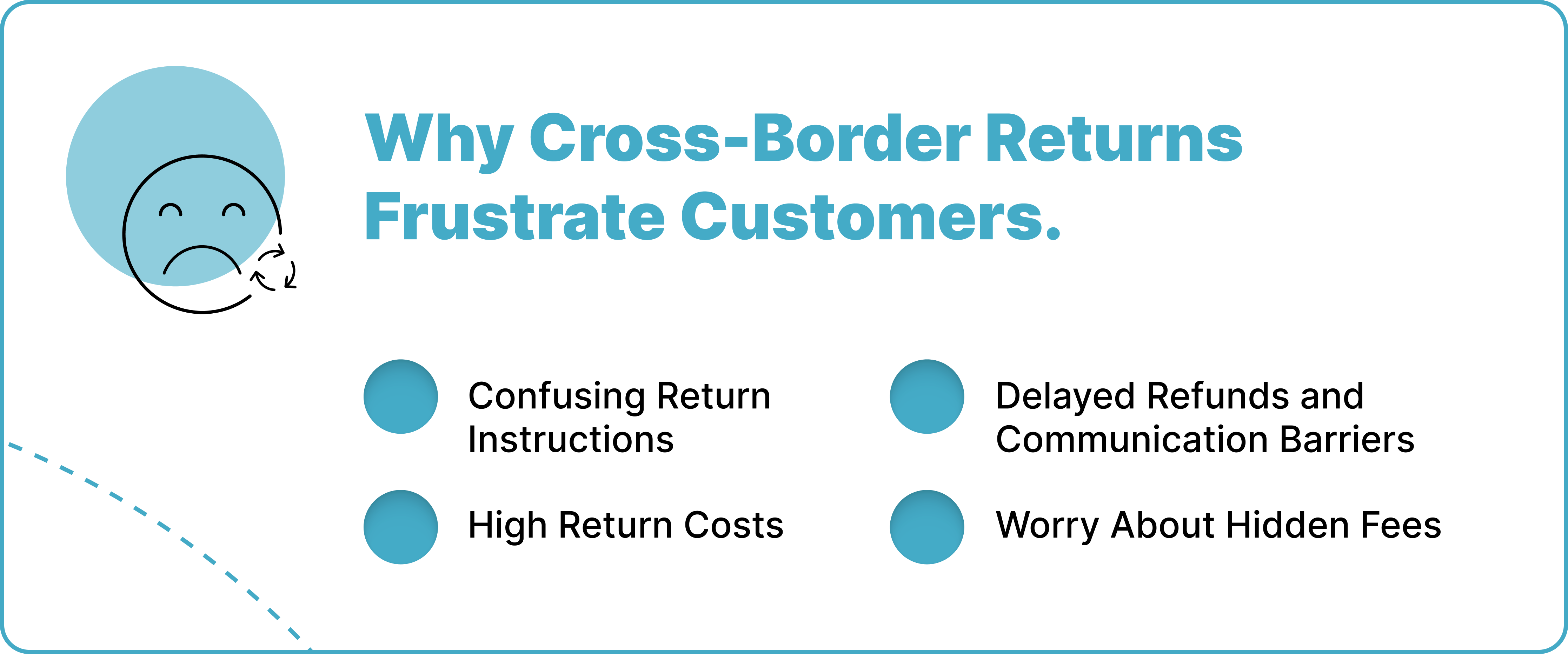
Customers often buy from international e-commerce sites because they offer more products at lower prices than local sellers. The return process can then frustrate them for any of the following reasons:
1. Confusing Return Instructions
Many return instructions are written only in English or are hidden deep in help pages. Some require the customer to fill out customs forms with no guidance. This leaves buyers unsure about what to do. In many cases, there is very little information available about where to send the package, the shipping cost, or whether a refund will be issued. All of this breeds confusion and dissatisfaction.
2. High Return Costs
Neither the customer nor the business wants to pay for a return. For customers, the cost alone can be a deterrent. One in four customers avoid buying from international online retailers due to this issue. Return shipping from another country often costs more than the product. Some buyers are shocked to find out they have to pay it themselves.
Offering free return shipping can alleviate the burden of return costs and encourage more customers to shop internationally.
3. Delayed Refunds and Communication Barriers
Due to factors such as payment methods and varying financial policies, product returns across borders can take several weeks. Between shipping, customs checks, and returns processing, customers may wait 20 to 30 days before seeing their refund. Without updates or clear expectations, many assume their return was lost. Then there is the communication and language gap.
Using customer data can help improve communication and reduce delays in the returns process by providing personalized updates and tailored strategies based on product categories.
Many online stores offer support in only one language. And in some cases, there is minimal investment in customer support that caters to international customers. Buyers feel ignored when they can’t ask questions or understand return rules, which hurts customer loyalty. Language barriers lead to more complaints, more disputes, and fewer repeat purchases.
4. Worry About Hidden Fees
Some shoppers fear they may not receive a full refund. They don’t know if duties will be deducted or if they’ll face restocking charges. Without a clear policy upfront, customers hesitate to buy again. They’d rather shop somewhere with easier returns. A transparent, customer-friendly return policy removes that doubt.
Three Key Strategies for Hassle-Free Cross-Border Returns
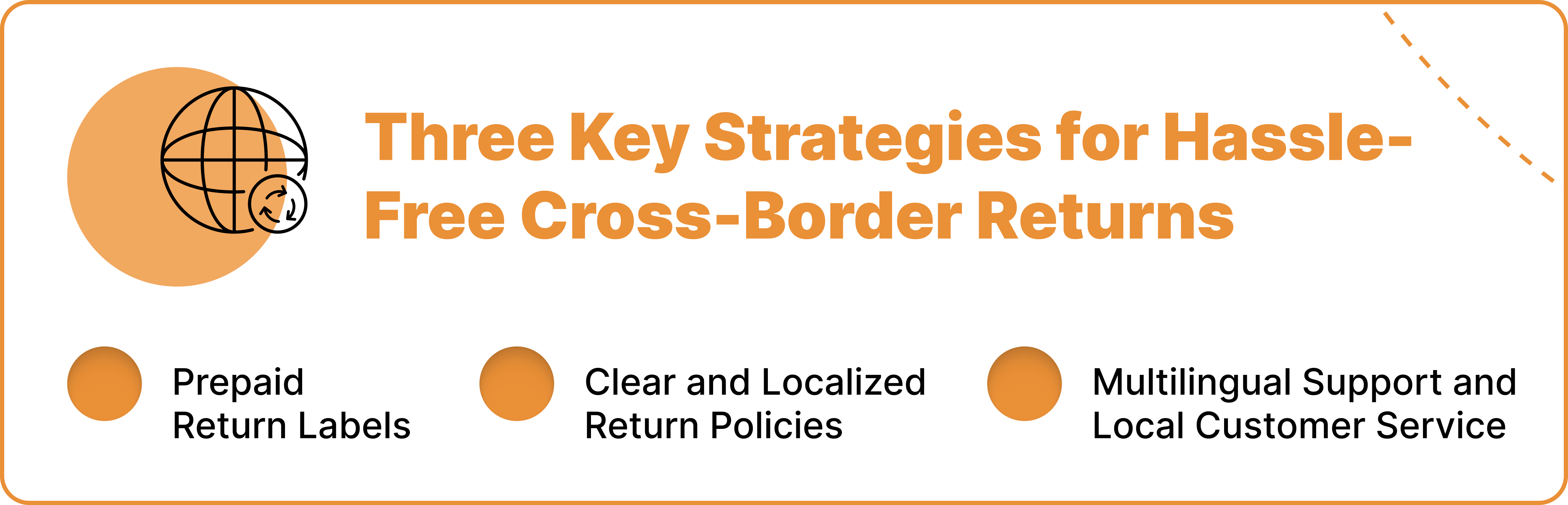
Three strategies make international returns easier for customers.
1. Prepaid Return Labels
One of the most effective ways to minimize confusion and frustration in managing returns is by offering prepaid return labels. The customer receives these shipping labels from the store, already filled out and paid for. Prepaid labels remove the guesswork. The customer doesn’t have to go to the post office, ask for help, or compare international shipping services.
Prepaid return labels can also help reduce shipping costs for customers, making the return process more affordable and convenient. They print the label, attach it to the box, and return the product. This convenience fosters trust and facilitates smooth transactions, particularly with first-time buyers in new markets. There are three ways to offer them:
- Offer downloadable labels via customer service.
- Utilize return portals that automatically generate prepaid labels.
- Include a label in the original package for countries with high return rates.
Prepaid return labels help the customer and simplify cross-border reverse logistics.
For customers, this means:
- More trust in the brand.
- Faster returns with fewer steps.
- No need to visit a post office or guess shipping prices.
For retailers, this means:
- Lower cart abandonment.
- Fewer service tickets about how to return.
- Better control over shipping methods and package tracking.
2. Clear and Localized Return Policies
Well-written return policies will ensure fewer refund disputes, higher trust in international businesses, and more buyers willing to shop again. The problem is that policies are often written from the company’s point of view, not the shopper’s. This creates tension because, in many cases, they may not contain nuances that impact these international customers.
Beyond that, poorly written and positioned policies also turn off customers because they don’t want to read legal text or search through FAQ pages to find return rules. When in doubt, show policies on product pages, checkout confirmation emails, and customer account sections.
How to write better policies:
- Use simple words. Break things into steps.
- Explain who pays for shipping and what happens to customs fees.
- Say how long refunds take and what items aren’t accepted.
How to localize return policies:
- Translate policies into your top five customer languages.
- List region-specific rules on local versions of your website.
- Adjust timelines and rules to match local laws. For example, in the EU, customers are entitled to return items for at least 14 days.
3. Multilingual Support and Local Customer Service
International buyers and customers feel more comfortable speaking to your support in their own language. This is especially true when discussing money, timelines, or returns. Achieving that may entail translating your help center into the top five global languages, ensuring clear communication with international buyers, and providing support through multiple channels, such as using AI chatbots with translation features for quick answers.
Here is why it matters:
- Support feels personal, not distant.
- Positive interactions lead to better reviews and higher customer lifetime value.
- Customers are more likely to complete a return when they understand what to do.
To build this, put the following in place:
- Offer local phone numbers where possible.
- Add live chat or email in your top languages.
- Train support staff on return processes for each region.
- Partner with call centers that specialize in global support.
- Use chatbots that auto-translate or respond in local languages.
- Make sure return emails are written in the customer’s language.
Bonus Ways to Strengthen Your Return Process
Beyond those three, here are five more ways to improve your global returns. Fashion and accessories have the highest return rate, so these matter most in those categories.
- Return Tracking: Let customers see how the reverse logistics process works and when their return is received. This reduces refund-related questions. Send email notifications that confirm receipt of the returned item and give updates on the refund or exchange.
- Instant Store Credit: Offer store credit before the product arrives to repeat buyers or for low-risk items.
- Encouraging Exchanges: Promote exchanging products over refunds to increase customer loyalty and reduce return costs.
- Local Drop-Off Options: Collaborate with local logistics companies to offer lockers or partner locations for returns to be dropped off.
- Feedback Requests: Ask customers why they returned the item. Use this to improve product pages, sizing charts, and descriptions. Analyzing return data helps identify patterns and implement strategies to prevent future returns.
Why Cross-Border Return Rates Are Higher
Not every return is about a bad product. Many cross-border returns happen because consumers find the buying process more complicated. An international return rate analysis shows that poor communication and misaligned expectations are the top reasons for higher returns. Here is how they lead to returns:
- Sizing issues: Clothing and shoes are sized differently around the world. A US medium is not a Japanese medium.
- Unclear expectations: Product descriptions that work in one market might confuse buyers in another.
- Surprise charges: Unexpected customs fees on delivery can cause customers to reject or return items.
- Language barriers: Poor translation leads to misunderstandings about product features or policies.
- Hard returns process: If returning something is difficult or expensive, frustrated customers send products back faster without trying to solve the issue.
Impact of Cross-Border Returns on Profitability
Each return affects the bottom line in several ways. A Shopify report showed that every $1 million in cross-border sales without a strong returns plan could lose $150,000 to $200,000 due to return-related expenses. Much of this loss is preventable with better processes and accurate return estimates.
Here are some of the ways this happens:
- Labor cost spikes: International returns need more checks, paperwork, and coordination.
- Unsellable inventory: Items returned late, damaged, or out of season often cannot be resold.
- Customer service overload: Cross-border returns create longer support calls, emails, and refunds.
- Shipping and handling loss: Bringing the product back can cost more than the profit from the original sale.
The Impact of Tariffs on Cross-Border Returns
The impact of tariffs on cross-border returns goes beyond just added fees. They create uncertainty, increase operational costs, and complicate logistics planning.
How Tariffs Increase Return Shipping Costs
Tariffs add a second layer of cost to returns. Businesses often pay re-import duties on returning items, plus brokerage and fuel surcharges. These extra costs hit reverse logistics especially hard.
Returns under tariffs are also hard to predict. Retaliatory tariffs and sudden policy changes make planning or budgeting for returns tough.
Between Q4 2023 and Q1 2024, logistics costs jumped 13%. That increase followed a 6.9% rate hike from major carriers. For any business handling frequent returns, that’s a sharp rise in overhead.
Tariff Effects on Business Profitability & Customer Experience
Tariffs put pressure on profit margins. Many businesses now pass that cost to customers. Over 63% of merchants charge for returns, up more than 20% from past years, as tariff and shipping costs make free returns harder to afford.
These added fees hurt margins and frustrate customers. Delayed returns and surprise charges can cause churn and lost loyalty.
Unclear return costs affect customers’ trust in your business. Brands that leave return costs unclear risk losing repeat buyers. The effect reaches the wider market too: each 5% tariff hike could cut S&P 500 earnings by up to 2%.
| Want to improve loyalty despite rising costs? See our article, How Reverse Logistics Can Build Customer Loyalty. |
Customs Clearance Challenges Under Tariffs
Customs clearance gets more complicated when tariffs are involved. Different countries apply different rules, which can slow returns down and create more costs. Understanding those regional differences is key to avoiding surprises at the border.
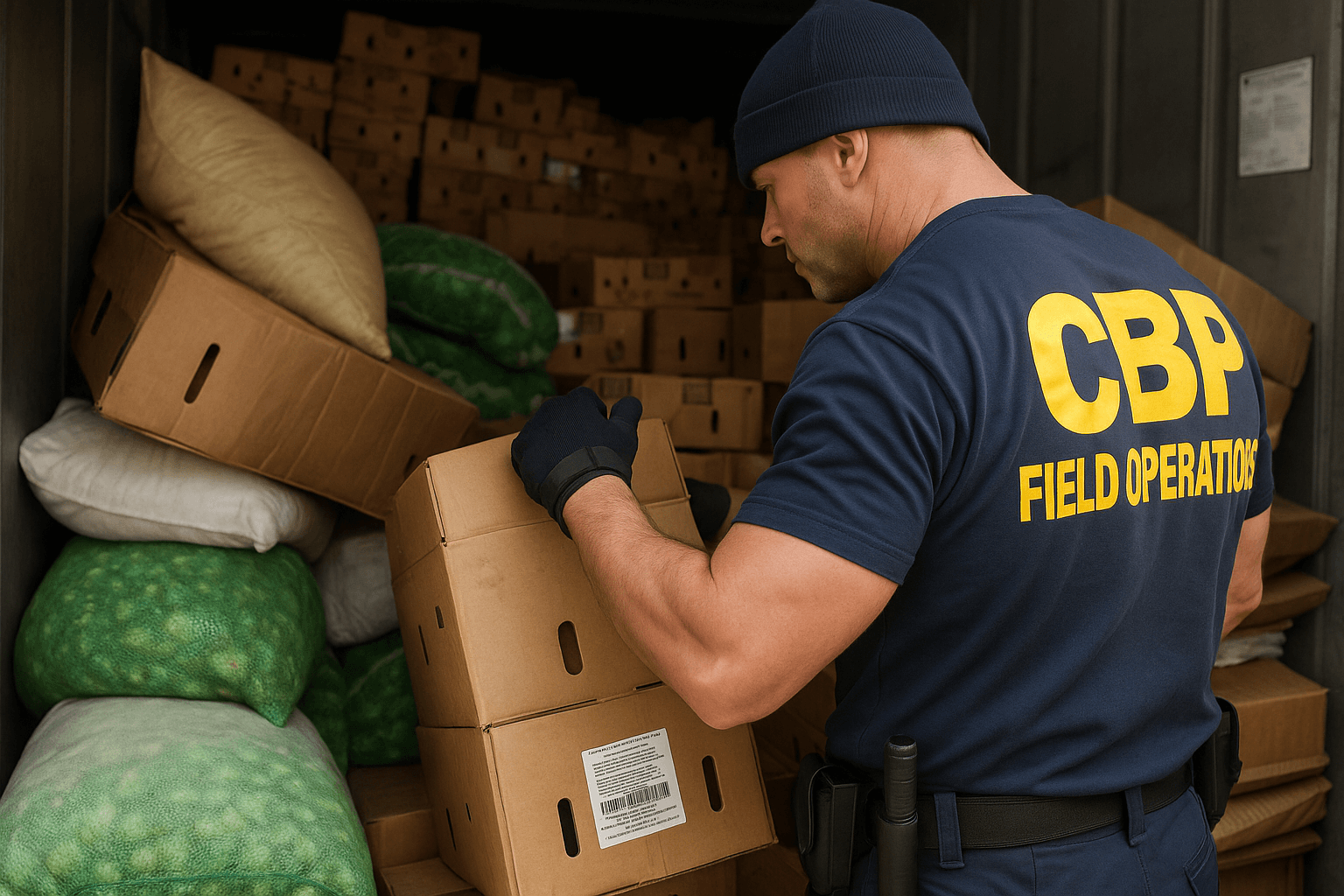
Different Clearance Rules by Region
Customs clearance rules vary widely across regions. In North America, forms and declarations are often digital. Europe uses strict documentation and classification standards. Meanwhile, Asia’s customs can involve more hands-on inspections and localized protocols.
Mistakes in tariff codes or product classifications can trigger reclassification reviews, fines, or even rejections. These risks rise when dealing with multiple borders and categories.
HS codes and accurate declarations are essential. A small error can mean big delays and costs. Training teams to get classifications right helps protect against compliance issues.
Bottlenecks at Border Points: Time & Cost
Congestion at borders slows down returns. Trucks may wait hours or even days due to processing delays, inspections, or missing documents. Each delay adds labor and storage costs, eating into already tight margins.
On average, border-related delays can stretch return cycles by 2 to 5 days. That extra time raises shipping fees and reduces inventory turnover.
Random inspections and outdated paperwork can also hinder the process. They create more stops and more waiting. The evolving nature of tariffs only adds to the unpredictability, making it harder to manage returns consistently.
| What is a tariff in LTL shipping? In less-than-truckload (LTL) shipping, a tariff outlines rates, charges, and rules. The cost to move even partial loads across borders can change when tariffs change. |
Duty Drawbacks: What They Are & How to Use Them
Duty drawbacks are refunds on specific duties, taxes, and fees paid on imported goods that are later exported or returned. You may qualify for one if your business ships products internationally and handles returns.
There are three main programs:
- Manufacturing drawback: When goods are imported, processed, then exported.
- Unused merchandise drawback: For items returned without being used.
- Rejected merchandise drawback: For goods that arrive damaged or don’t meet specifications.
| Need to make the most of returned inventory? See our article, Inventory Recovery: 10 Steps to Properly Recover Assets. |
To file a claim, follow these steps:
- Collect all shipping and import documents.
- Provide proof of export within the required time frame.
- Submit classification data and any supporting records.
- File with U.S. Customs before deadlines expire.
Getting HS codes right is critical. Mistakes in classification or recordkeeping can delay or disqualify your claim. Keep your process organized to avoid common errors.
Timing matters. Late submissions or improper classifications can block eligibility under programs like HTSUS Subheading 9801.00.10, which allows duty recovery on returned U.S. and foreign goods.
| What is the difference between a trade duty and a tariff? A tariff is a specific type of trade duty applied to imported goods. Trade duties may include tariffs, fees, or taxes that governments charge at the border. |
Cross-Border Returns With ReverseLogix
Cross-border returns in international e-commerce take careful planning and the right tools.
ReverseLogix gives businesses the tools and expertise to manage cross-border returns. A smooth returns process can encourage repeat customers and build long-term loyalty. Get a demo today.

Frequently Asked Questions
1. What makes cross-border returns more difficult than domestic ones?
Cross-border returns involve more steps, international shipping, customs paperwork, longer transit times, and higher costs, especially when dealing with customers from different countries . On top of that, online shoppers may not speak the same language or be familiar with return policies that aren’t written for their region. All of this increases the chance of delays and dissatisfaction.
2. Why do prepaid return labels matter so much for international buyers?
They take the guesswork out of returning an item. Without a prepaid label, the customer has to figure out how to send the package internationally, calculate customs info, and pay up front. A prepaid label makes the return process feel smoother, cheaper, and safer, which encourages repeat business .
3. Is offering prepaid labels too expensive for small businesses?
It depends on the product type and return volume. For high-return categories or loyal customers, the cost is often worth it. Many businesses offer prepaid labels in select countries or for specific products, and negotiate discounted rates with shipping partners.
4. What should a cross-border return policy always include?
Every return policy should clearly state:
– How many days a customer has to return
– What condition items must be in
– Who pays for return shipping
– What types of refunds are offered (money back, store credit, exchange)
– How to start the return
When these points are missing, customers get confused, and that leads to complaints or lost sales.
Get a Demo
Discover how you can jump-start your returns management efforts with ReverseLogix.