As online sales increase for both B2C and B2B industries, the acceleration isn’t typically driven by the company website. Marketplaces are now the go-to source for online purchases. According to Gartner, marketplaces account for 67% of global eCommerce, while corporate websites only make up about 33% of sales.
For the software side of this topic, see retail returns management software.
Think of a marketplace as a digital department store: It’s a site where many vendors sell their wares. There are the classic examples like eBay and Etsy, as well as recent additions like Target+ and Walmart Marketplace.
Tips for Managing Product Returns on Marketplaces
While marketplaces offer opportunities to expand your sales, the logistics of product returns can be more complicated. (This is not only a B2C issue: Gartner predicted that by 2023, at least 70% of enterprise marketplaces launched would serve B2B transactions.)
Perhaps you have the option to set your own returns policy, or you may have to follow the marketplace’s standards. Either way, here are a few factors to consider for managing the reverse logistics of product returns in a marketplace environment.
Automate
Managing returns from multiple eCommerce sites compounds the complexity of your reverse logistics. You may be processing returns at more locations, at a higher rate, with more variability than ever before.
To keep locations and employee workflows consistent, automate returns management as much as possible. The more automation you can apply, the better you can manage speed, errors and tracking.
A returns management system (RMS) can manage the end-to-end needs of your returns logistics, across multiple locations. With an RMS, you can:
- Build consistent rules and policies for decision making and inspection, and customize those rules by product or location
- Give team members clear, consistent workflows for restocking, repairs and re-commerce
- Improve tracking and processing transparency across your ecosystem
- Automatically approve, reject or flag returns based on any policy
Track and Measure Everything
Managing returns from your own website, third-party marketplaces and perhaps physical locations quickly becomes a lot to track and measure.
Using your RMS, you should be tracking and answering questions such as:
- Where do most of my returns originate? Can I determine the reason for that?
- How much does it cost to manage a return? Does that cost change depending on whether it was returned at a store, in the mail, or through a marketplace?
- Where are there opportunities to make returns management more efficient?
Because an RMS integrates with other supply chain software (like your WMS, TMS and OMS), it replaces scattered point systems with a clear, end-to-end view of your returns management metrics. Break down data by location, uncover trends, and get the insight you need to improve how you sell, position and restock.
Know How to Prevent Returns
The best way to improve the efficiency of your returns processes is to reduce the volume of returns in the first place. Returns are a large cost to retailers. In a ReverseLogix research study conducted with Lead to Market, 80% of eCommerce retailers reported that the cost of returns to their company is “significant to severe.”
To prevent returns, you need to have the right data at hand to make the right decisions. According to Gartner, most retailers don’t have visibility into their true costs of returns management. And if you don’t know your costs, you can’t figure out how to lower them. An RMS provides that data, with real-time tracking and visibility into every step of the returns process, from end to end.
Seven Features That Make Marketplace Returns Easier
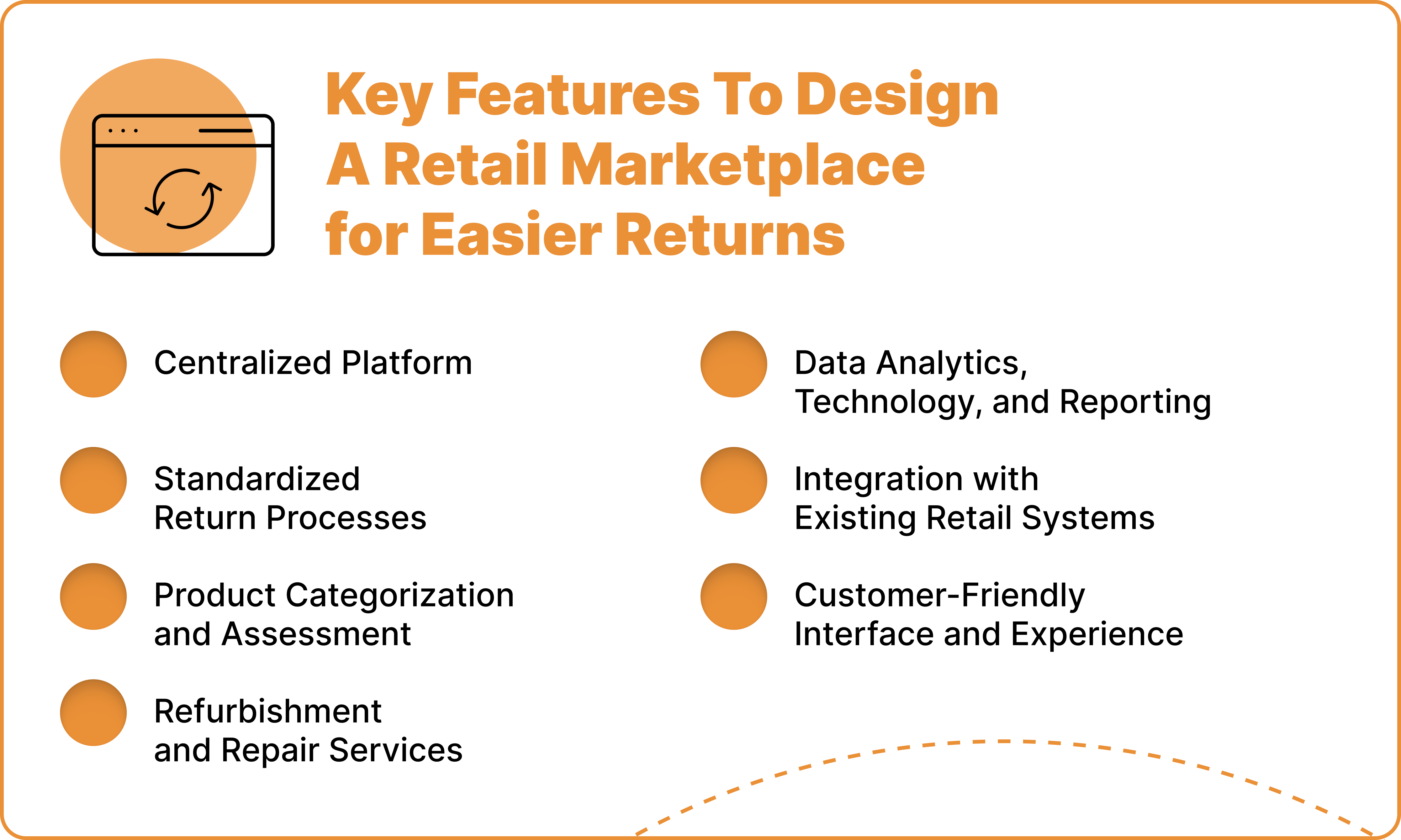
Marketplace reverse supply chains are complex, so the returns process should be built on a few foundations. These seven determine how efficiently it runs:
1. Centralized Platform
A centralized platform lets all stakeholders, including consumers and retailers, manage product returns in one place. The platform provides a single access point and simplifies the process, from initiating returns and tracking customer progress to sorting, decision-making, and handling refunds for retailers. Centralizing the process reduces confusion for everyone involved.
2. Standardized Return Processes
Standardizing the return procedure for customers reduces errors and speeds up processing. Automated workflows based on standardized criteria will also help to improve consistency and reduce labor costs. Retailers and logistics providers get simpler operations, and customers get a hassle-free return.
3. Product Categorization and Assessment
Effective categorization ensures that returned items are handled appropriately. Products can be classified as new, used, or damaged, with standardized assessment criteria determining the next steps. With proper categorization, retailers can make faster, better-informed decisions on resale, refurbishment or recycling, and recover more value.
4. Refurbishment and Repair Services
Refurbishment and repair services extend the life of products such as batteries and electronics, and reduce waste. They allow the marketplace to connect retailers with skilled technicians or refurbishment centers, creating opportunities to restore items to a sellable condition. This approach supports a circular economy and helps retailers recapture lost value.
5. Data Analytics, Technology, and Reporting
Data analytics enables retailers to monitor return trends, identify common product issues, and optimize processes. Analyzing return data can reveal areas for improvement in product design, marketing strategies, and customer service. Retailers can also use insights to predict demand for refurbishment and resale services.
6. Integration with Existing Retail Systems
Integration with e-commerce platforms, inventory management tools and customer relationship management systems keeps operations connected. Retailers benefit from improved visibility across systems, while automation reduces manual work and errors.
7. Customer-Friendly Interface and Experience
A user-friendly interface makes it easy for customers to initiate returns, track their progress, and receive refunds. Clear communication about return policies and procedures builds trust and reduces frustration, creating a positive experience.
Get a Demo
Discover how you can jump-start your returns management efforts with ReverseLogix.