How BNPL Returns Impact the Returns Management System

Buy now, pay later (BNPL) increases sales, and it also makes returns harder and more expensive to close out. Retailers do not have to choose between living with that and dropping BNPL. This article explains how to keep BNPL and fix the returns process around it.
BNPL is easy to use and growing fast. Customers get what they want now and pay over time, often without interest. It creates new work on the back end. When a return comes in, the retailer has to involve the BNPL provider as well as the customer. The product has to come back, the money has to be sorted out, and everyone expects it to happen quickly.
This changes how payment and reverse logistics work together. If your return process is slow or disconnected, support tickets pile up, customers get annoyed and revenue slips away.
BNPL Improves Cash Flow, But It Also Encourages Higher Return Rates
In 2025, U.S. buy now, pay later credit totaled $175 billion. A Bankrate survey found that 56% of BNPL users ran into problems, including difficulty returning purchases or getting refunds (18%). BNPL makes it easy to check out without paying the full amount right away.
That encourages more buying and more returns, which is costly for retailers that offer free return shipping. People are more likely to buy items they might not keep when credit is easy.
Return and Refund Challenges for Retailers Offering BNPL
Returns are common everywhere, but BNPL adds its own problems:
1. Complex Refund Coordination
When a return happens with a regular credit card, it’s a simple refund. With BNPL, it’s more complicated. You, the retailer, need to send the refund signal to the customer and the BNPL provider. If that step is missed or delayed, the customer might get charged while waiting for their refund. This damages trust and increases customer service complaints.
2. Split Payments and Partial Refunds
If the customer has already made one or two payments before returning the item, the refund must match what they paid so far. This needs to be calculated correctly by the retailer and BNPL provider together. Mistakes can lead to incorrect refunds, more support tickets, and lost time fixing the error.
3. Disputes and Chargebacks
Sometimes, customers don’t understand how BNPL refunds work. They may open a dispute if they don’t see the refund fast enough. The BNPL provider handles these disputes and can create friction for your brand. Your support team may need to gather tracking numbers, return confirmations, and emails to prove the refund was processed. That takes time and can hurt your reputation.
Strategies to Manage Returns and BNPL Efficiently
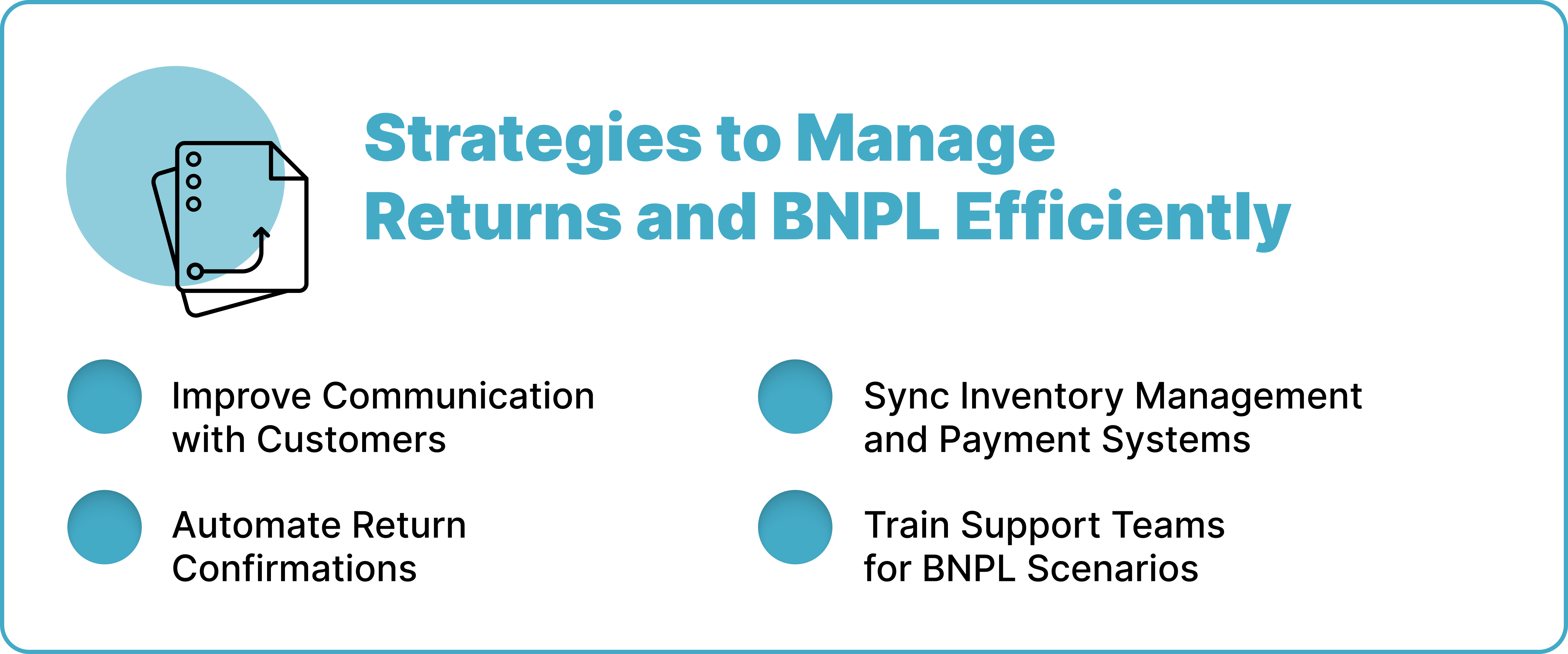
Each BNPL service handles returns a little differently. The process works when systems are linked and updates happen fast. When they are not, a refund can take days, which frustrates the customer and affects how they rate the experience.
These strategies avoid that:
1. Improve Communication with Customers
Make it clear how the return and refund process works for BNPL orders.
- Add a separate FAQ for BNPL returns.
- List the typical refund time for each BNPL provider.
- Remind customers to log their return with the BNPL provider so their payments are paused.
This keeps expectations clear and reduces service tickets.
2. Automate Return Confirmations
Use returns software such as ReverseLogix that can trigger a notification to your payment systems as soon as a return is approved.
- Link your order system with your returns portal.
- Send the customer an automated message with refund details.
- Trigger instant updates to the BNPL platform when the return is scanned or received.
These steps speed up the refund process and prevent delays.
3. Sync Inventory Management and Payment Systems
Connect your systems.
- Connect your warehouse, POS, and e-commerce platform.
- Track which products were paid with BNPL and monitor their return patterns.
- Use this data to fine-tune fraud checks and adjust return rules.
If a product has a high BNPL return rate, you may need to review its listing, price, or return policy.
4. Train Support Teams for BNPL Scenarios
Your customer support team should know how BNPL works.
- Create guides and scripts for common refund questions.
- Have direct contact with BNPL platforms for quick problem-solving.
- Set up quick access to the customer’s payment status with the BNPL provider.
This helps resolve issues faster and improves the customer experience.
Streamlining BNPL Product Returns With ReverseLogix
BNPL returns are becoming a normal part of e-commerce. While they bring in more sales, they also bring extra work. Businesses must handle refunds across more systems and deal with more customer questions. By improving communication, syncing your tools, and training your teams, you can make BNPL returns less painful.
With the right system, you can offer BNPL, keep return rates under control and give customers a clear refund process. ReverseLogix is an end-to-end returns management system built for retailers, eCommerce brands, manufacturers and 3PLs. Whether B2B, B2C or hybrid, it manages and reports on the entire returns lifecycle.
Frequently Asked Questions
1. What makes BNPL returns different from regular returns?
BNPL returns involve the retailer, the customer, and the BNPL provider. Unlike card payments, refunds have to be coordinated across systems, which can slow things down and increase errors if not managed carefully.
2. How can eCommerce businesses and Online retailers reduce BNPL return-related complaints?
Make return steps clear on your website. Add BNPL-specific details in your return policy, and remind customers to notify the BNPL service when they return something.
3. What happens if a customer returns an item after making partial payments?
The BNPL provider adjusts the refund based on how much has been paid so far. If payments are split into four and two have been made, the provider usually refunds the two and cancels the rest once the return is confirmed.
Choosing a returns management system
Five factors that decide whether a returns platform works in practice.
Get a Demo
Discover how you can jump-start your returns management efforts with ReverseLogix.