Strategies for Handling Post Holiday Returns Rush

Holiday sales bring a surge of product returns once the season ends. Managing those returns efficiently limits their impact on the business, and returns data helps you improve the process and plan stock levels.
For the software side of this topic, see ecommerce returns management software.
In 2023, $173 billion worth of products were returned in a post-holiday return rush, after the strongest holiday sales season since the pandemic. More sales mean more exposure to returns.
Returns put pressure on retailers, but they do not have to overwhelm the business. This article covers strategies for handling the post-holiday return rush.
How to Reduce Post-Holiday Returns
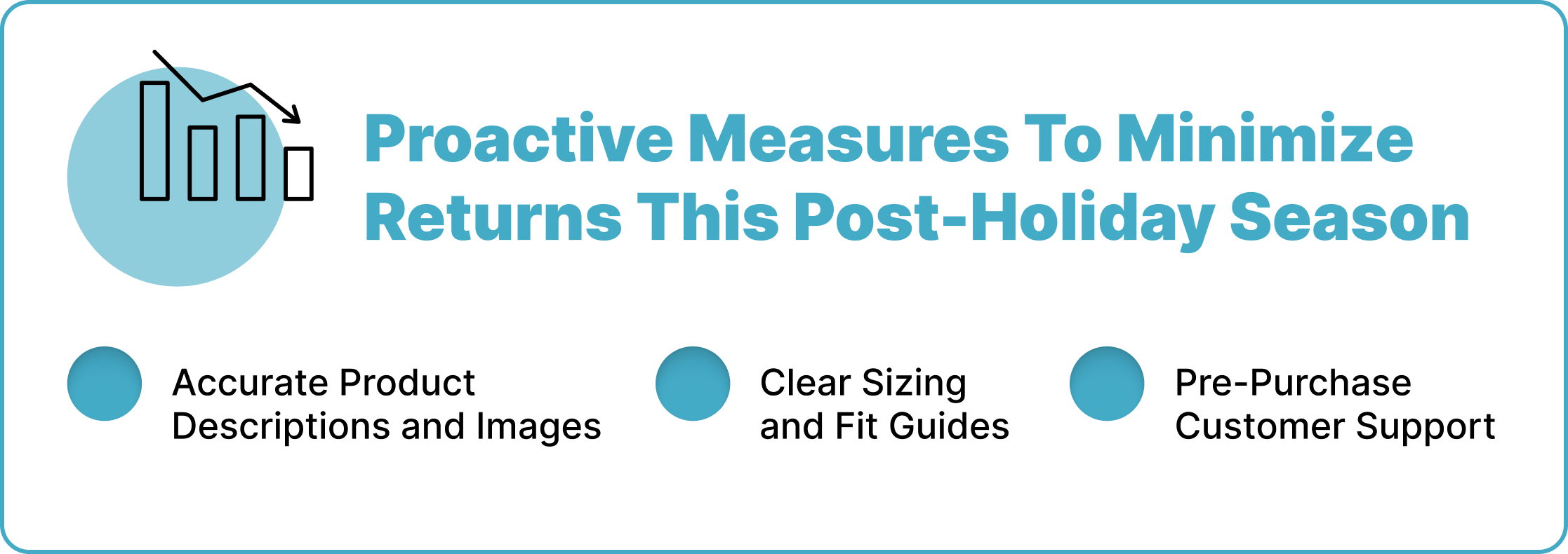
The best returns are the ones that never happen. Before looking at how to process returns, here are three ways to reduce them.
1. Accurate Product Descriptions and Images
56% of customers will return purchased products from online retailers because it is a poor fit. That makes poor product descriptions one of the main reasons for returns. During the holidays, customers buy in a hurry and check less carefully.
Businesses that want to avoid high return volumes should improve product descriptions across their online store. Give detailed, realistic product information to manage expectations, and use high-quality images and videos that show products from different angles.
2. Clear Sizing and Fit Guides
Customers return products in every category, but fashion has some of the highest return rates, mainly because of size and fit. Customers buy thinking they are one size and find out they are another. Offer detailed sizing charts and fit guides, and consider virtual try-on or fit recommendation tools.
3. Pre-Purchase Customer Support
Customers like having the option to return, but most would rather not use it. Many research and ask questions before buying to avoid a return, so have a team available to help them.
That team answers questions and addresses concerns before purchase, through live chat, email or phone.
Strategies for Handling the Post-Holiday Return Rush
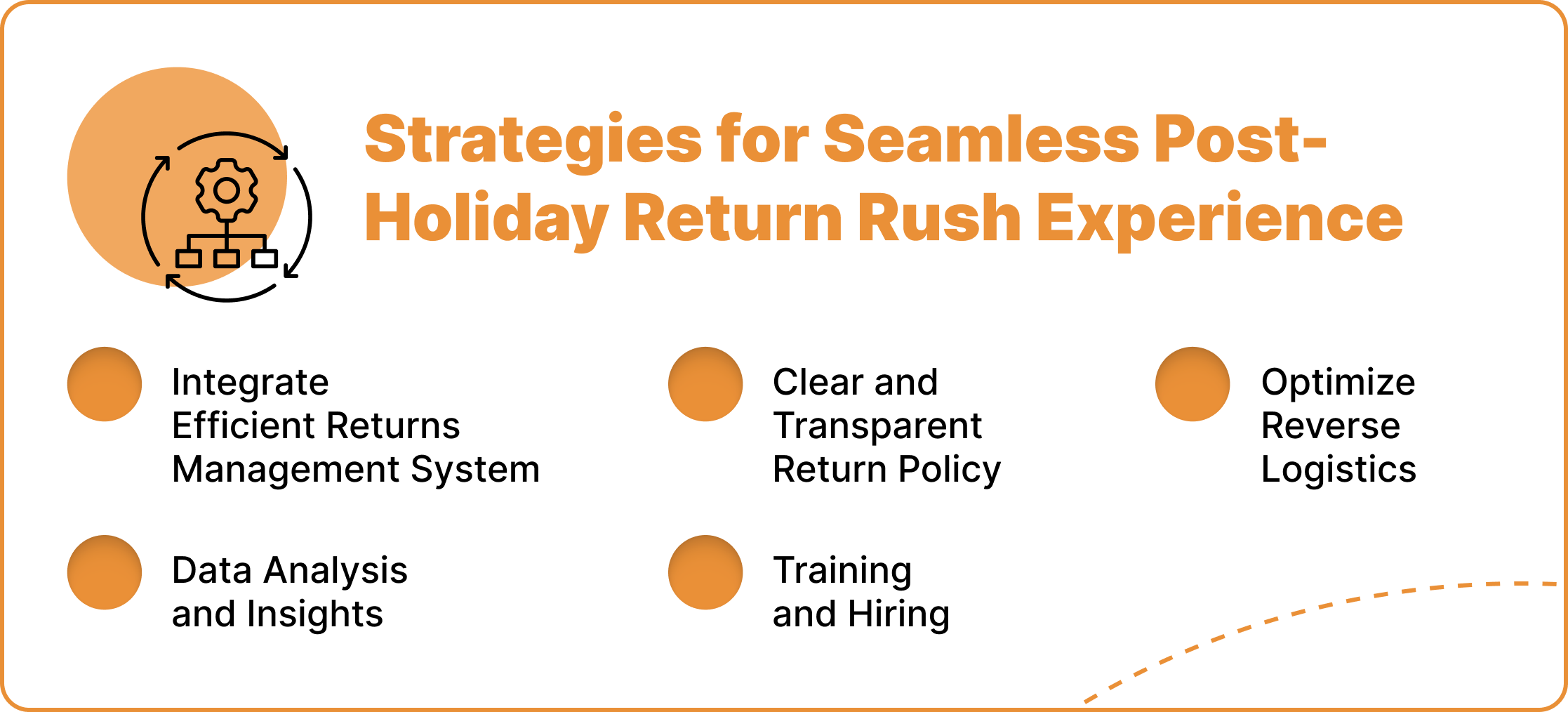
Handling the post-holiday return rush takes preparation. Without it, businesses struggle to process returns and the reverse supply chain can break down. These five strategies help:
1. Use a Returns Management System
A returns management system is a technology solution that streamlines the entire returns process for customers and staff. Customers use a portal to start the return and track their products through the process.
They can also generate return labels for shipping and see the return and refund policy for each item (store credit or cash back). On the back end, the system helps the team process and sort returned items.
2. Clear and Transparent Return Policy
The return policy tells customers which goods can be returned, in what condition and by when. To work, it must be consumer-friendly: clear, transparent, fair and easy to find.
Write the policy in language every customer can understand, and place it where customers can easily find it. A good policy that customers cannot find does not help.
The policy should also be fair: do not promise what the business cannot deliver, and do not penalize customers for returns that are not their fault. Eight in ten customers say that free shipping is an important consideration. That should inform the policy, though it applies differently by industry.
3. Optimize Reverse Logistics
During a post-holiday rush, make sure the reverse logistics process is not overwhelmed. If reverse logistics fails, customers think less of the business even when forward logistics works well. If it succeeds, it improves customer loyalty.
Confirm that your logistics provider can handle the higher return volume, with dedicated vehicles if needed, and that its systems are integrated with yours so information flows both ways. Pre-paid return labels and designated drop-off locations also help.
4. Data Analysis and Insights
Returns data helps you identify trends, understand customer behavior and improve the returns process. It comes from customer feedback, surveys and the information captured while processing returns.
Track key metrics such as return rate, return reasons and associated costs in your returns management system, and use them to spot and fix problems.
5. Training and Hiring
The volume of returns after the holidays can overwhelm staff, so consider hiring temporary staff for the period. Training is essential: retrain staff on procedures and on how to use the returns management system.
Training and hiring improve throughput and customer satisfaction, and better inventory management helps prevent losses.
Handling the Post-Holiday Return Rush With ReverseLogix
The ReverseLogix RMS platform helps your business handle the post-holiday return rush: it manages returns, streamlines processes and provides insight from return data.
Your business can:
- Centralize returns management by connecting customer-facing portals with commerce platforms and warehouse operations for visibility and control.
- Standardize warehouse workflows by allowing businesses to configure workflows for efficient inspection, grading, and put-away of returns, maximizing recovery and minimizing manual work.
- Optimize warehouse operations through centralized operations with standardized analytics and reporting. This will streamline the entire reverse logistics process and provide real-time data from facilities worldwide.
Get a demo today.
Frequently Asked Questions
1. Why is there typically a post-holiday returns rush?
The holidays will often lead to a surge in gift-giving and impulse purchases. However, after the festivities, many realize they received unwanted or duplicate gifts or simply experience buyer’s remorse, leading to higher returns.
2. How can we prevent damaged or defective products from being resold?
There are a few ways, but the most common are thorough inspections, establishing clear guidelines for sorting the items, and maintaining quality control standards that ensure only products in good condition are returned to inventory.
3. How can we handle customer dissatisfaction during the returns process?
The following will help:
Empathy and understanding: Train the staff to listen actively, acknowledge customer concerns, and offer solutions in a friendly and professional manner.
Flexibility: Be willing to go the extra mile to accommodate customer requests within reason.
Timely resolution: Strive to resolve issues promptly and efficiently to minimize customer frustration.
Remember that these processes can also help improve customer lifetime value beyond ensuring satisfaction.
Get a Demo
Discover how you can jump-start your returns management efforts with ReverseLogix.